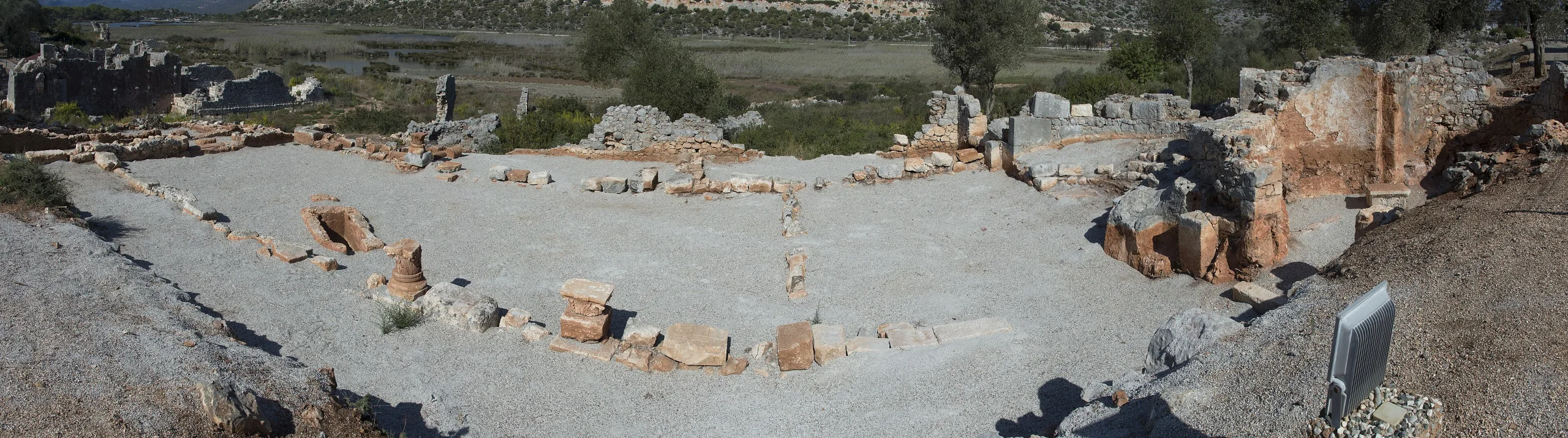
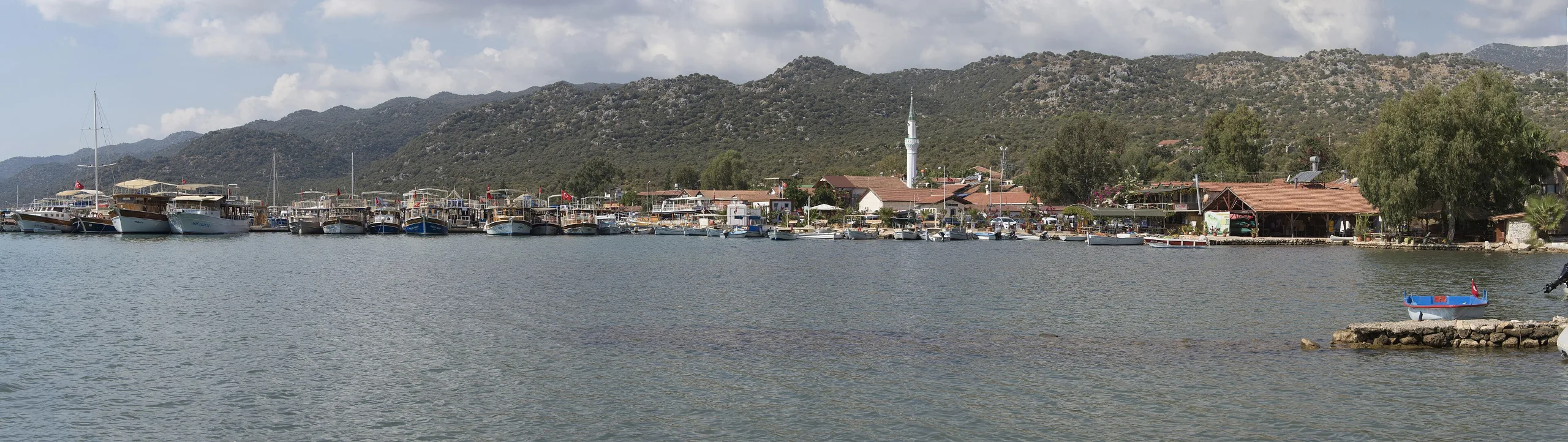
Olympos, near Kumluca in Antalya, was one of the three-vote cities of the Lycian League, known for its pirate past, Byzantine churches and the eternal flames of Yanartaş.
Olympos is an ancient city located in Turkey, Antalya. Main periods: Hellenistic Period, Roman Period, Byzantine Period.
Olympos is a Lycian city on Antalya's southern coast, in the Yazır neighbourhood of Kumluca district and inside Beydağları Coastal National Park. The name means high mountain; Kültür Portalı says it comes from a Taurus spur about 16 km to the north. The ministry page calls it the city of the unquenched fire, meaning the natural-gas flames of the Chimaera, or Yanartaş, at Çıralı.
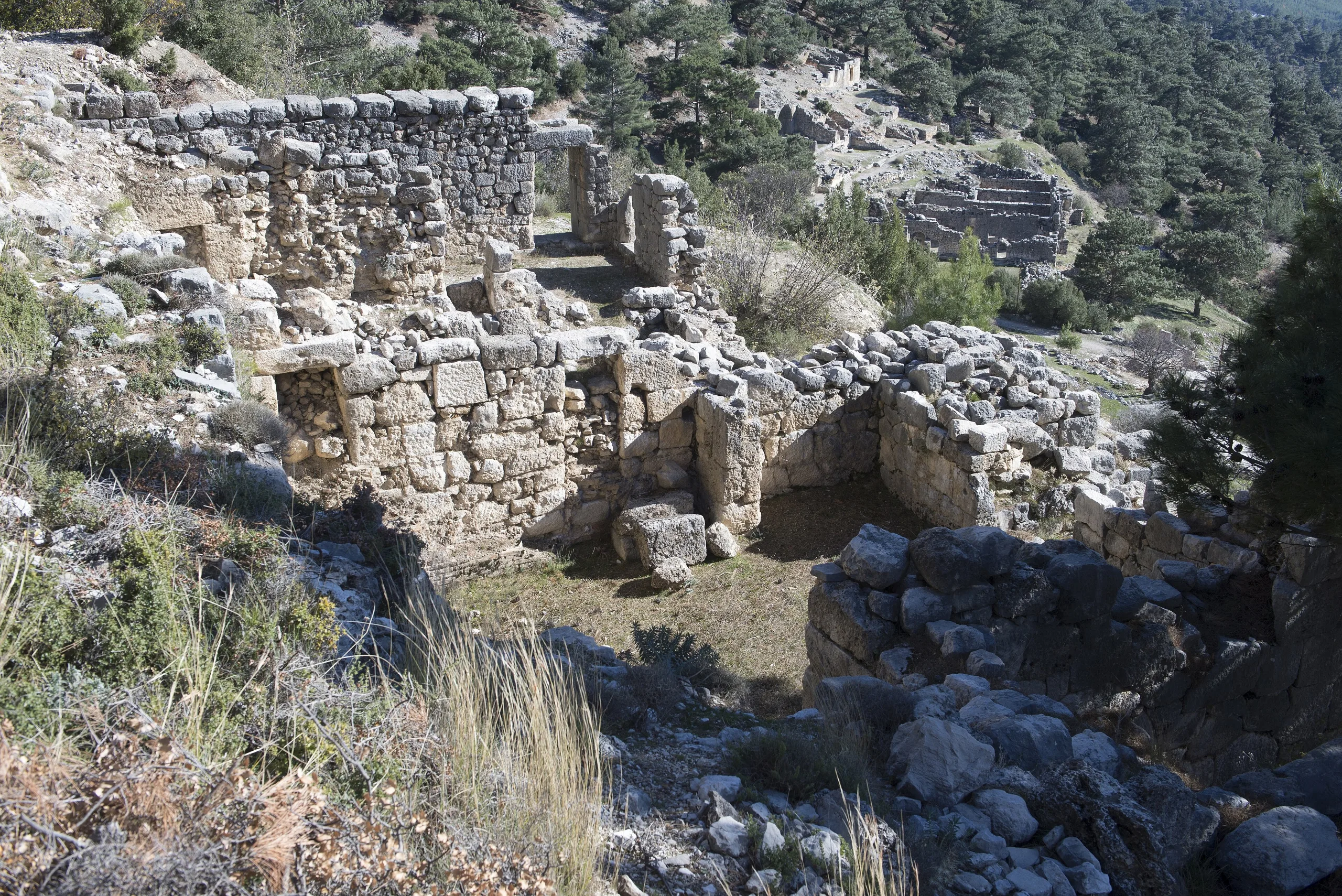
The ruins lie hidden in forest among trees and bushes, and most belong to the Hellenistic, Roman and Byzantine periods. The Antalya provincial directorate calls Olympos the second important port of Antalya's southern shore after Phaselis.
Location and setting
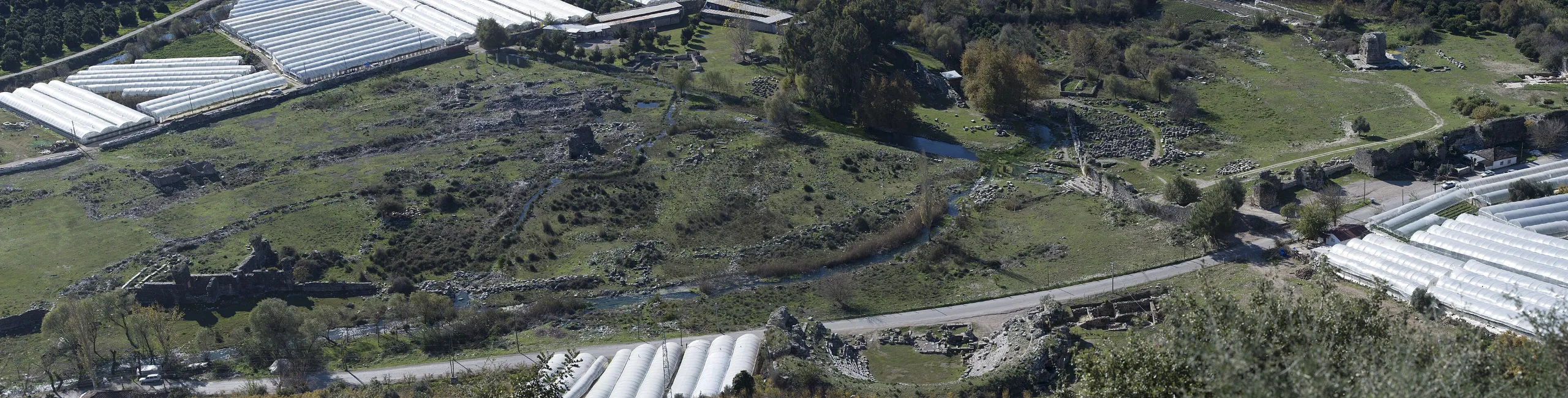
The ministry gives the address as Yazır Mahallesi, Olympos Örenyeri Mevkii, Kumluca, whereas Kültür Portalı's page on the city says the ruins are in Kemer district. Pleiades records the place as Olympus/Hadrianopolis and mentions Deliktaş in its Barrington note. The city lies in a deep valley between the steep slopes of Sepet Mountain to the south and Omurga Mountain to the north, and the Olympos Stream (Göksu/Akçay) divides it into northern and southern halves. Either of two turn-offs from the Antalya-Kumluca road leads to the site. East of Olympos, some 300 m inland from the shore, lies the village of Çıralı, whose famous beach is a nesting ground for loggerhead turtles.
History
The exact date of foundation is unknown; Kültür Portalı and the provincial directorate say its name appears on Lycian League coins struck in 167-168 BCE. The ministry's English page states that the city was founded in the 3rd century BCE, whereas the Anadolu University thesis says the first phase was Hellenistic on the archaeological evidence, with the polygonal walls south of the city as proof. Olympos was one of 23 cities with voting rights in the League and, with Xanthos, Patara, Pinara, Myra and Tlos, held three votes. League coins in the name of Olympos were struck from the 2nd to the 1st century BCE.
The thesis reports that from 104 to 77 BCE the rule of Zeniketes over the area split Olympos from the League, and the city issued look-alike coins without the League ethnic. The ministry's English page says the town sheltered pirates, that their chief Zeniketes based himself there and that people began to speak of it as a pirates' city; this went on until 78 BCE, when Servilius Isauricus (ministry and Kültür Portalı) captured it and made it a Roman town. The thesis says that in 78 BCE Rome sent the commander Publius Servilius Vatia and that the region was brought under control in 77-76 BCE. The provincial directorate, however, writes that Zeniketes used the town as a base until 67 BCE and that definite Roman rule in 43 CE opened a new and brilliant age.
Under the Roman Empire Olympos again became a privileged member of the League; the thesis links one reason to Hadrian's journey through Anatolia in 129-131. Autonomous coins were struck in the city's name under Gordian (238-244). As Christianity spread in Lycia after the 2nd century, Olympos met the new faith early: Methodios is named as the first bishop in the 3rd century. Nine churches of the Early Byzantine period have been identified, five in the south of the city and four in the north, and building was intense in the 5th-6th centuries. Disasters and epidemics in the mid-6th century, Sasanian invasions and Arab raids in the 7th hit the coastal towns, and archaeological evidence shows that urban life at Olympos largely ended in the second half of the 7th century. The site came under Ottoman rule in the 15th century without being resettled, and in the 18th-20th centuries Yörük pastoralists used it as winter quarters.
People and events
The pirate leader Zeniketes, the Roman commander Servilius (Isauricus or Vatia), Hadrian, bishop Methodios and Eudomus, a captain of Olympos, stand out. The thesis tells how Methodios, bishop of Olympos in the 3rd century, was martyred in Chalcis in Syria under Diocletian. Among later bishops, Aristokritos (Council of Ephesus, 431), Anatolius (458) and Ioannes (Constantinople meetings of 518 and 520) are named, together with Theophiletos and Nikholaos from excavation inscriptions.
Principal monuments
River, bridge and city walls
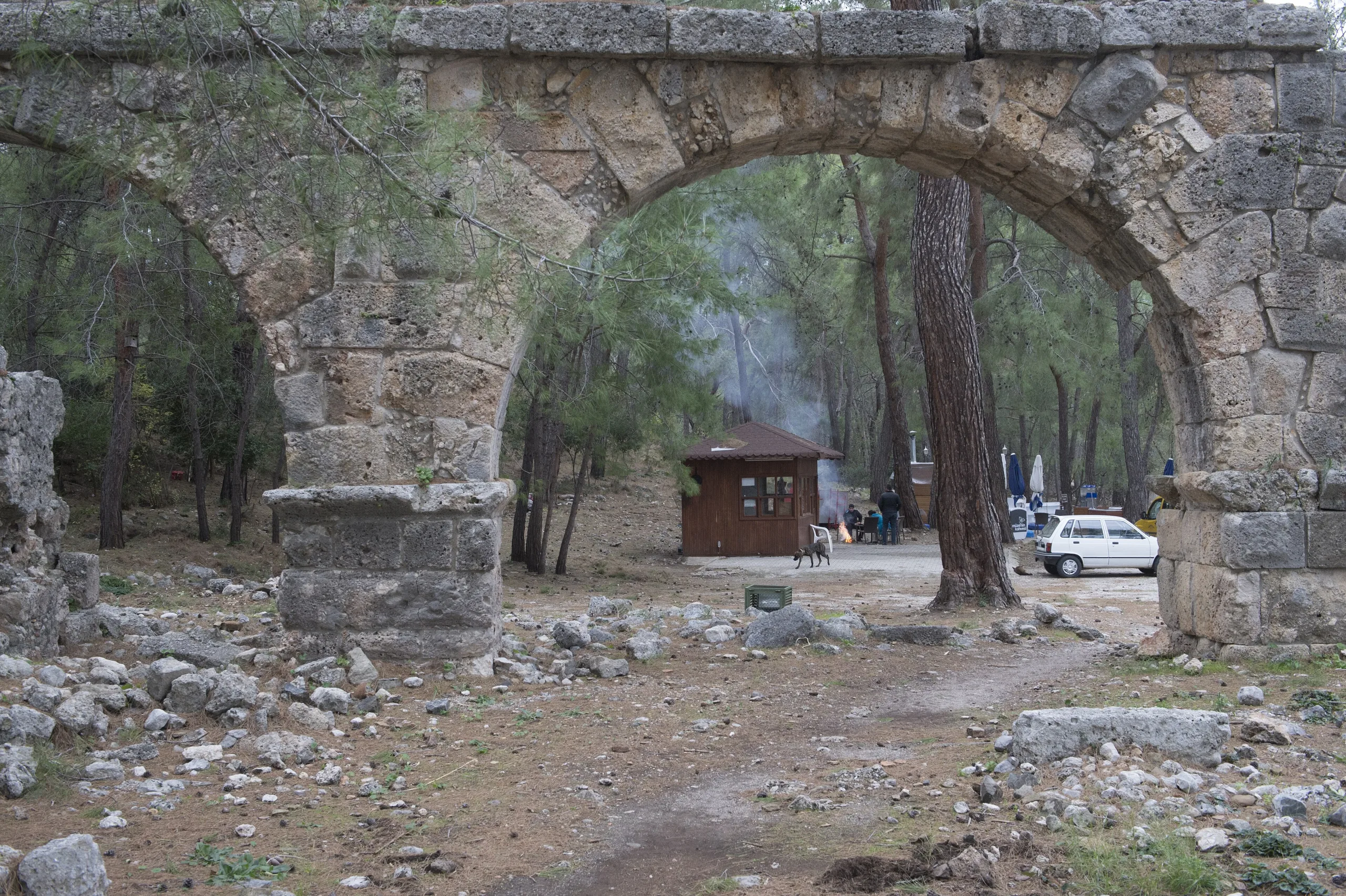
The remains stand at the mouth and on both banks of a river that runs quickly to the sea from east to west. In antiquity the river that split the city was channelled, both banks served as quays, and a bridge joined the two sides; one pier of the bridge still stands. The ministry's English page mentions the acropolis, the protective walls, the theatre, the canalised river and the bridge remains.
Theatre, acropolis and temple gate
On the small steep acropolis near the river mouth are late buildings; by the ministry's account the acropolis remains belong to walls that were turned into a castle in the Middle Ages. On the south bank of the river, the small theatre, of Hellenistic foundation with Roman repairs, is rather ruined, with only one side of the entrance well preserved. The temple gate about 150 m west of the river mouth belonged to a small Ionic temple, and a statue base shows it was built in the name of a person connected with 172-173 CE.
Byzantine churches and the Episkopeion
The Byzantine church with frescoes on parts of its inner walls is, according to Kültür Portalı, the most monumental ruin on the site. In the northern city the temple and temenos area at the crossing of Harbour Street and Bridge Street was turned into an Episkopeion complex in Byzantine times. The largest group of buildings in the city, the Episkopeion consists of a church, baptistery, relic chapel, peristyle, triclinium, administrative rooms, kitchen and the bishop's residence; it is thought to have been built in the second half of the 5th century and went out of use in the 7th century or later.
The sarcophagus of Captain Eudomus
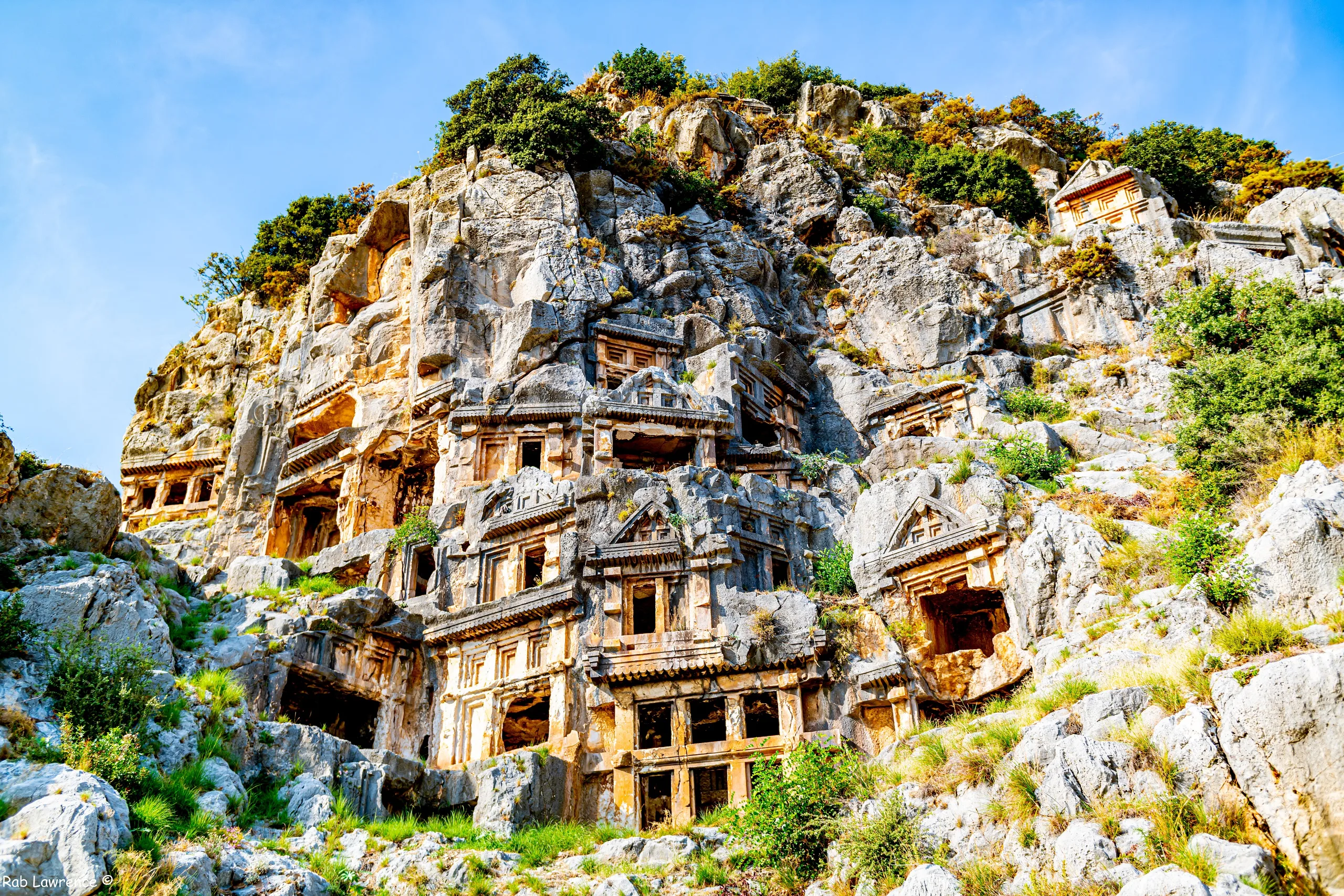
A sarcophagus in a hollow of the rock right beside the river mouth was brought to light by the Antalya Museum's excavations. Its moving dedicatory inscription names the captain and a relief on the long side shows the shape of his ship. The thesis relates that the inscription on the Eudomos sarcophagus, dated to the 2nd century, describes Eudomos of Olympos as a wealthy and famous captain.
Excavation history
The Anadolu University master's thesis speaks of excavation at Olympos spanning 1991-2019 and studies the 6,519 glass fragments that entered the excavation depot in those years. Excavation team members Yelda Olcay Uçkan, Gökçen Kurtuluş Öztaşkın, Ömer Ergün Öncü and Serra Evcim are cited in it for their publications on Olympos's Roman and Byzantine urban fabric. The glass finds give information on Early Byzantine glass-making. Kültür Portalı also mentions the digs of the Antalya Museum.
Mythology and ancient writers
Yanartaş lies a few kilometres south-west of Olympos and holds methane flames that have burned for thousands of years. According to the legend these are the fire of the Chimera, which Bellerophon defeated and buried seven layers deep; the story first appears in the Iliad. A temple was built beside the flames for Hephaistos, the chief god of Olympos in Roman times, and in the Byzantine period a large basilica was raised over it. The Stadiasmus Patarensis (43-45 CE) does not mention Olympos but gives Korykos where it should be, so some researchers propose that today's Olympos was called Korykos in Hellenistic times and that the name Olympos belonged to a settlement on the summit of Musa Mountain; another view cited in the thesis looks for Korykos on the Çıralı beach, and the debate continues.
World Heritage and protection
Olympos is named among the cities proposed for the UNESCO World Heritage List as part of the Ancient Cities of the Lycian Civilisation (2009). Kültür Portalı says it lies within Beydağları Coastal National Park.
Visiting
The ministry page says the Müzekart is valid for Turkish citizens. Olympos and its surroundings form a 7.5 km stage of the Lycian Way, and the page suggests watching the Chimaera flames at Çıralı after dark. For hours and fees, use the official page.
Frequently asked questions
Where is Olympos?
What does Olympos mean?
Why is Olympos linked to pirates?
What was Olympos in the Lycian League?
What can be seen at Olympos?
How far is Yanartaş?
When was Olympos abandoned?
Is the Müzekart valid at Olympos?
Sources (6)
- Olympos Örenyeri / Olympos Archaeological Site (TR ve EN sayfalar) — T.C. Kültür ve Turizm Bakanlığı, Müzeler ve Ören Yerleri
- Olympos (Türkiye Kültür Portalı) — T.C. Kültür ve Turizm Bakanlığı, Antalya İl Kültür ve Turizm Müdürlüğü
- Olympos (Antalya İl Kültür ve Turizm Müdürlüğü) — T.C. Antalya Valiliği, İl Kültür ve Turizm Müdürlüğü
- Yanartaş (Türkiye Kültür Portalı) — T.C. Kültür ve Turizm Bakanlığı, Antalya İl Kültür ve Turizm Müdürlüğü
- Olympos Kazısı Cam Buluntuları (Erin, B.), Yüksek Lisans Tezi, Anadolu Üniversitesi, 2021 — Anadolu Üniversitesi Açık Erişim
- Olympus/Hadrianopolis (Pleiades place 639017) — Pleiades