Pergamon's steep 10,000-seat theatre and 200,000-volume library crowned Kale Hill above the Bakırçay plain, the capital of the Attalid kings and now a World Heritage Site.
Pergamon (Bergama) is an ancient city located in Turkey, Izmir. Main periods: Hellenistic Period, Roman Period, Byzantine Period, Ottoman Period. It was inscribed on the UNESCO World Heritage List in 2014.
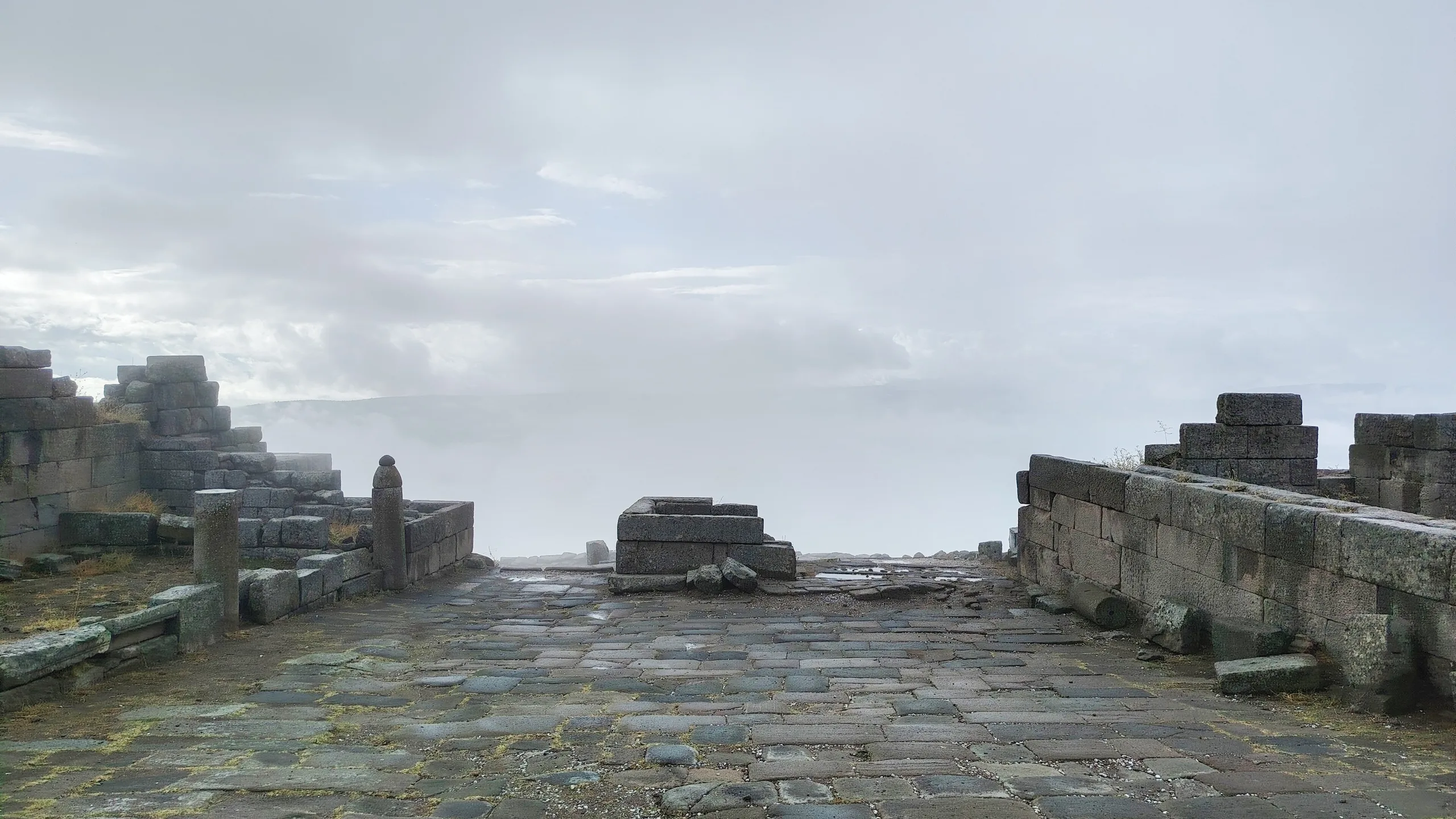
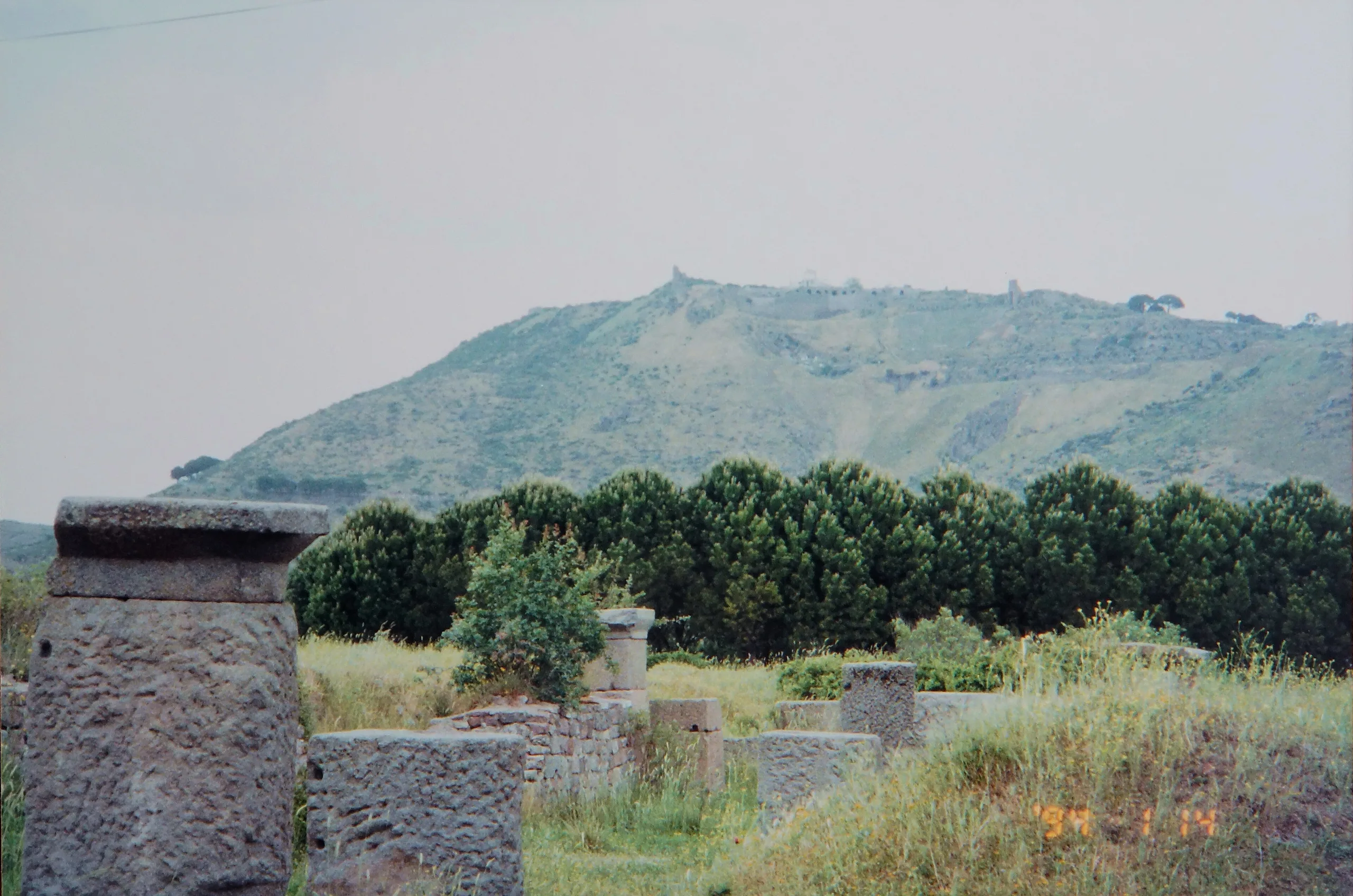
Pergamon's theatre pins 10,000 seats to a slope that is almost a cliff. It sums up the whole city on Kale Hill, which rises over the Bakırçay plain north of İzmir: Hellenistic builders tamed an awkward site with terraces, and palaces, temples and a library climbed the hill step by step. Invasions and destruction never emptied the place, since its strategic position kept it inhabited. In 2014 it was inscribed on the World Heritage List as Pergamon and its Multi-Layered Cultural Landscape.
As capital of the Attalid dynasty the city stood out in science, art and politics, and after 133 BC it became the centre of Rome's province of Asia. Byzantine and Ottoman layers survive in present-day Bergama as well, and UNESCO ties much of the site's value to that layering.
Location and access
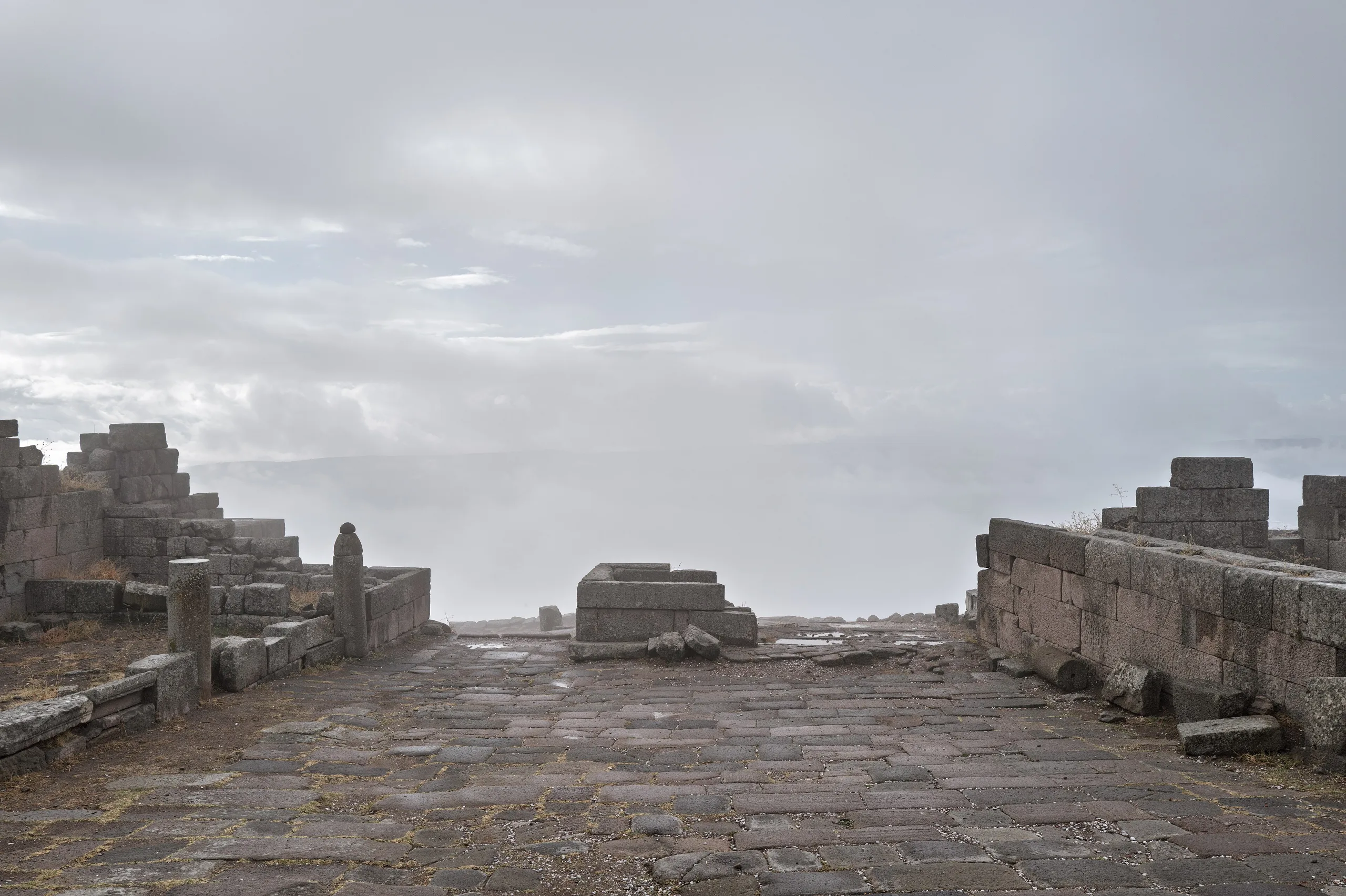
The acropolis lies in the Kurtuluş quarter of Bergama, along Akropol Yolu. A vehicle road reached the hill in 1935, and because the steep slope carries an avalanche risk, a cable car was built up Kale Hill's eastern flank in 2010. Check the official page for hours, fees and guide services. The Müzekart pass is valid for Turkish citizens.
History
Traces of settlement in the Bakırçay basin go back to prehistoric times, and finds on the hill where Pergamon was founded point to the 7th, 6th and 5th centuries BC. Philetairos, a former Macedonian army officer, laid out the first Hellenistic city between about 283 and 263 BC, and the kingdom he founded lasted roughly 150 years as a strong political, economic and cultural centre. The Temple of Athena and the Demeter sanctuary just outside the city belong to this earliest phase.
Attalos I (241-197 BC) steered the city towards Rome as a partner, and the Kybele cult stone taken from the Galatians and carried to Rome symbolises that closeness. Water pipelines were laid around the same time. In the reign of Eumenes II (197-159 BC) the walls were pushed out to include the area south of the acropolis, and a burst of building produced the Great Altar, the lower agora, a gymnasium and the library. Roman backing helped the city withstand Seleucid attacks.
By the will of Attalos III, Pergamon passed to Rome around 133 BC and became capital of the province of Asia. The Romans kept the Hellenistic monuments and added the roles of cultural centre and imperial cult site. The Asklepion healing sanctuary, the Roman theatre, a vast amphitheatre among the biggest in the empire, a major aqueduct, the temple of Trajan and the Serapeum were built or enlarged in this period. Worship of Augustus, Trajan, Hadrian and Caracalla kept the city thriving, until earthquakes speeded its decline in the 5th century.
In Byzantine times trade routes and political centres moved from the Aegean towards north-west Anatolia and Constantinople, and Pergamon shrank into a mid-sized town, though it kept religious weight as home to one of the Apocalypse's Seven Churches. Arab attacks in the 7th and 8th centuries forced the walls to be rebuilt, with stone pulled from earthquake-damaged monuments, above all the Great Altar. The town joined the Menteşe principality early in the 14th century and fell to the Ottomans around 1345, with a short Timurid episode and a second conquest under Murad II in between. Ottoman builders added mosques, bathhouses, bridges, inns, bedestens, arastas and water works, building a new town over the Roman and Byzantine strata.
Notable structures
Acropolis and the Temple of Athena
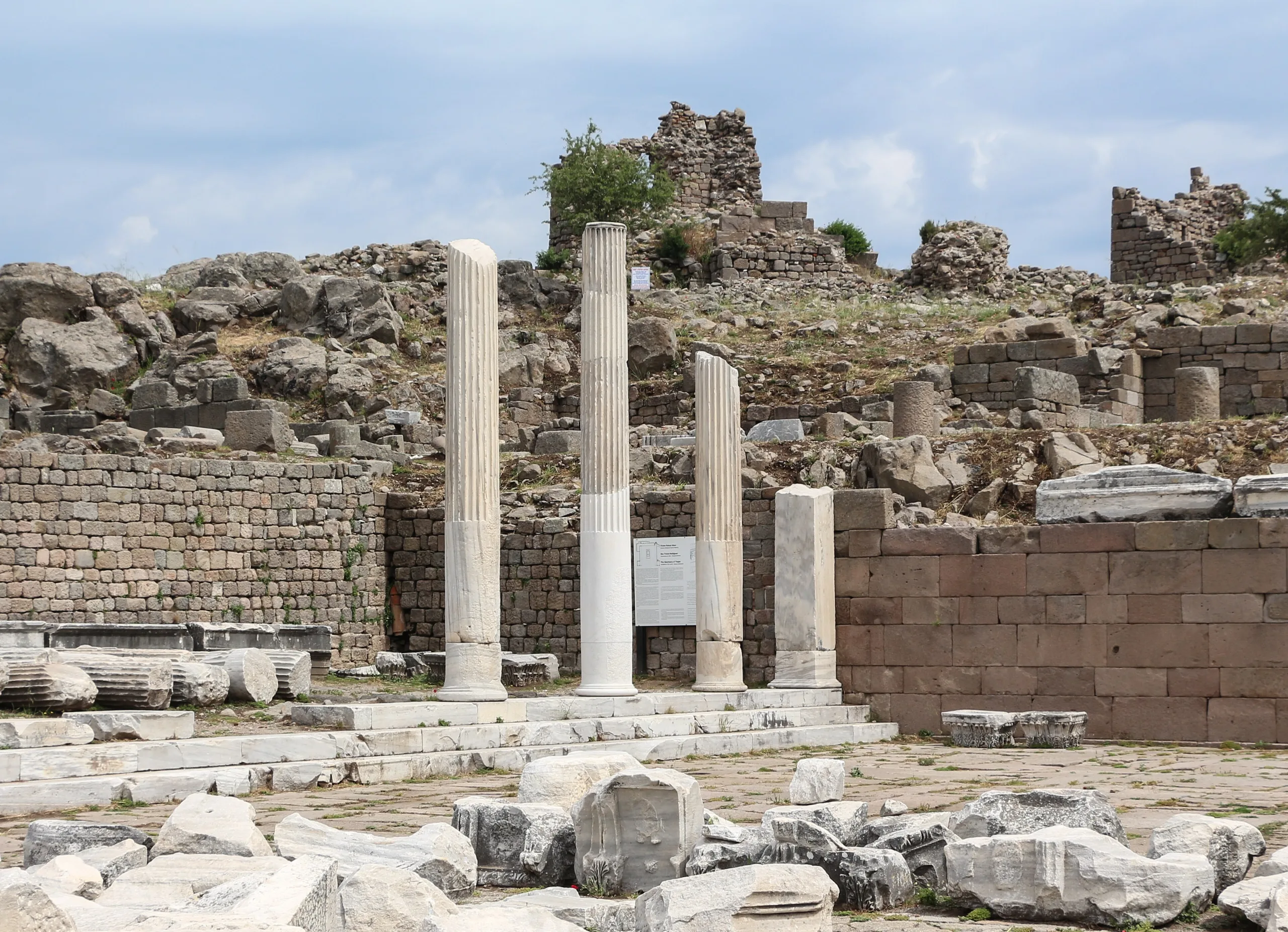
The city divides into an upper and a lower town. The upper town held royal palaces with peristyle plans (courtyards ringed by columns) and rich decoration, the Doric Temple of Athena, and the Temple of Trajan with its colossal statues of Trajan and Hadrian. The famous Gaulish sculptures created by the Pergamene school of sculptors are associated with the Athena temple precinct. The Trajan Temple has had major restoration since 1979, and a German team partly re-erected it between 1976 and 1996.
The library
With 200,000 volumes, the library counted as the most important of the ancient world. Its works were written on pergamene, the parchment the people of Pergamon developed, and the shelves held both scrolls and codices, books written on both sides of the leaf. The figure is thought to date to about 41-40 BC, when Antony is said to have handed the collection to Cleopatra. UNESCO also highlights Pergamon's parchment tradition.
The Great Altar of Zeus
The most striking work in the city's building programme is the Altar of Zeus, thought to have been commissioned after Eumenes II's victories over the Galatians. Relief groups on its outer face show Zeus and Athena, Apollo, Artemis and Leto, Helios, Eos, Selene, Nyx, Eris and other deities in battle. The reliefs are now in Berlin, and the German excavation began with their recovery.
Theatre and the Temple of Dionysus
The 10,000-seat theatre clings to a steep slope and is tied architecturally to the Temple of Dionysus by a movable stage building; UNESCO calls it an extraordinarily steep theatre. The theatre, its terrace and the temple formed a public and religious complex dedicated to the dynasty's god.
Water supply and walls
Water for the hilltop came from springs on Mount Madra, tens of kilometres away. The high-pressure line dropped from 900 m and was laid with 240,000 clay pipes, one of the most striking feats of Hellenistic engineering. Under Eumenes II the city also grew beyond a wall circuit of up to 4 km.
Lower town, Asklepion and Red Basilica
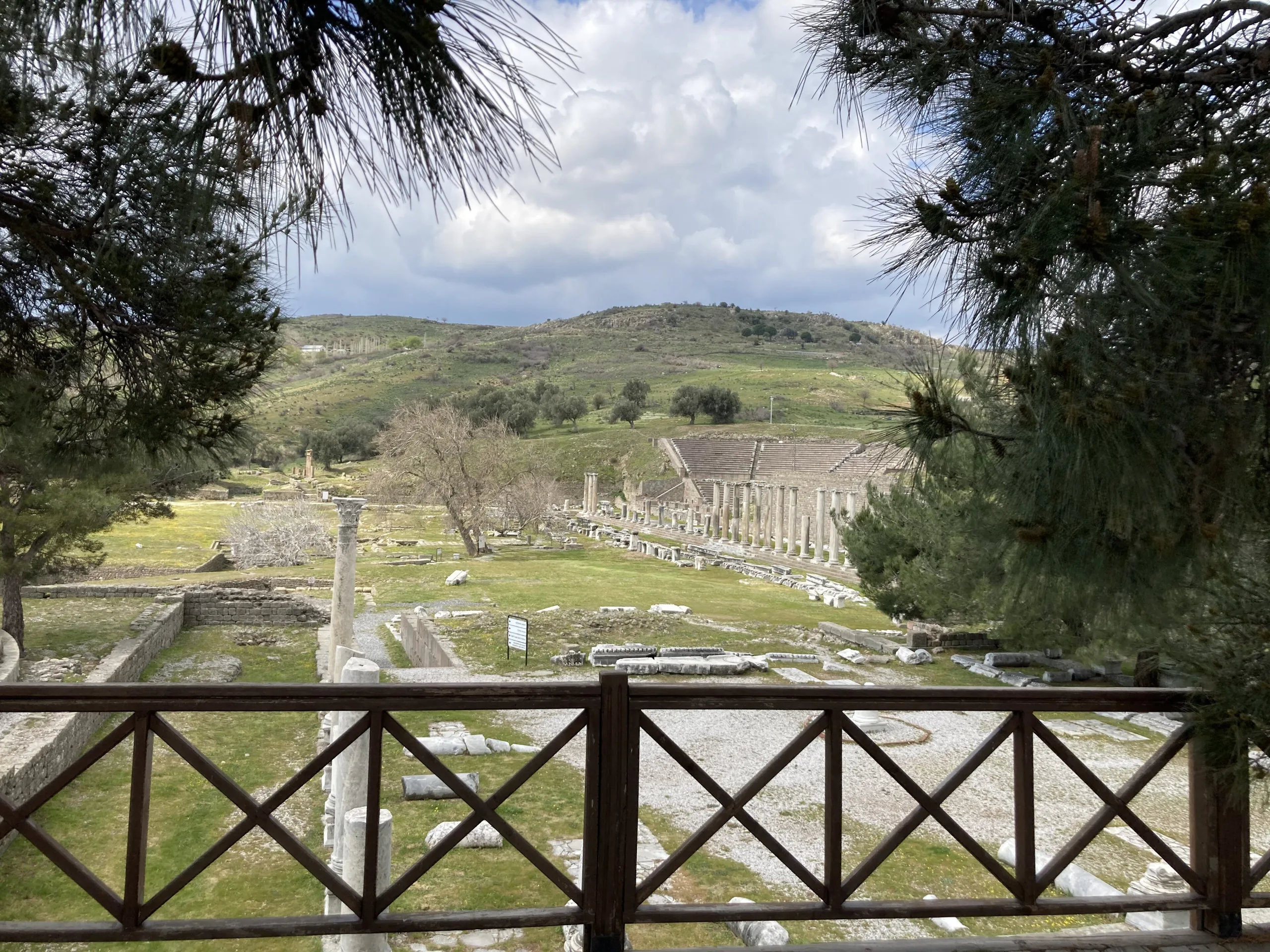
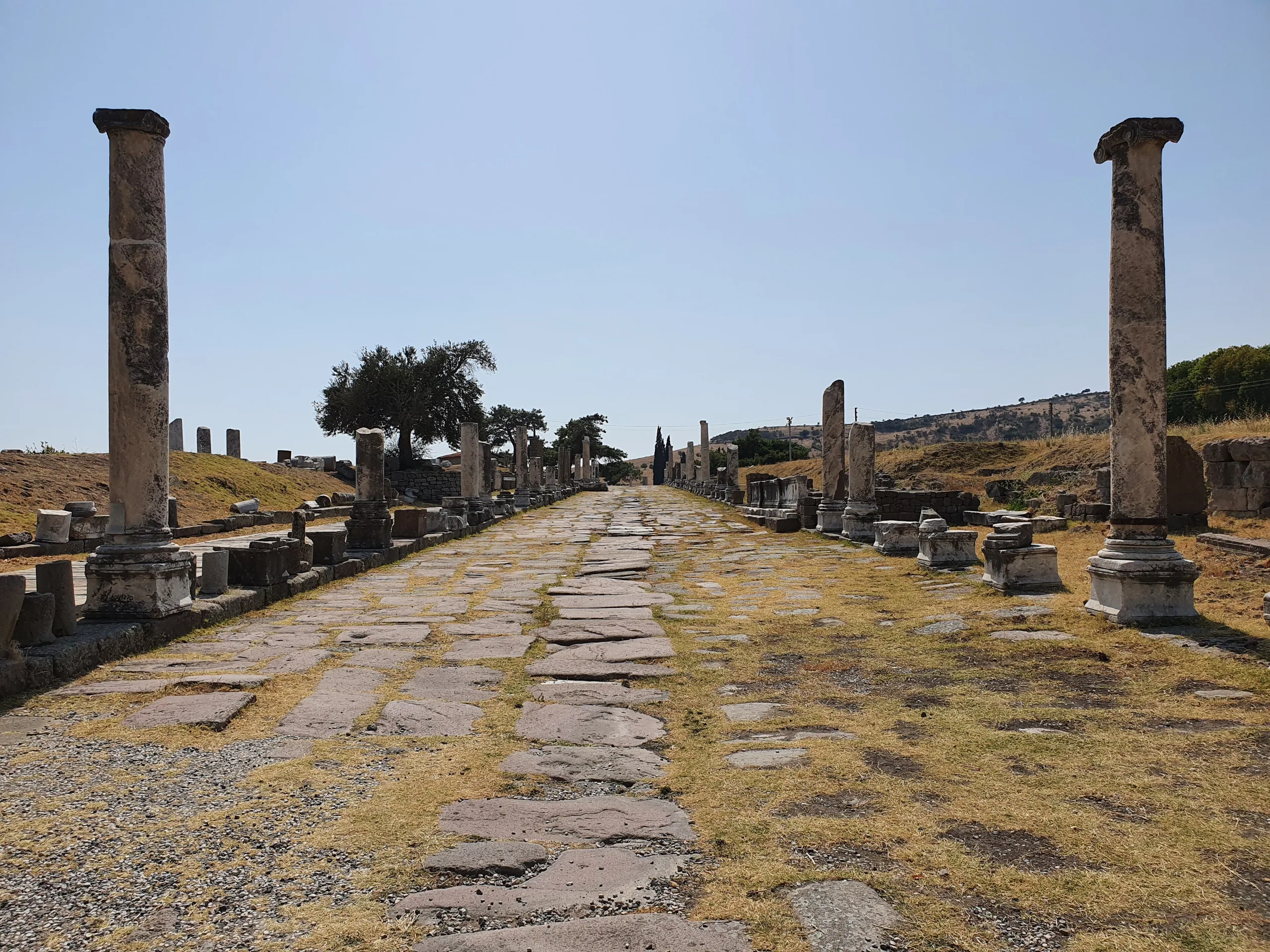
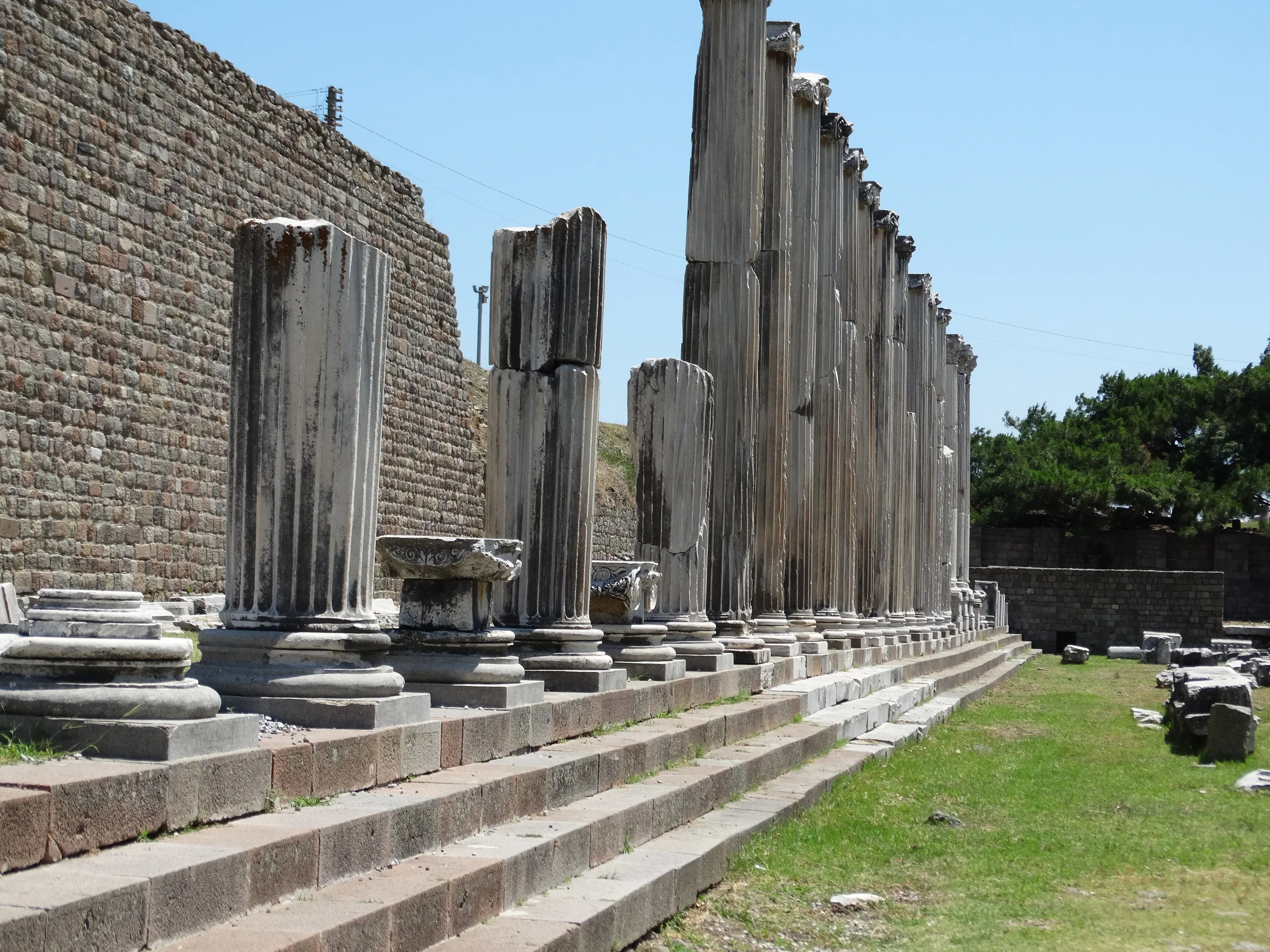
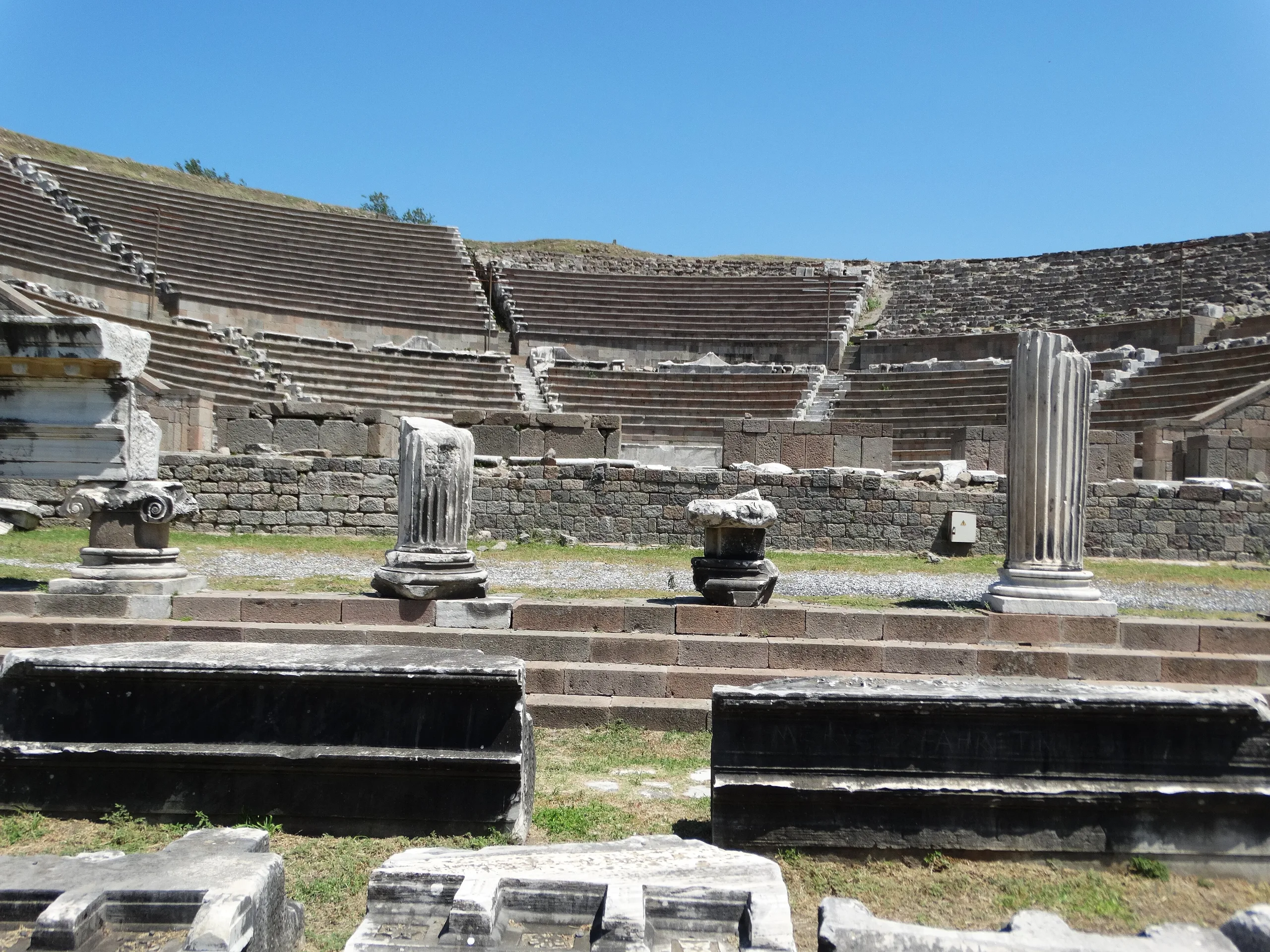
The lower town held sanctuaries of Hera and Demeter, one of the largest known Hellenistic gymnasia, the lower agora, houses and shops. The Asklepion, a healing sanctuary, flourished in the time of the physician Galen; it had its own theatre, a temple of Zeus-Asklepios, a sacred fountain and a circular treatment building, and a sacred way linked it to Kale Hill. In the 2nd century AD it was a famous destination for pilgrims seeking cures, and UNESCO notes that the sacred spring still flows.
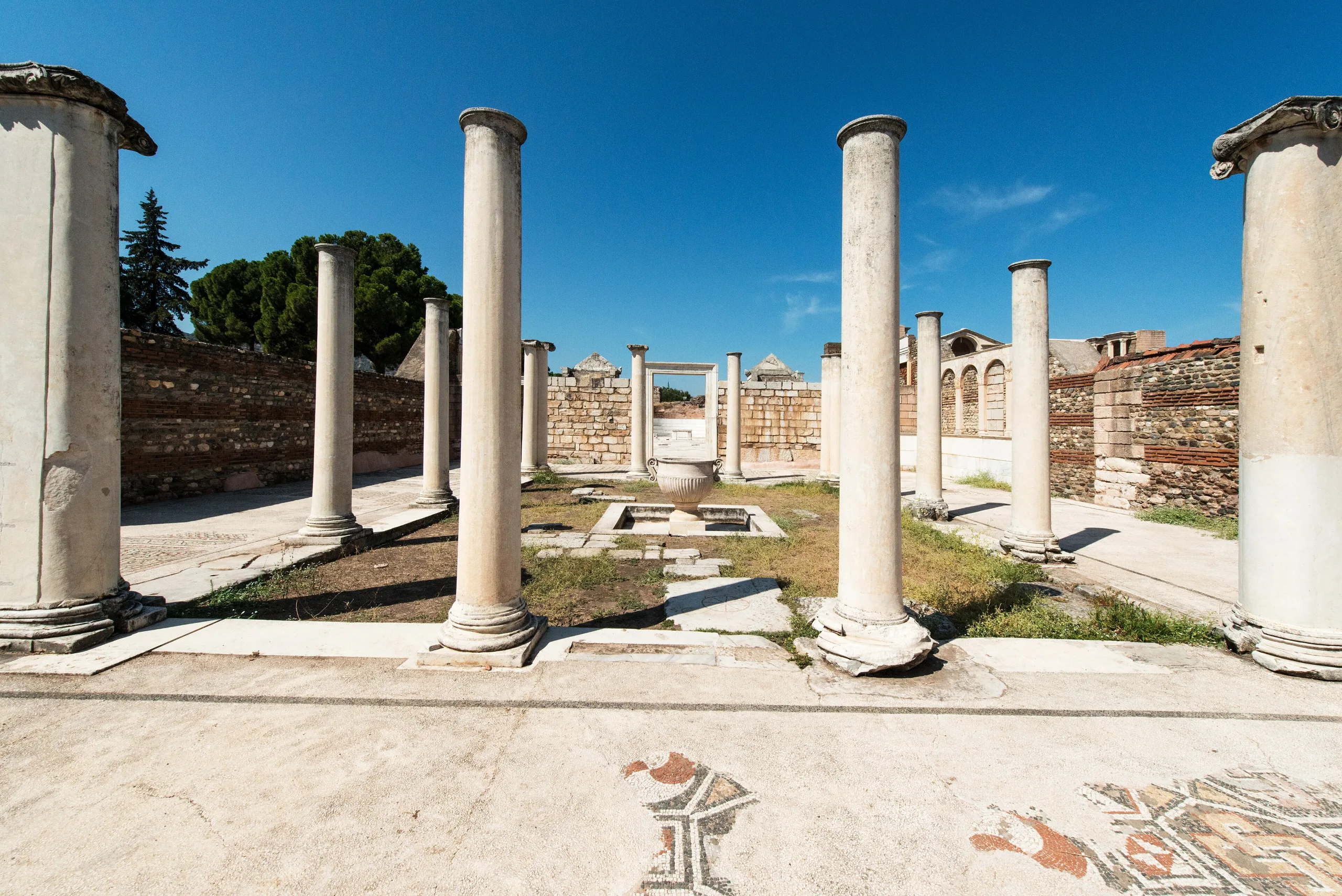
The Red Basilica was set into the Roman Serapeum, a temple built for an Egyptian deity, as the Church of St John after the 4th century. Its north rotunda later served as a synagogue and then, for about 600 years, as a mosque. Roman platforms and tunnels beneath the building are still in use.
Kybele sanctuary and the tumuli
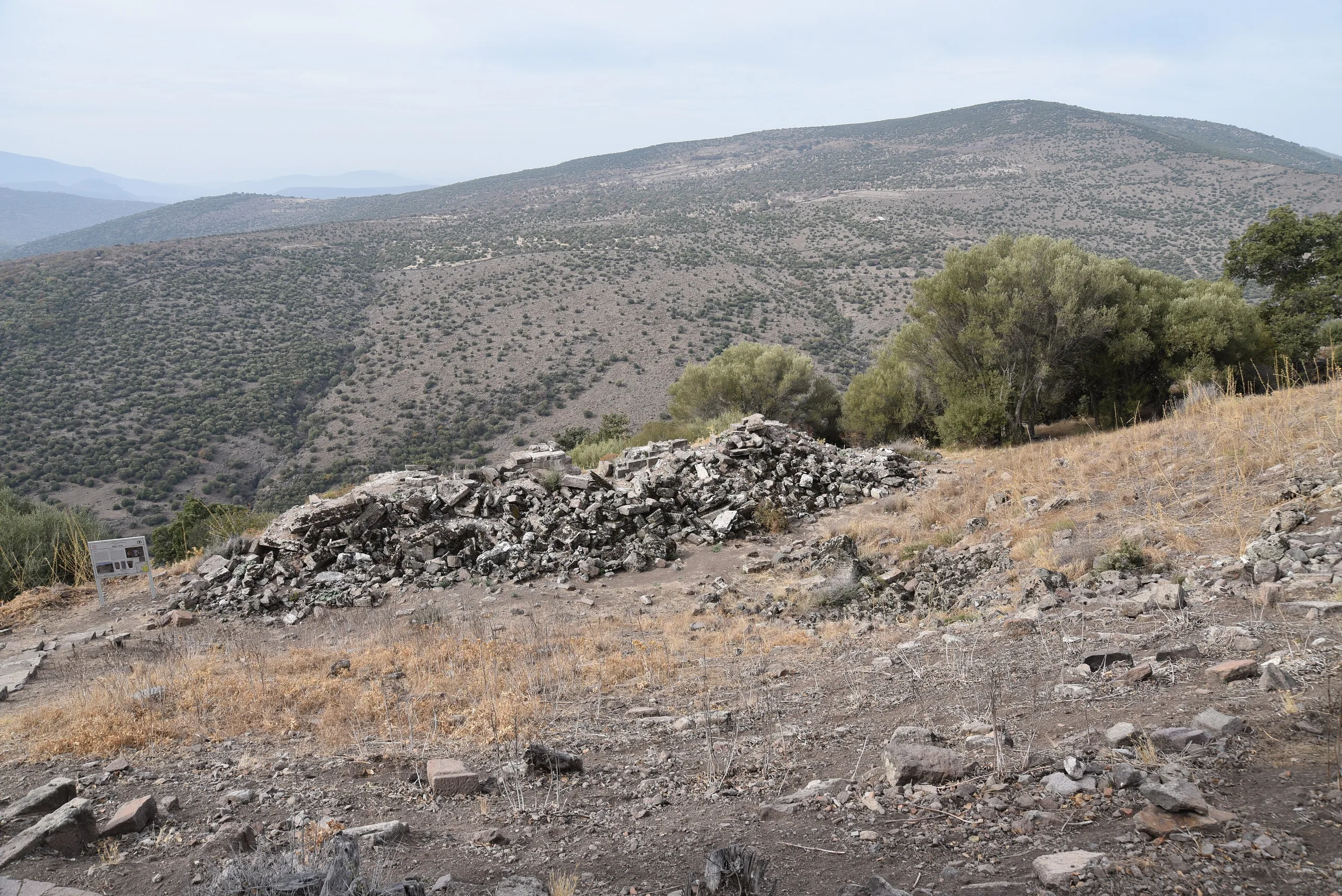
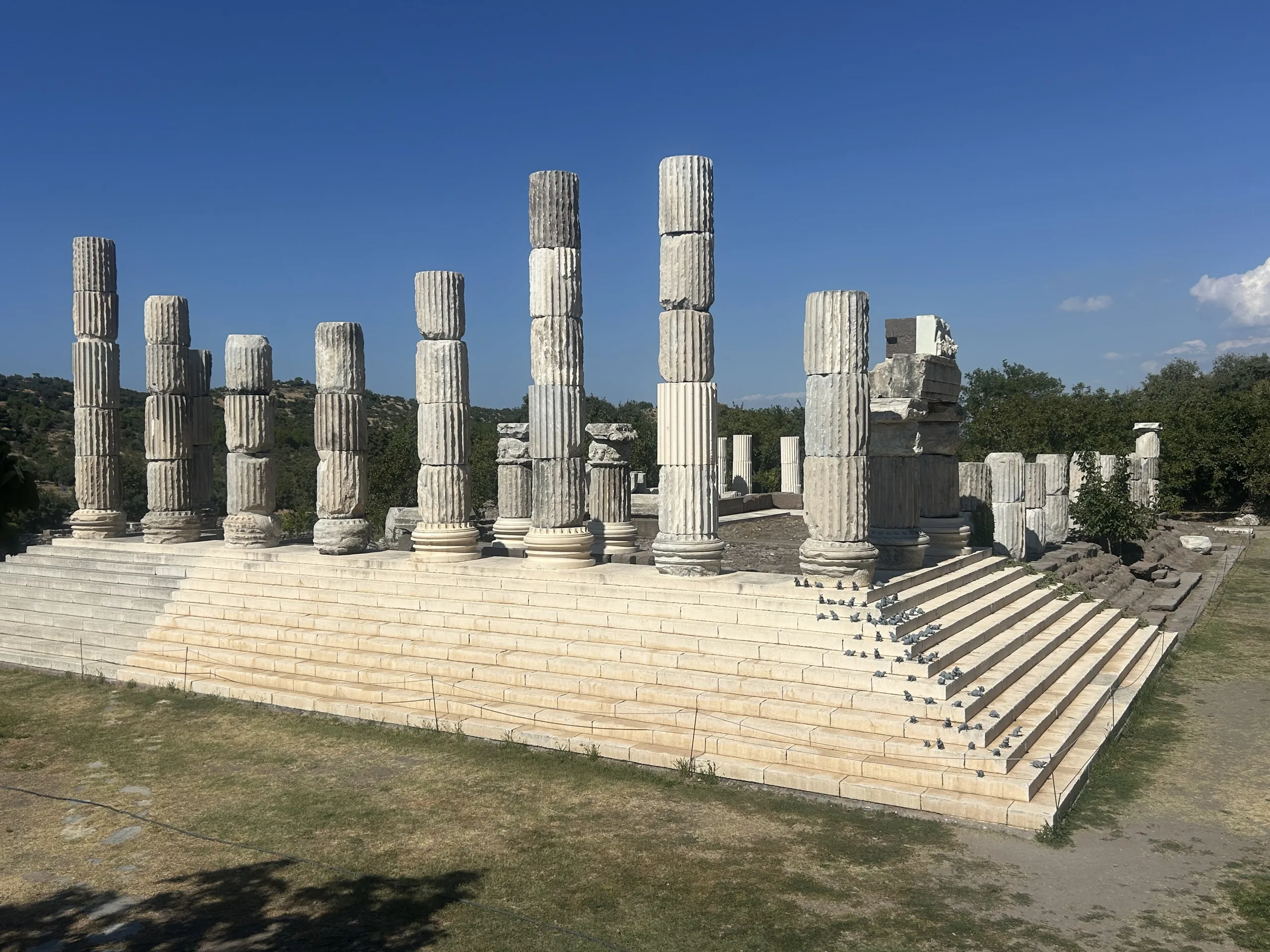
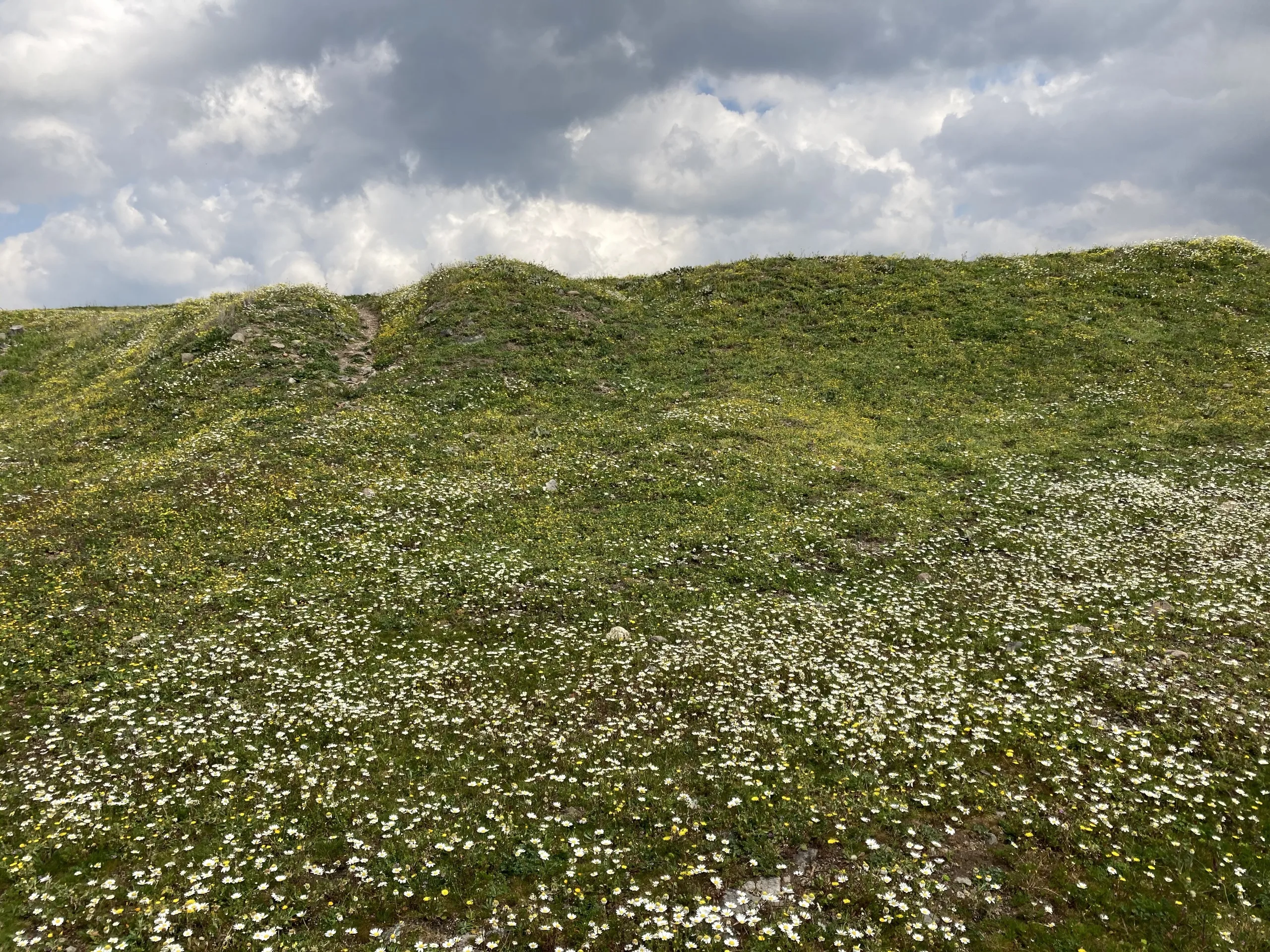
The rock-cut Kybele Sanctuary at Kapıkaya is a rural shrine, developed between 282 and 263 BC from an Archaic cave, and from it you can see the Athena Temple on Kale Hill. Other parts of the serial property include Yığma Tepe (158 m across, 35 m high), the Double Tumuli and further Attalid-period mounds. The ring of grave mounds, in place from the 3rd century BC, reads as a claim to rule over the Bakırçay plain.
Excavations
Research began after the high reliefs of the Altar of Zeus turned up inside the Byzantine wall in 1865. Systematic digging started when the engineer Carl Humann began work in 1878 for the Royal Museums in Berlin; Alexander Conze directed it, and the reliefs travelled to Berlin with Ottoman permission. The Humann-Conze campaigns ran until 1886. From 1900 to 1911 Wilhelm Dörpfeld, director of the German Archaeological Institute in Athens, continued with the aim of uncovering the whole city; the south gate, lower agora, House of Attalos, gymnasium and Demeter sanctuary came to light in those years.
After a gap of several years Theodor Wiegand resumed work in 1927, concentrating on the acropolis, the Asklepion and the Red Hall. The Second World War interrupted the dig; Erich Boehringer restarted in 1957 and studied the Asklepion until 1968. Wolfgang Radt worked from 1971 to 2005 on the residential quarter, where House Z, a richly decorated Hellenistic and Roman mansion, was found. The Red Hall was reexamined in 2002-2005. Since 2005 the research programme has turned to the Hellenistic polis and its suburb and to neighbouring towns. The German Archaeological Institute's Istanbul department carries out the project. Early 20th-century digging cleared away the remains of Byzantine churches around the Athena Temple.
Myth and ancient authors
Pliny called Pergamon the most famous and respected city of Asia Minor. The continuity of the Kybele cult and the removal of its idol to Rome by an Attalid king feature in UNESCO's case for criterion (vi). The physician and philosopher Galen trained at Pergamon, and his works spread from here; Zeus, Athena, Dionysus and Asklepios stand out among the city's cult buildings.
UNESCO and protection
Pergamon was inscribed in 2014 under criteria (i), (ii), (iii), (iv) and (vi) (reference 1457). The serial property covers 332.5 ha with a 476.9 ha buffer zone, its components being Kale Hill with the town, the Kybele Sanctuary and six tumuli. UNESCO notes that the cable car intrudes on the setting of the Hellenistic and Roman ruins, that the Ottoman layout survives but has been affected by late 20th-century development, and that illegal construction and digging have harmed some components.
First-degree archaeological sites fall under Law No. 2863. The municipality drew up an urban conservation plan in 2012, and a World Heritage Management Office was set up by late 2011.
Visiting
The acropolis, Asklepion and Red Basilica lie in separate parts of town. Hours and prices change, so check the official Bergama page for current information.
Gallery
Frequently asked questions
Where is Pergamon?
Who founded Pergamon?
When did Pergamon become a World Heritage Site?
Why are the Great Altar's reliefs in Berlin, not Bergama?
How big was the Pergamon library?
Why is the Asklepion famous, and what is the Red Basilica?
Sources (14)
- Bergama (Pergamon) Örenyeri / Pergamon (Bergama) Archaeological Site (TR ve EN sayfaları) — T.C. Kültür ve Turizm Bakanlığı, Müzeler ve Ören Yerleri
- Pergamon and its Multi-Layered Cultural Landscape — UNESCO World Heritage List 1457 — UNESCO World Heritage Centre
- ICOMOS Advisory Body Evaluation — Pergamon (1457) — ICOMOS
- Nomination file — Pergamon and its Multi-Layered Cultural Landscape (1457) — T.C. Devlet Taraf (aday dosyası), UNESCO WHC
- Pergamon (Pleiades place 550812) — Pleiades
Photo credits
- Photo: Giorgio Galeotti, CC BY-SA 4.0 — Wikimedia Commons (resized)
- Photo: Bernard Gagnon, CC BY-SA 3.0 — Wikimedia Commons (resized)
- Photo: Giorgio Galeotti, CC BY-SA 4.0 — Wikimedia Commons (resized)
- Photo: Ayratayrat, CC BY-SA 4.0 — Wikimedia Commons (resized)
- Photo: Antoloji, CC BY-SA 4.0 — Wikimedia Commons (resized)
- Photo: lienyuan lee, CC BY 3.0 — Wikimedia Commons (resized)
- Photo: Ayratayrat, CC BY-SA 4.0 — Wikimedia Commons (resized)
- Photo: Leon petrosyan, CC BY-SA 4.0 — Wikimedia Commons (resized)
- Photo: Leon petrosyan, CC BY-SA 4.0 — Wikimedia Commons (resized)