A city on an extinct volcano at Behramkale where Aristotle lived for three years: Anatolia's only Archaic Doric temple, city walls, agora, theatre and a sarcophagus necropolis.
Assos is an ancient city located in Turkey, Canakkale. Main periods: Archaic Period, Classical Period, Hellenistic Period, Roman Period, Byzantine Period, Ottoman Period, Bronze Age.
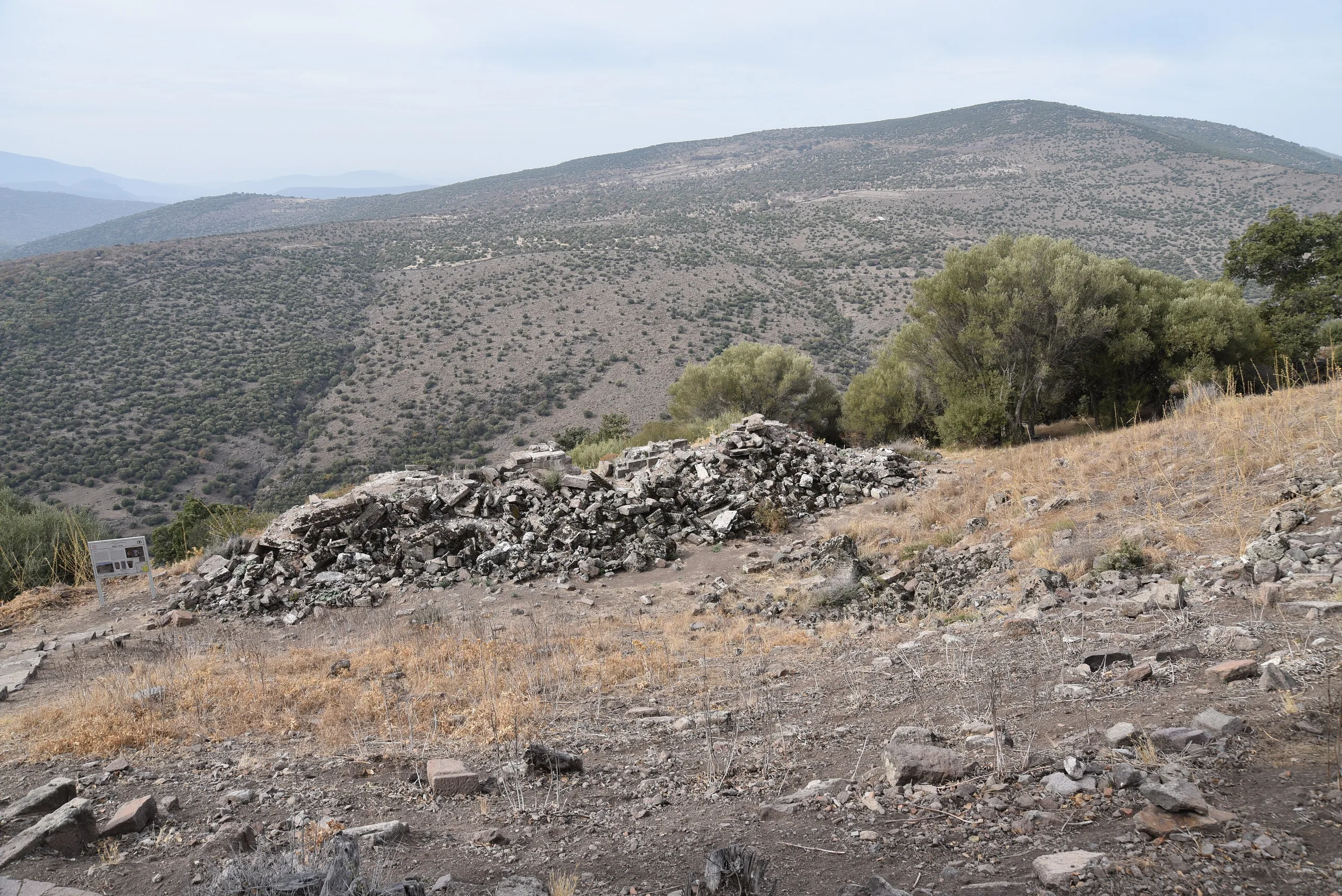
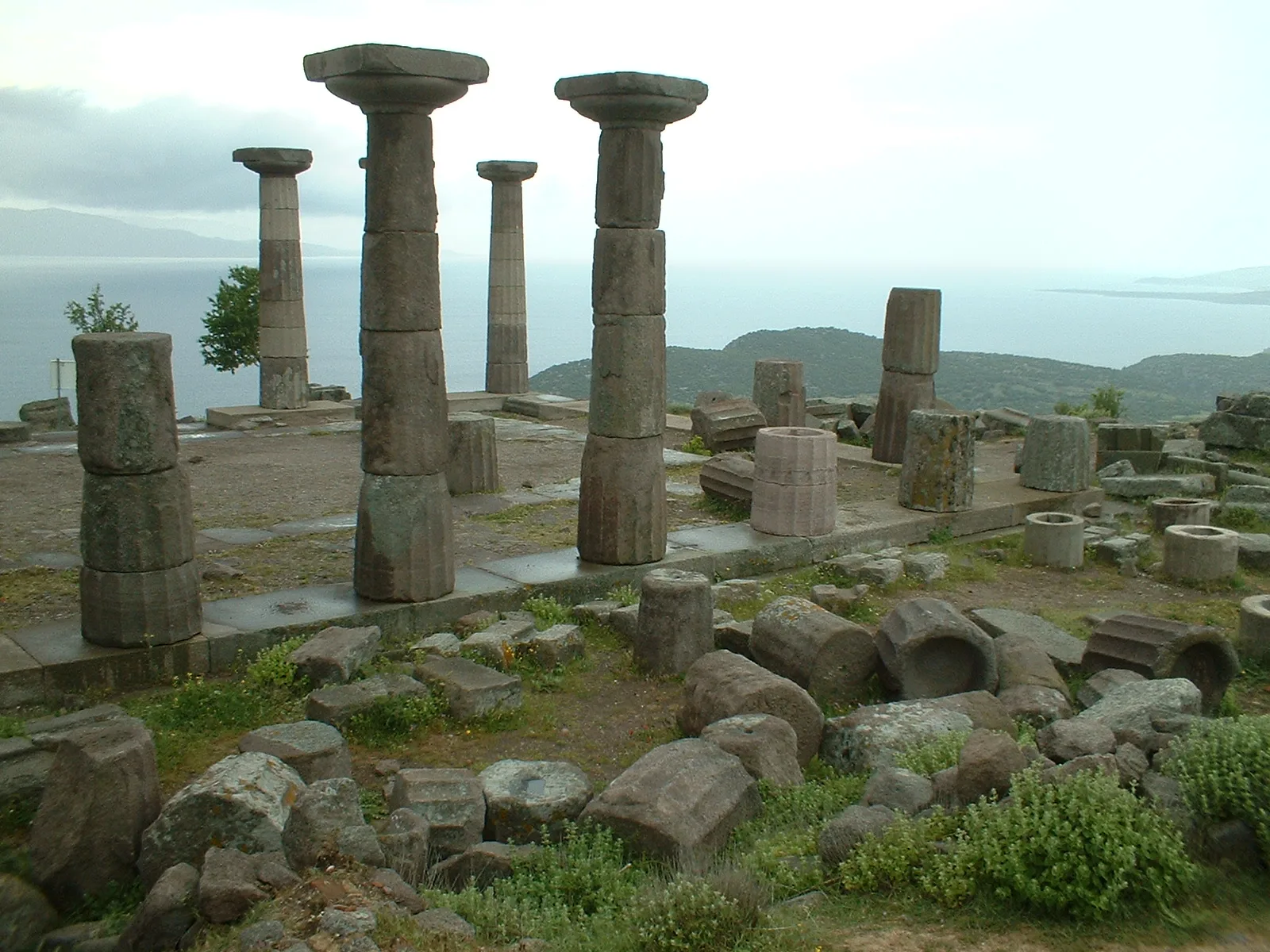
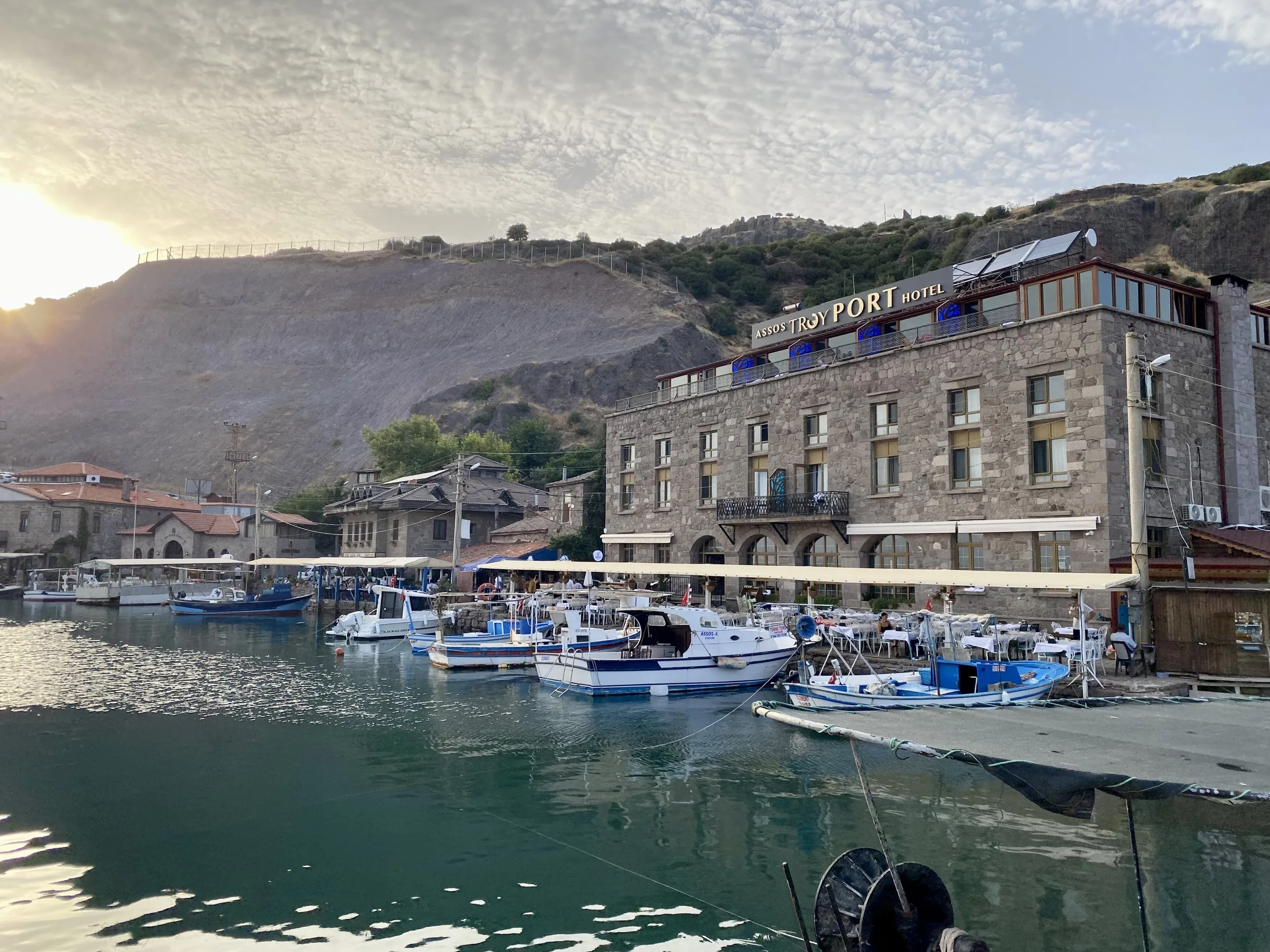
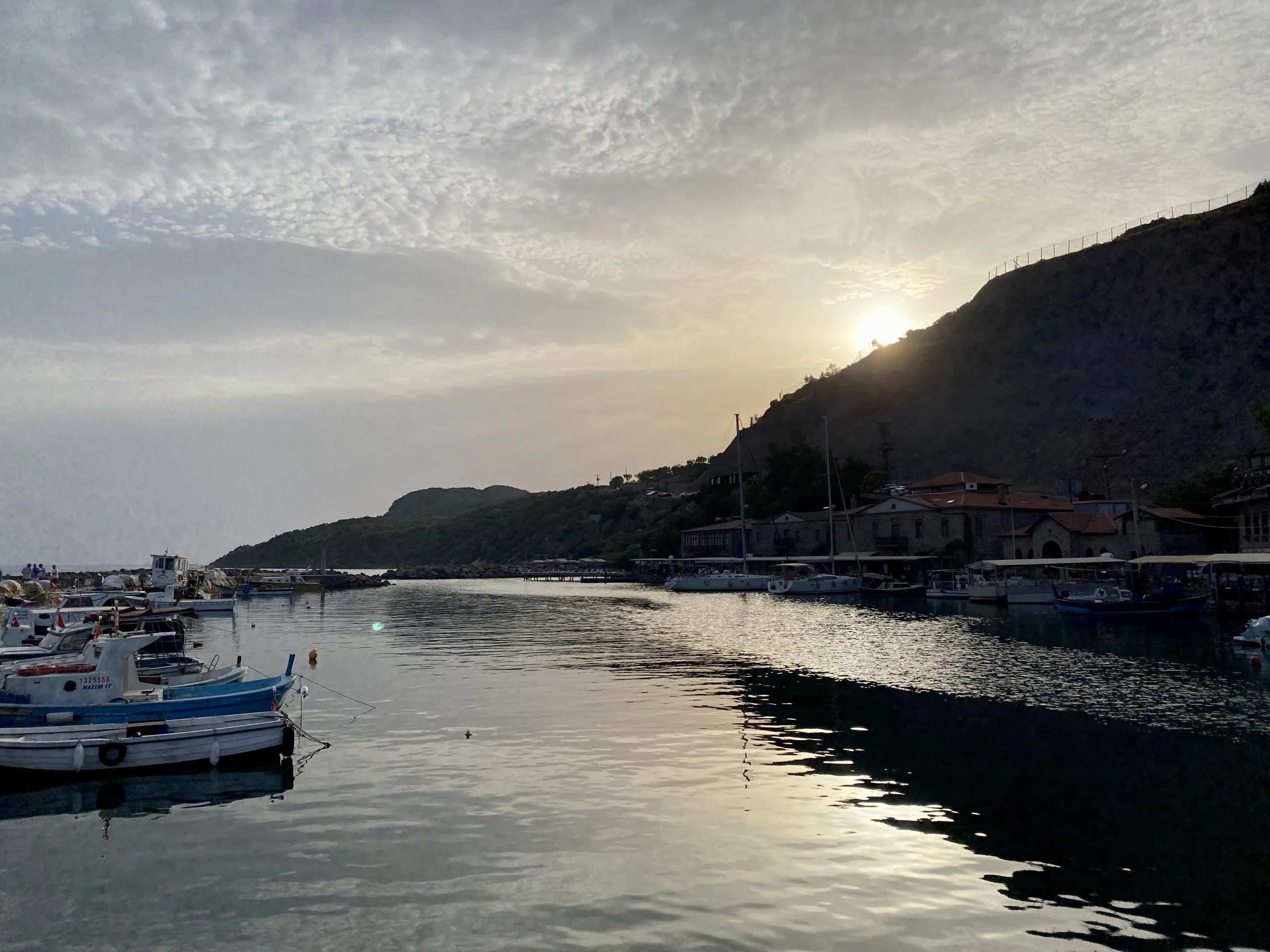
On the summit of the andesite hill at Behramkale a Doric temple stands, visible from far out on the strait to Lesbos. Assos lies in the Ayvacık district of Çanakkale, at the south-western tip of the Biga Peninsula (the Troad), and its buildings climb the top and slopes of an extinct volcano above the Gulf of Edremit. Andesite is hard to work but extremely durable, which goes a long way towards explaining why so much of the city survives. The Temple of Athena crowns the highest point.
Setting
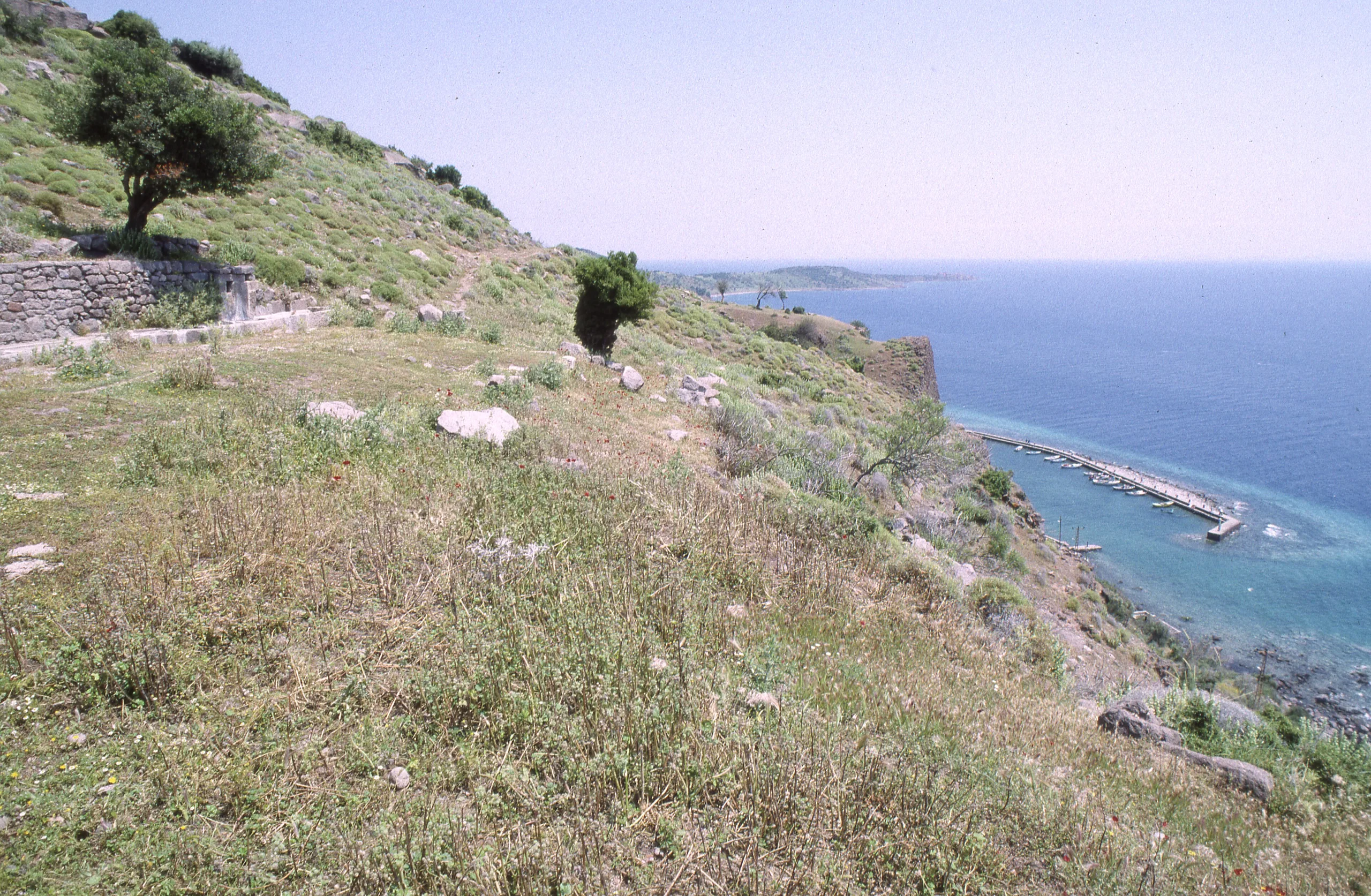
The site occupies a hill about 17 km south of Ayvacık and roughly 235 m above sea level. From the top you look north over the Tuzla river valley and south across the Mytilene strait to Lesbos. The address is Behramkale village. For opening hours and fees see the official museum page; the Müzekart is valid for Turkish citizens.
History of the city
The foundation is usually credited to settlers from Methymna on Lesbos around the 7th century BC. Newer research nonetheless shows the hill in use since the Bronze Age, and Assuwa of the Hittite texts and Pedasos of the Iliad are both identified with Assos.
In the 6th century BC Assos came under Lydia and, when Cyrus overthrew that kingdom, joined the Persian Empire. It was a member of the Athenian alliance in the 5th century BC and seems to have returned to Persian control early in the 4th. That century was the city's golden age. In 365 BC, under the banker Eubulus, Assos withstood a joint siege by the Persian commander Autophradates and Mausolus, satrap of Caria. About 350 BC Eubulus's former slave Hermias, a student of Plato's Academy, took over the government.
Hermias summoned old friends from the Academy, among them Aristotle, Xenocrates, Callisthenes and Theophrastus, and had them found a philosophical school. When Plato died in 347 BC, Aristotle came to Assos and stayed three years. He married Hermias's niece Pythias, studied animals and living things here, and probably began the Politics in this town. Assos fell to Persia again in 345 BC and was freed by Alexander the Great's victory in 334 BC. Seleucid rule followed, then the Pergamene kingdom, and in 133 BC the city passed to Rome.
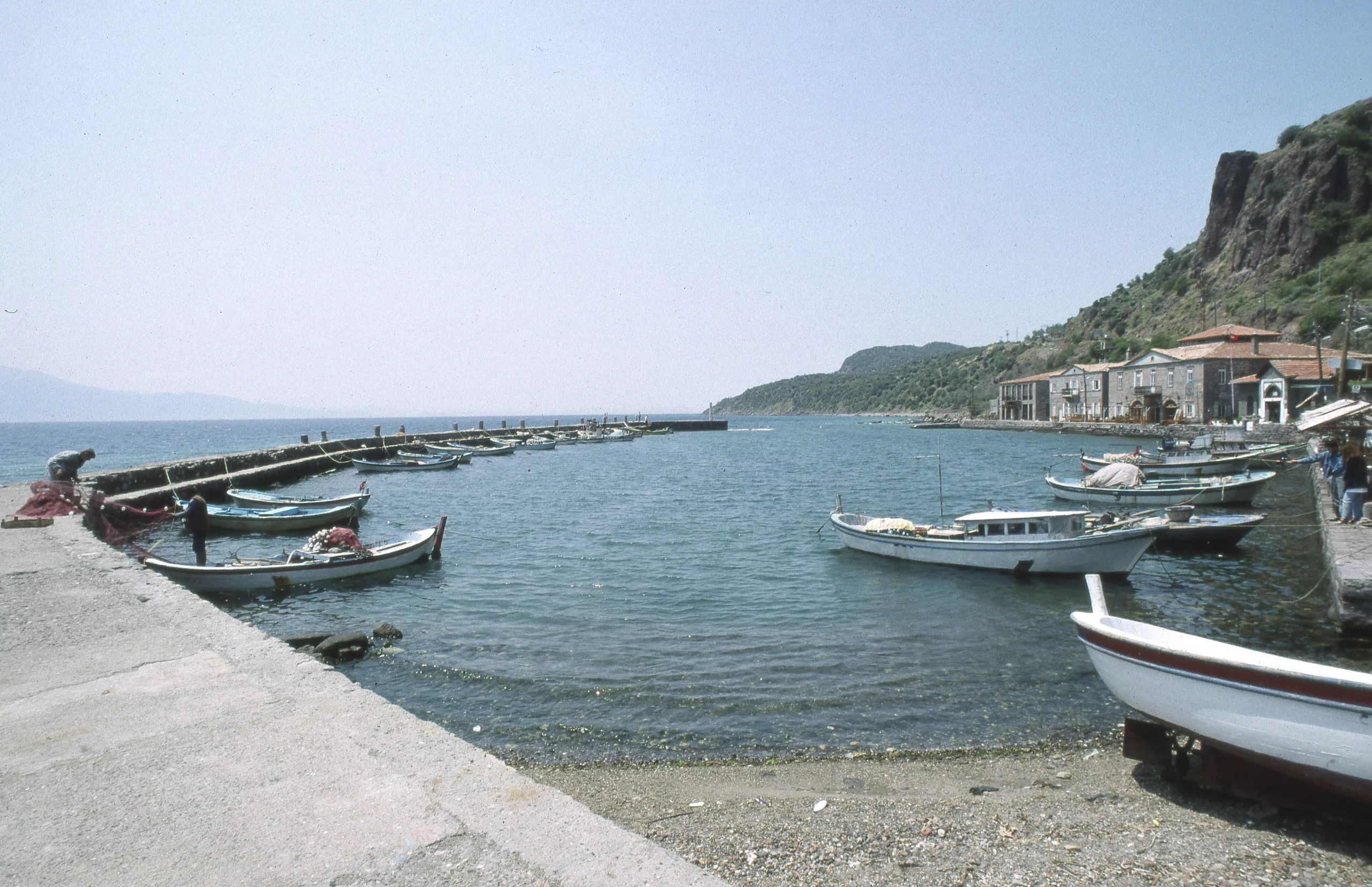
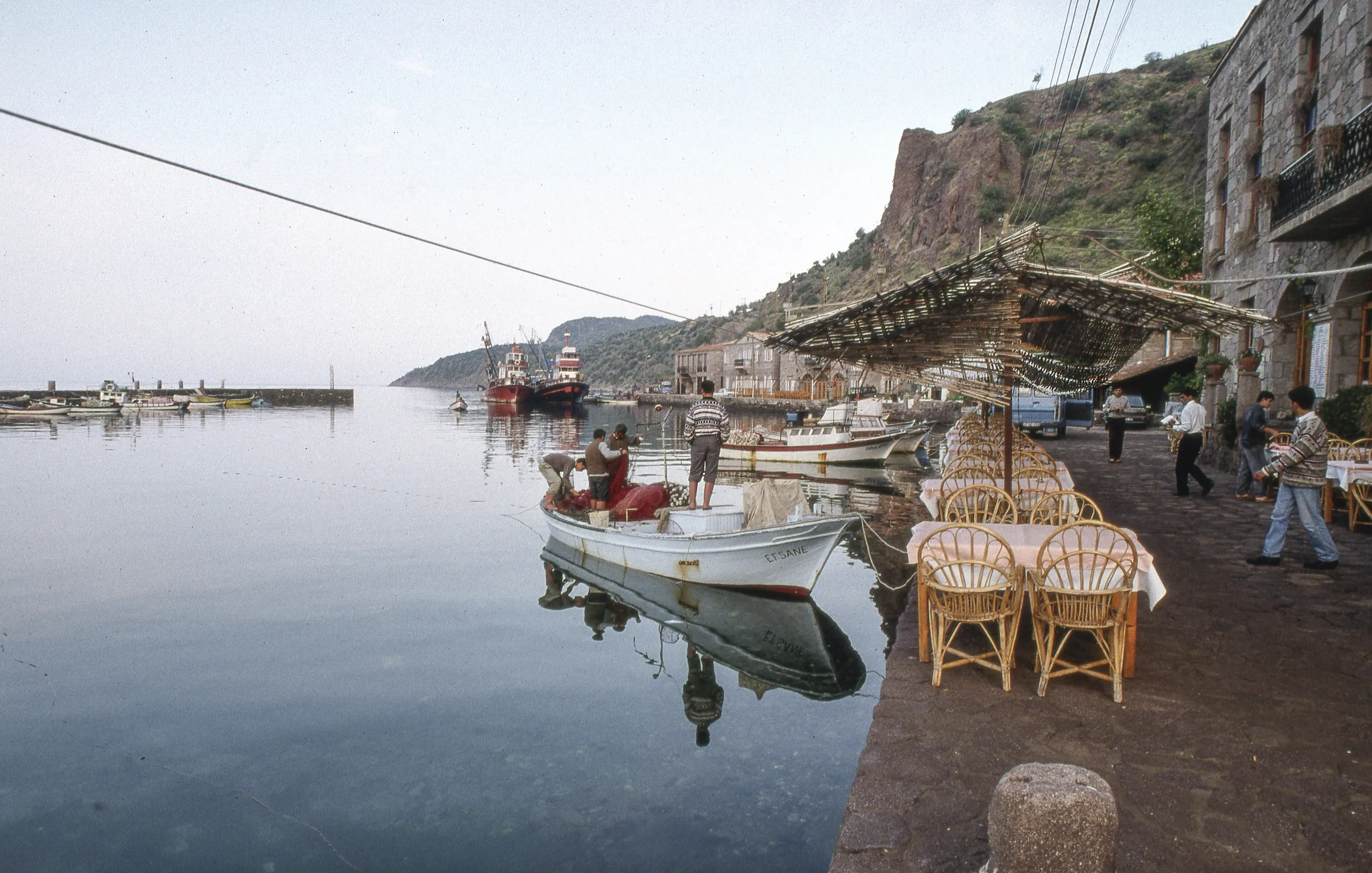
The apostle Paul visited in AD 56-57. Assos was among the earliest Christianised cities of western Anatolia and shows up in bishops' lists between the 5th and 14th centuries. In Byzantine times it bore the name Machram, from which Behram is thought to come. The Turks took it in the early 14th century, and the harbour went on working until the 18th.
Main structures
Temple of Athena
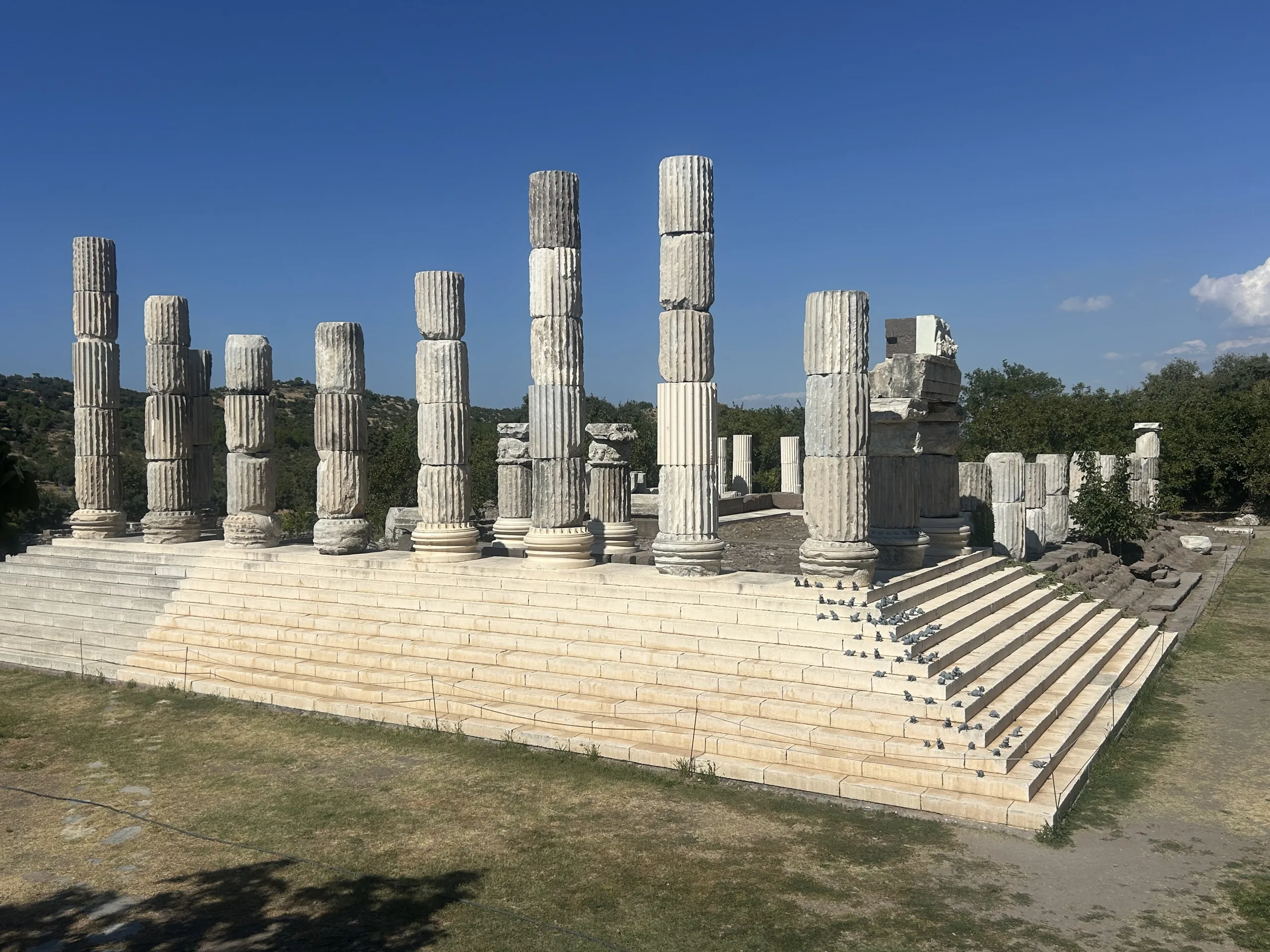
The temple at the east end of the acropolis honours Athena, the city's protector, and dates from about 540-530 BC. Its plan is peripteral, meaning a row of columns runs all the way round; here there are 6 by 13. Builders used andesite blocks cut from the acropolis rock itself. It is the only known Doric temple of Archaic Anatolia, and it mixes the Doric order with an Ionic-style frieze and unusual decoration. The epistyle (the horizontal beam carried by the columns) and the metopes bear reliefs of sphinxes, lions, boars and centaurs, including Heracles fighting the centaurs. Parts of this sculpture are now in museums in Paris, Boston, Istanbul and Çanakkale.
City walls
The wall around the lower terraces is 3,100 m long, stands up to 12 m high and is strengthened by 8 towers. It was built between the 6th and 3rd centuries BC, and the main gates open onto roads from the east and the west.
Agora, bouleuterion and gymnasium
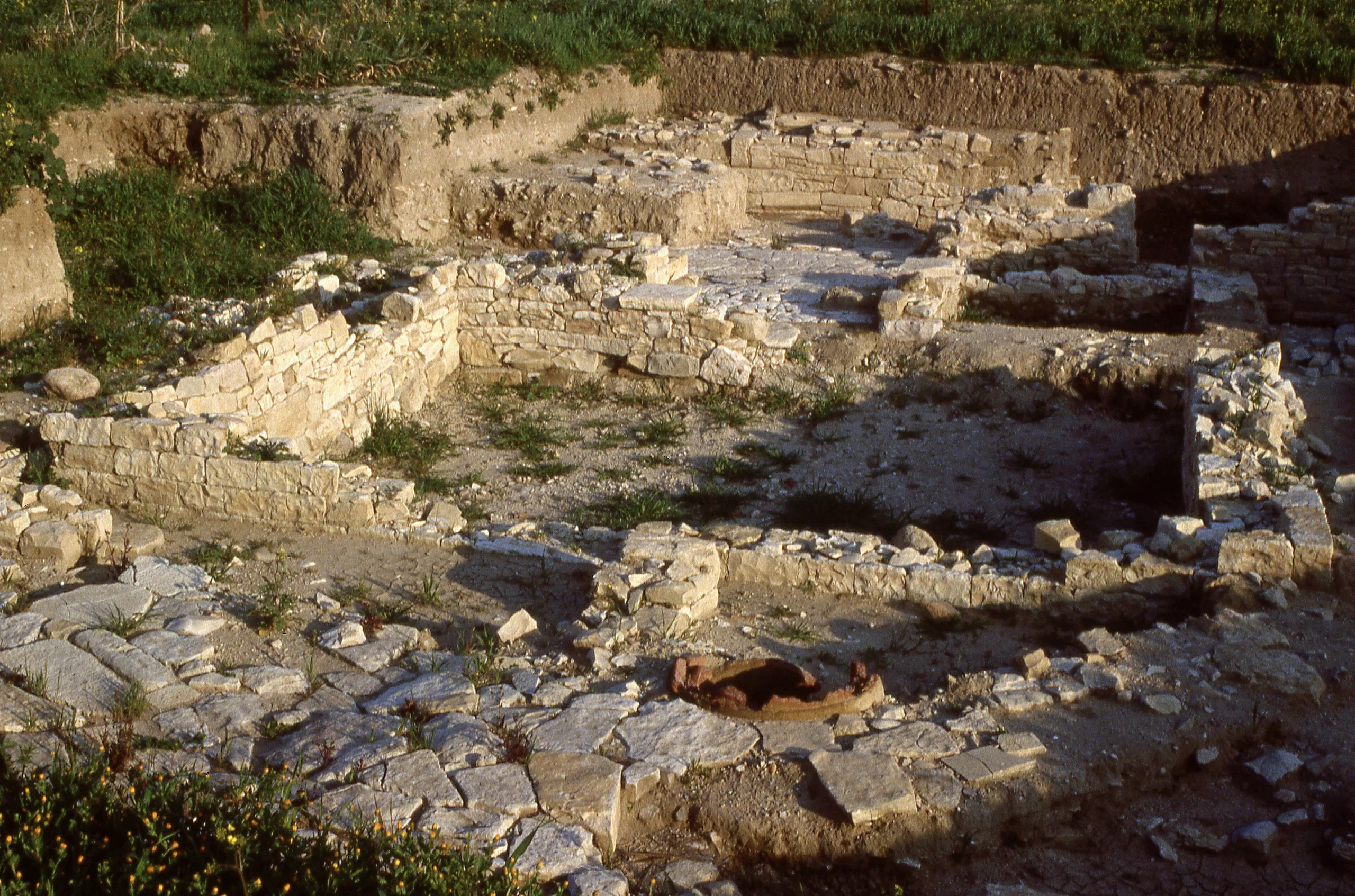
The heart of the city was laid out to a deliberate plan in the early Hellenistic period. Level ground for the agora was won by cutting back conglomerate rock on the north side and raising a very tall retaining wall on the south. A two-storey stoa (a colonnaded gallery) flanks the north and a four-storey one the south, whose lower floors served as cisterns and storage. A square bouleuterion, the council house, founded at the end of the 4th century BC, closes the agora, and a large gymnasium occupies the same terrace towards the west gate. In early Byzantine times a Christian community used the northern portico to build a church with a mosaic floor.
Theatre
The theatre faces the Aegean from a slope south of the agora, its seating carved in steps from the conglomerate rock. It dates to the late 4th century BC and follows the horseshoe plan of a classic Greek theatre.
Necropolis and sarcophagi
The roads to the east and west gates were lined with graves, the earliest from the middle of the 7th century BC. The western necropolis has monumental tombs, sarcophagi and family tombs enclosed by temenos walls. Through the Hellenistic and Roman eras the town was known for sarcophagi exported around the Mediterranean, nicknamed man-eating coffins; Pliny the Elder claimed that a corpse inside vanished within forty days, teeth apart.
Excavations
C. Texier briefly surveyed the site in 1835. The first full-scale dig was carried out by the Archaeological Institute of America in 1881-1883 under J. T. Clarke, with F. H. Bacon and R. Koldewey, and the results were published in 1921. The team focused on architecture and big public buildings and also explored the western necropolis.
After roughly a century Turkish fieldwork resumed in 1981 under Ümit Serdaroğlu of Istanbul University. It centred on the western necropolis, with test pits around the Athena temple and in the housing terraces of the southern slope, plus restoration at the temple. Since 2006 Nurettin Arslan and a team from Çanakkale Onsekiz Mart University have kept the project going.
Protection and UNESCO status
Assos was entered on UNESCO's Tentative List in 2017 under criteria iii, iv and vi. That means it is a candidate that may be put forward for the World Heritage List, but it is not yet inscribed. The site has been a first-degree archaeological site since 1982, Behramkale village is a protected Historical Urban Site, and a conservation plan is still being prepared. Because nothing was built over the ancient city in Ottoman or later times, its authenticity has been largely preserved.
Visiting
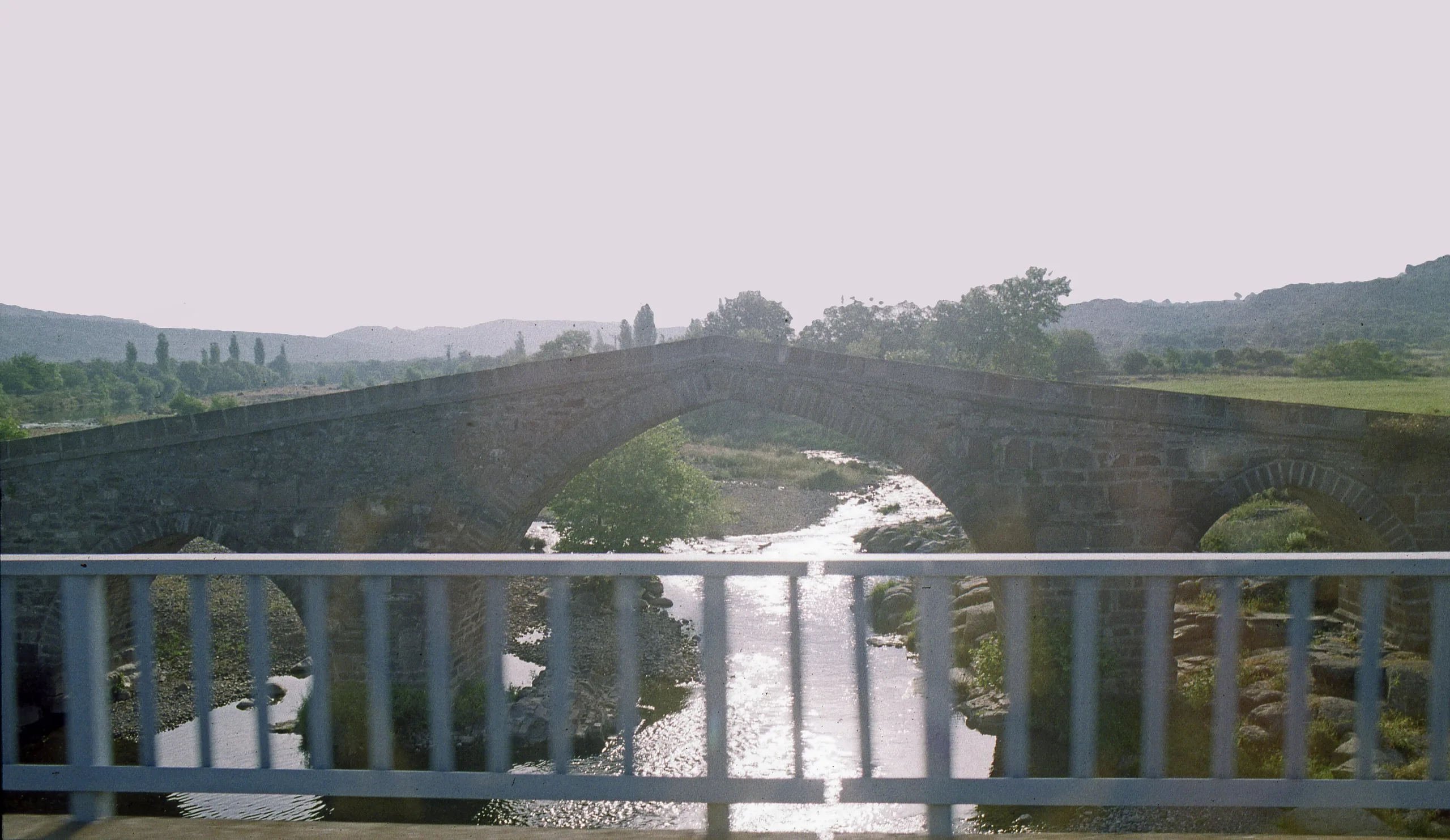
Visitors can walk among the Athena temple, agora, bouleuterion, theatre, necropolis and walls. In the village stand the Murat Hüdavendigâr Mosque and the Ottoman bridge over the Tuzla river. For current hours and prices see the official museum page.
Gallery
Frequently asked questions
Where is Assos?
When was Assos founded?
What did Aristotle do at Assos?
Why is the Temple of Athena special?
What can be seen at the site?
Is Assos a World Heritage Site?
Sources (13)
- Assos Örenyeri / Assos Archaeological Site (TR ve EN sayfaları) — T.C. Kültür ve Turizm Bakanlığı, Müzeler ve Ören Yerleri
- Archaeological Site of Assos — UNESCO World Heritage Tentative List 6242 — UNESCO World Heritage Centre (Türkiye Daimi Delegasyonu başvurusu)
- Çanakkale Assos Archaeological Site — T.C. Kültür ve Turizm Bakanlığı, Turkish Museums portalı
- Assos/Apollonia (Pleiades place 550463) — Pleiades
Photo credits
- Photo: Dosseman, CC BY-SA 4.0 — Wikimedia Commons (resized)
- Photo: Gregorof at English Wikipedia, CC BY-SA 2.5 — Wikimedia Commons (resized)
- Photo: Kadı Kadı, CC BY-SA 2.0 — Wikimedia Commons (resized)
- Photo: Kadı Kadı, CC BY-SA 2.0 — Wikimedia Commons (resized)
- Photo: Dosseman, CC BY-SA 4.0 — Wikimedia Commons (resized)
- Photo: Dosseman, CC BY-SA 4.0 — Wikimedia Commons (resized)
- Photo: Dosseman, CC BY-SA 4.0 — Wikimedia Commons (resized)
- Photo: Dosseman, CC BY-SA 4.0 — Wikimedia Commons (resized)
- Photo: Dosseman, CC BY-SA 4.0 — Wikimedia Commons (resized)