Tlos is a Lycian city at the foot of the Akdağlar in Seydikemer, known for the Bellerophon tomb, theatre, stadium and acropolis, on UNESCO's Tentative List since 2009.
Tlos is an ancient city located in Turkey, Mugla. Main periods: Classical Period, Roman Period, Byzantine Period, Ottoman Period, Neolithic Period, Iron Age.
Tlos is a Lycian city in the Yakaköy area of Seydikemer district, Muğla, roughly 40 km east of Fethiye. According to the English page of the ministry, it was built on a plain at the south-western foot of the Akdağlar range, walled in by steep cliffs on three sides, and counts among the notable Lycian settlements of the Xanthos Valley. The Culture Portal presents it as one of the oldest inhabited places in the Lycian region.
Location and access
The Culture Portal explains that visitors heading toward Saklıkent turn east at Güneşli village onto a paved road that leads to the site. The ministry page names the neighbours: Patara and Xanthos lie eastward, Kadyanda and Telmessos further west, and Pınara to the south. For current visiting terms, see the official page.
Name and early history
In the ministry account, Greek myth links the name to Tloos, one of four sons of Tremilus and Praxidice, while the name really stems from the Lycian word Tlawa. Hittite texts refer to the place as the land of Dalawa. The English ministry page says a Hittite-period settlement is backed by finds, and that data from the Tlos digs and the nearby Arsa and Girmeler caves push occupation of the area back before the Hittites. The Culture Portal says traces of continuous settlement run from the Neolithic to the Iron Age.
The ministry's Turkish page frames this a little differently. It says documents take the history of Lycian cities back to the 5th century BCE, but that an axe found by chance at Tlos belongs to the 2nd millennium BCE and suggests the city existed then under the name Talawa. The two pages differ in detail yet agree that the settlement is very old.
History
The English ministry page records that the city passed under Persian rule in 540 BCE together with other Lycian cities and reached a prosperous classical period in the 5th and 4th centuries BCE. With Alexander's arrival in 333 BCE it fell to Macedon along with the rest of Lycia. The Ptolemies held it in the early 3rd century BCE and the Seleucids briefly in 197 BCE. In 168 BCE the Lycian cities formed the Lycian League, and Tlos became one of its six largest members, with three votes.
In 43 CE Emperor Claudius made Lycia a Roman province, and Tlos kept its standing within the League. The Road Guide Monument at Patara, the Lycian capital, shows Lycian roads reaching Tlos from seven directions. In Christian times Tlos was a major bishopric of Lycia, a role the ministry says lasted into the 12th century. The Culture Portal adds that in the 18th century the city, which also bears Ottoman traces, stood at a crossing of regional trade routes. According to the ministry, a 19th-century local ruler named Kanlı Ali Aga raised a castle on the acropolis summit from ancient stone.
Notable structures
Acropolis and walls
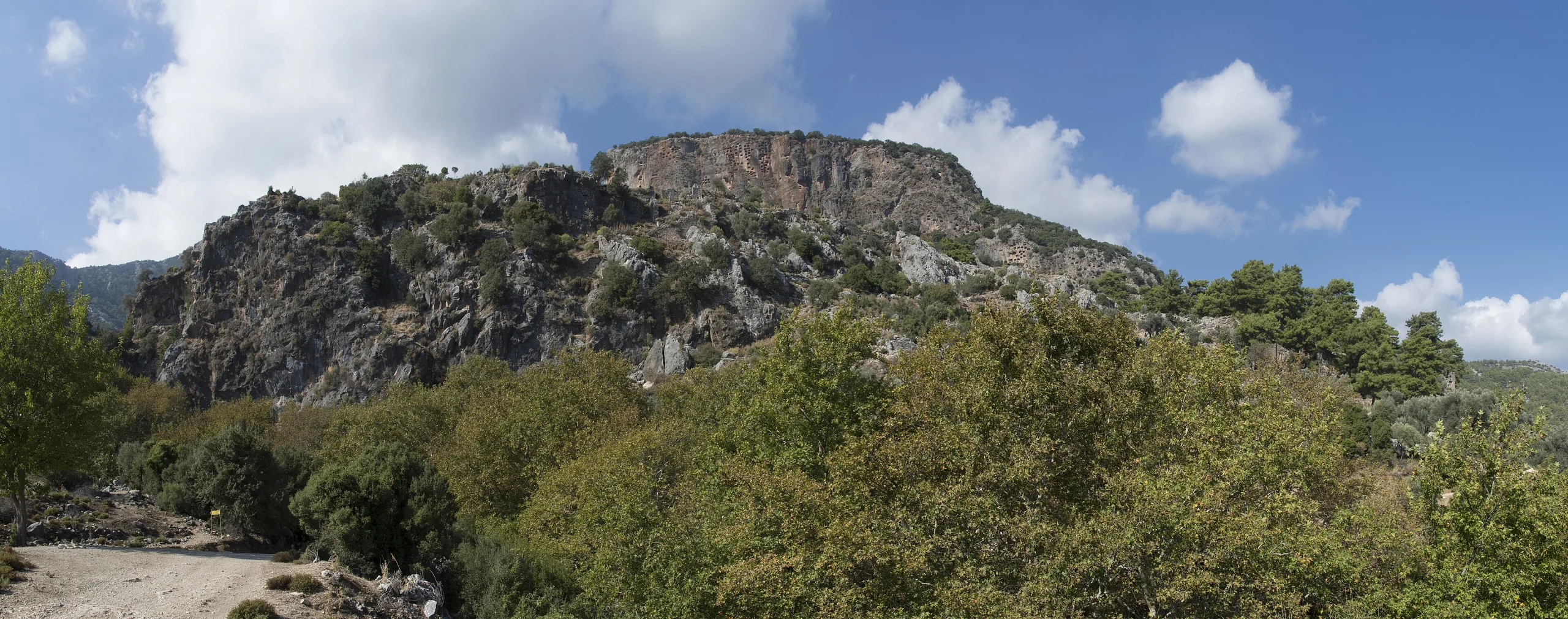
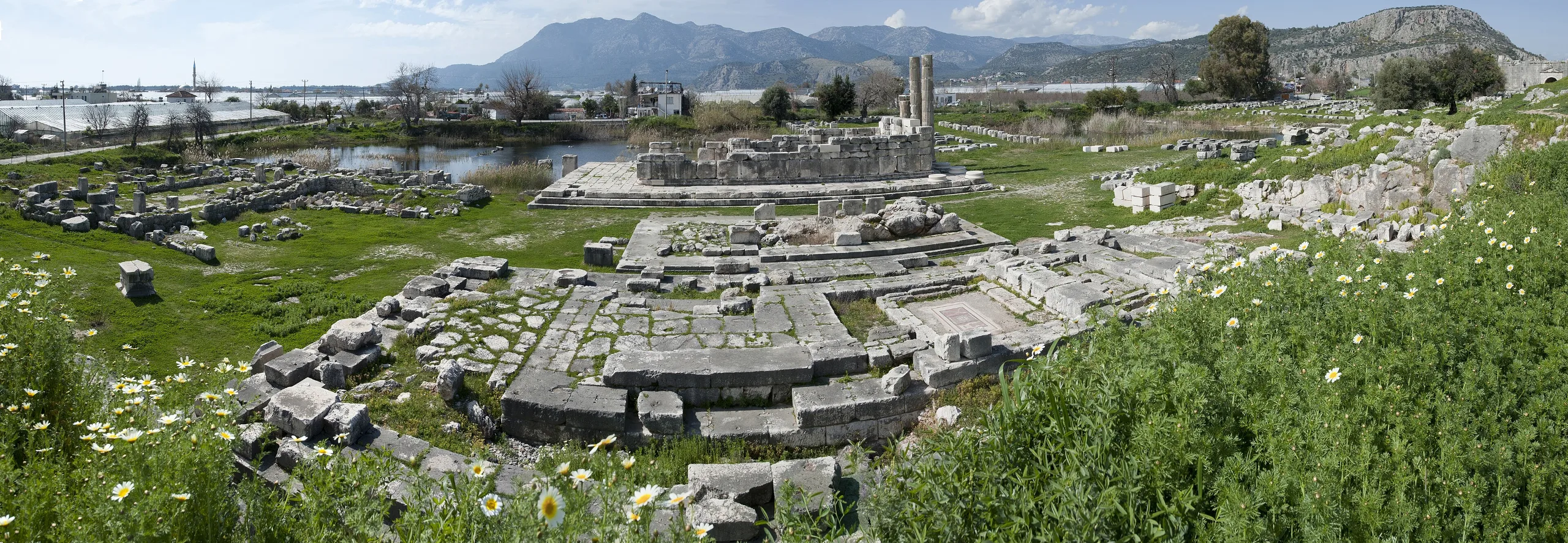
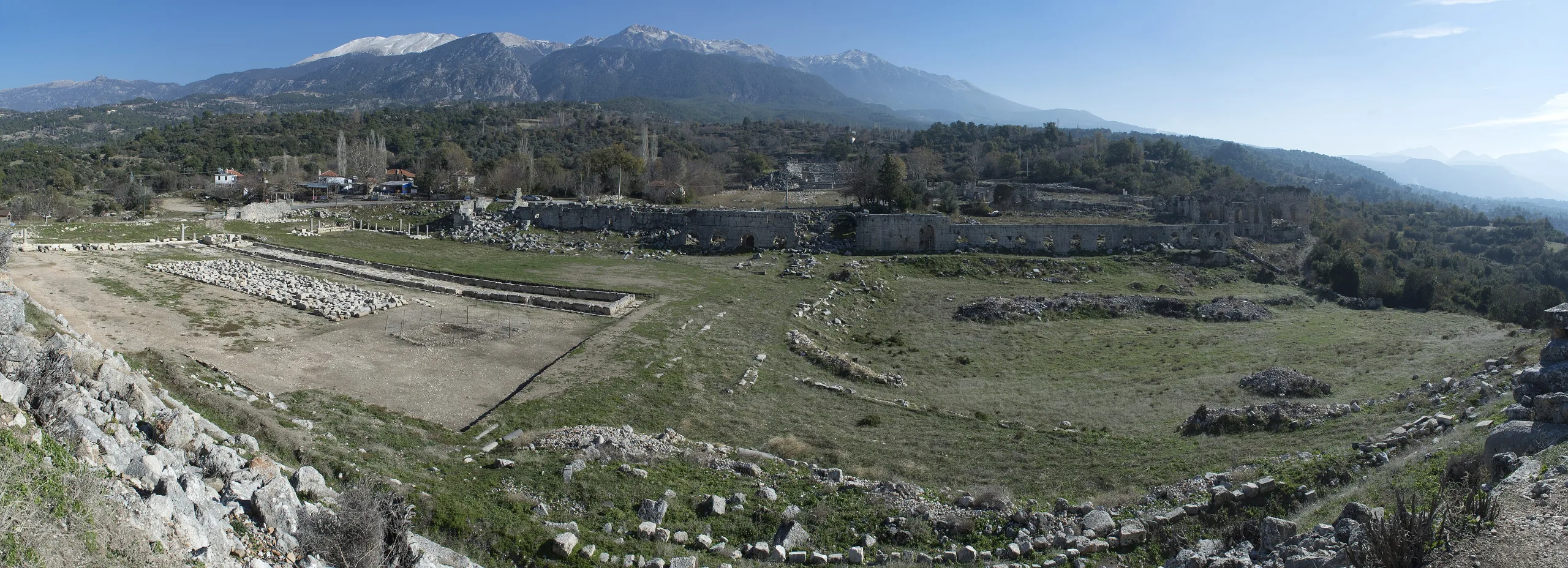
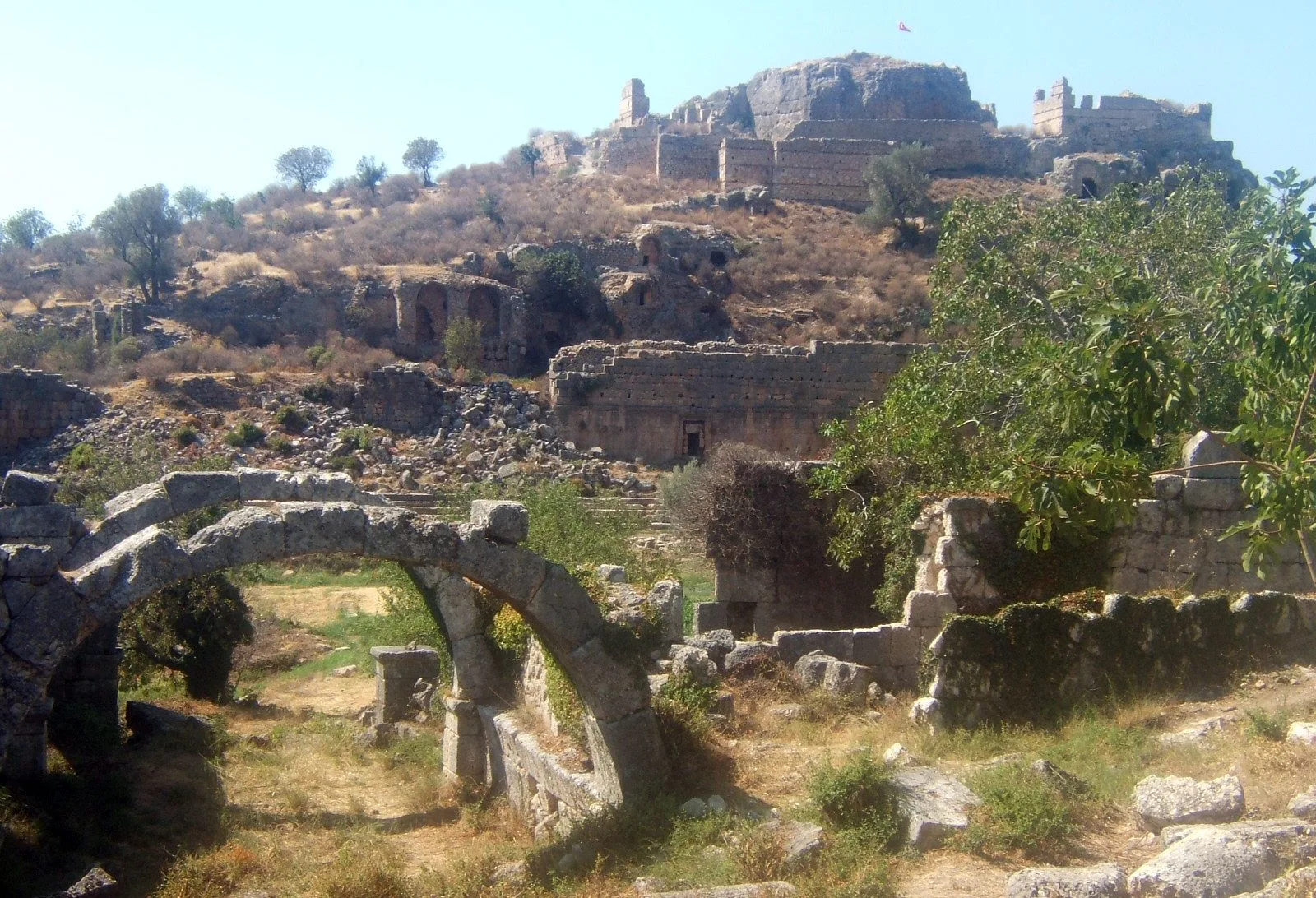
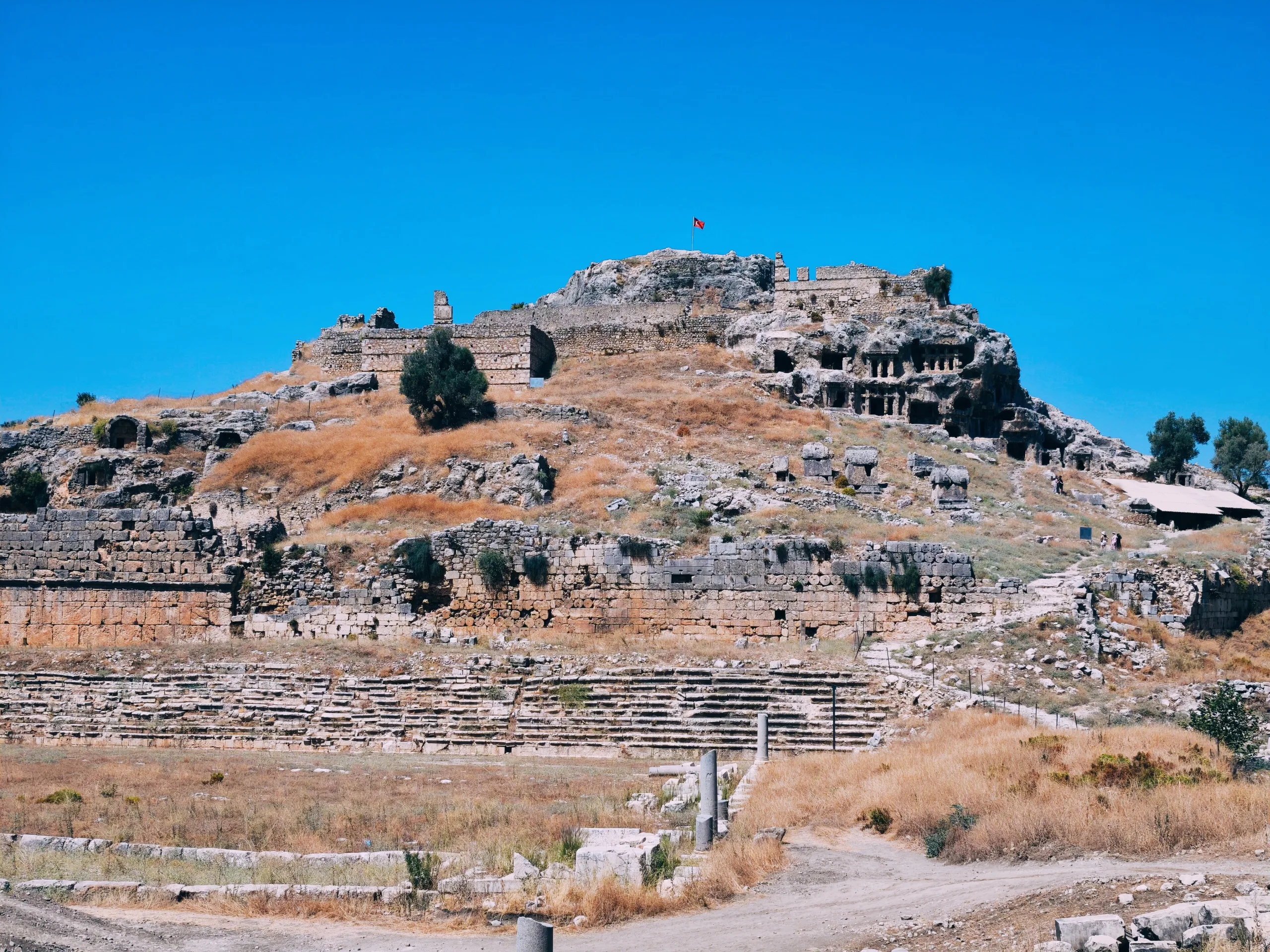
The Culture Portal describes an acropolis at the entrance to the city, protected by natural slopes about 500 metres high and reinforced here and there with wall sections. Below it lie some seating rows, a stadium, a bath, a theatre and church remains, and the theatre is named as the most important standing building.
Rock tombs
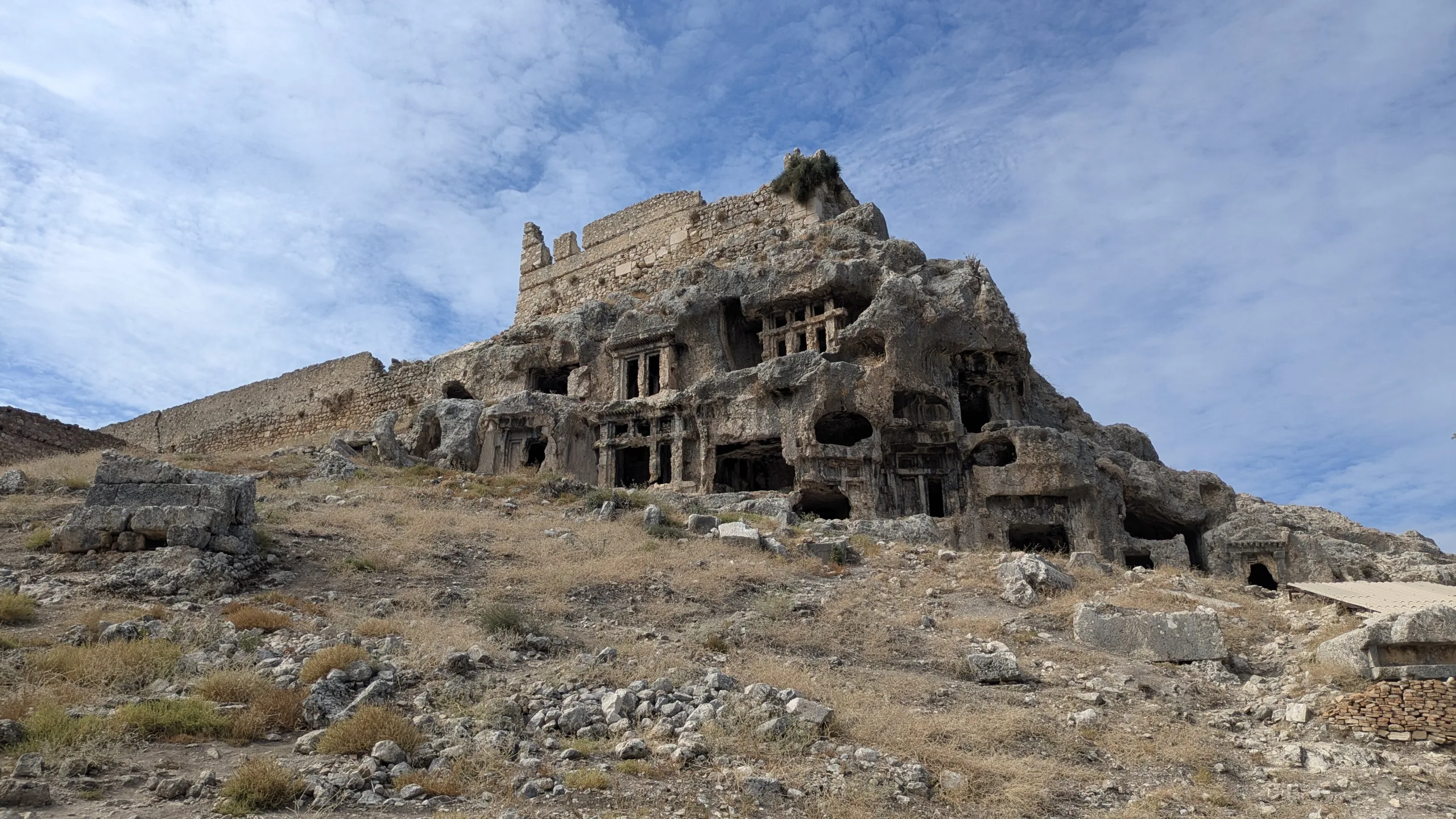
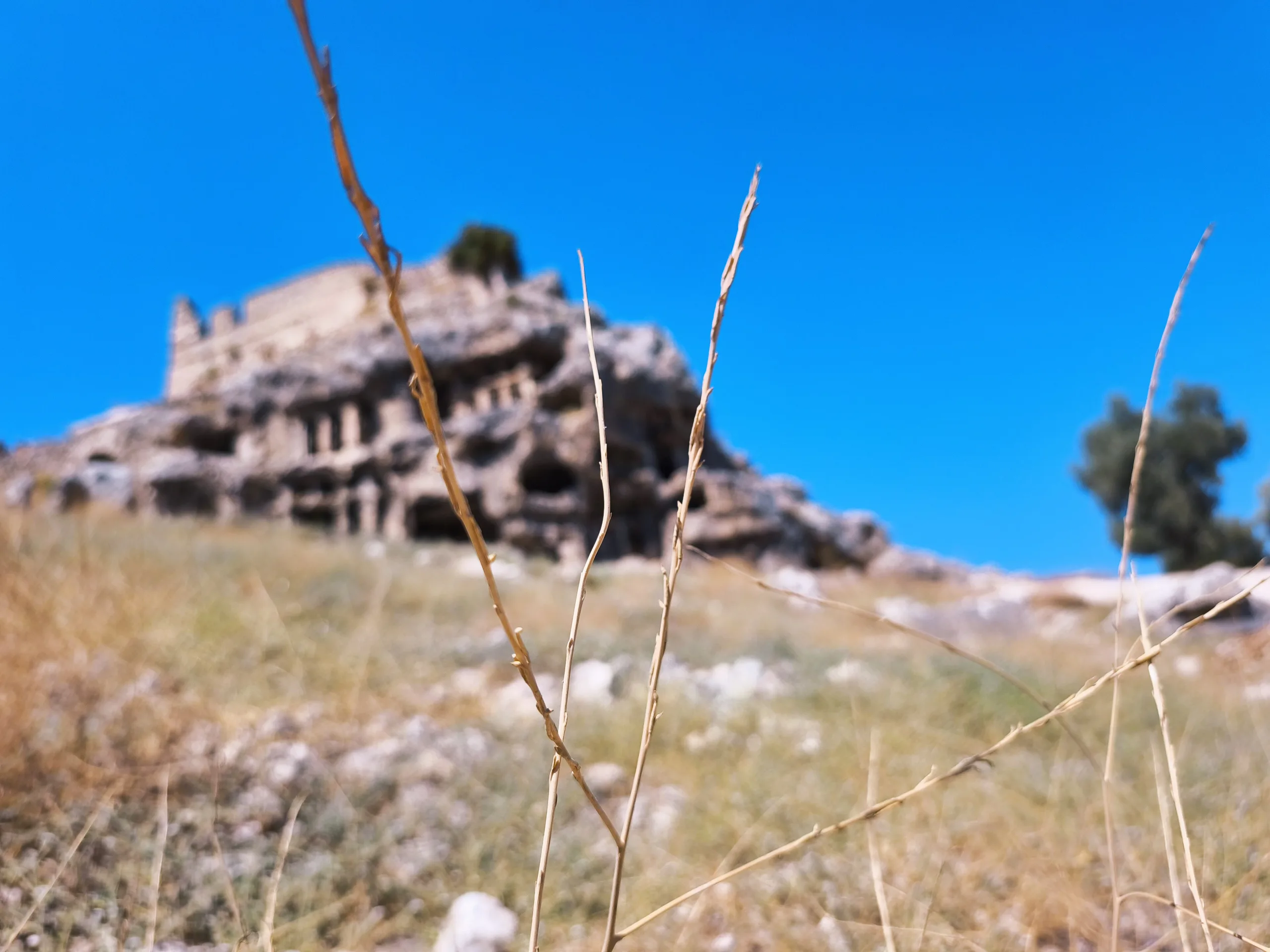
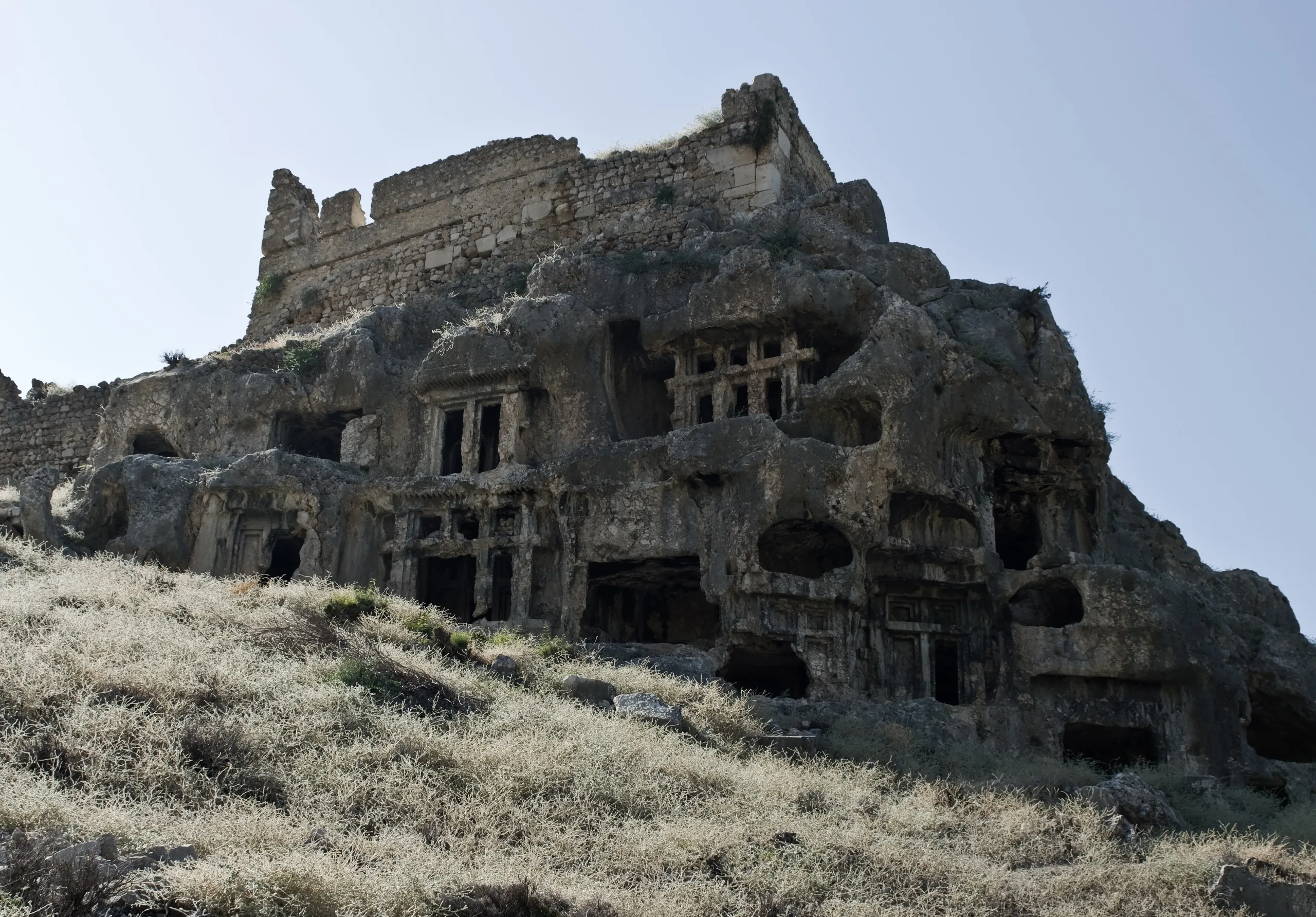
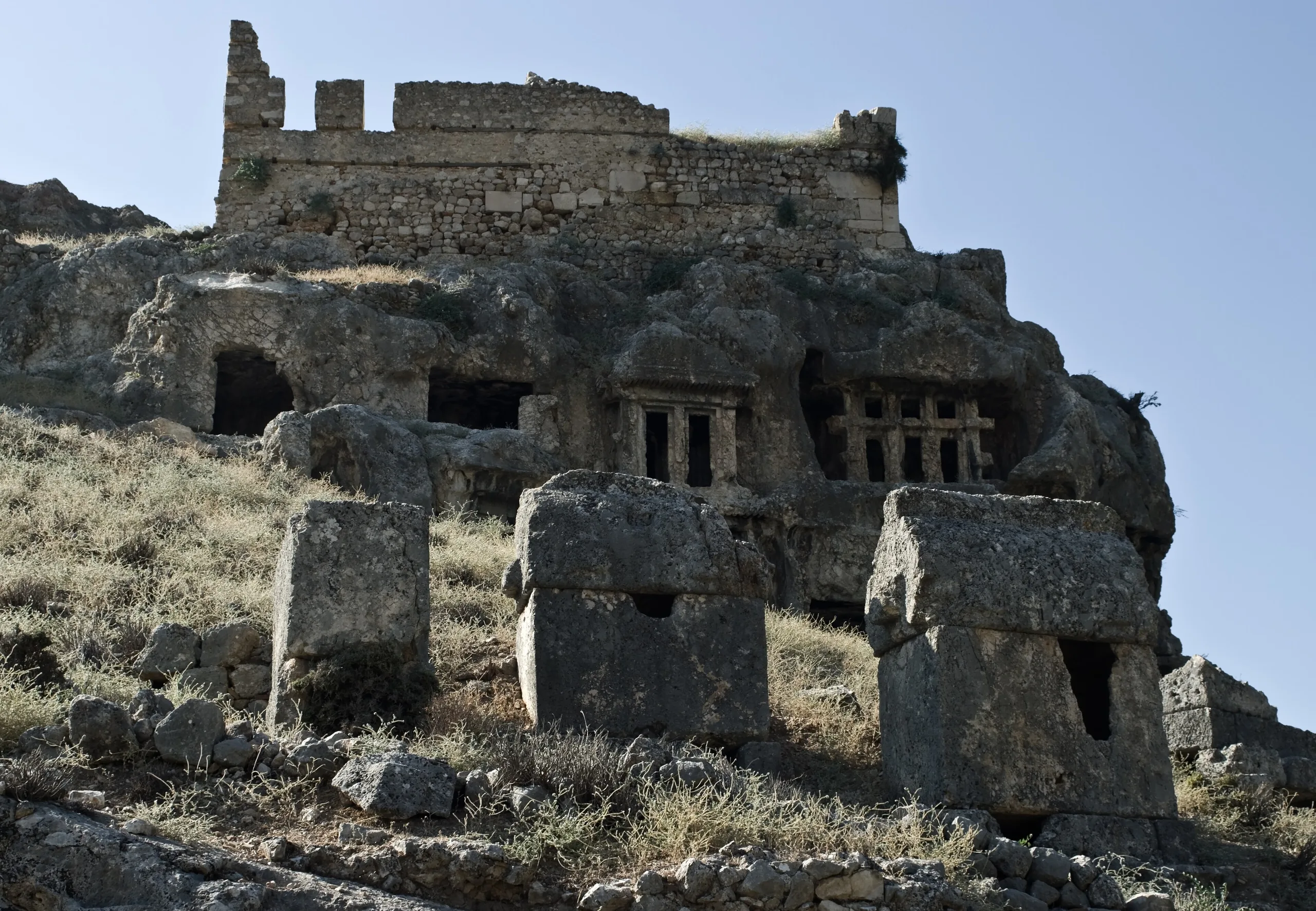
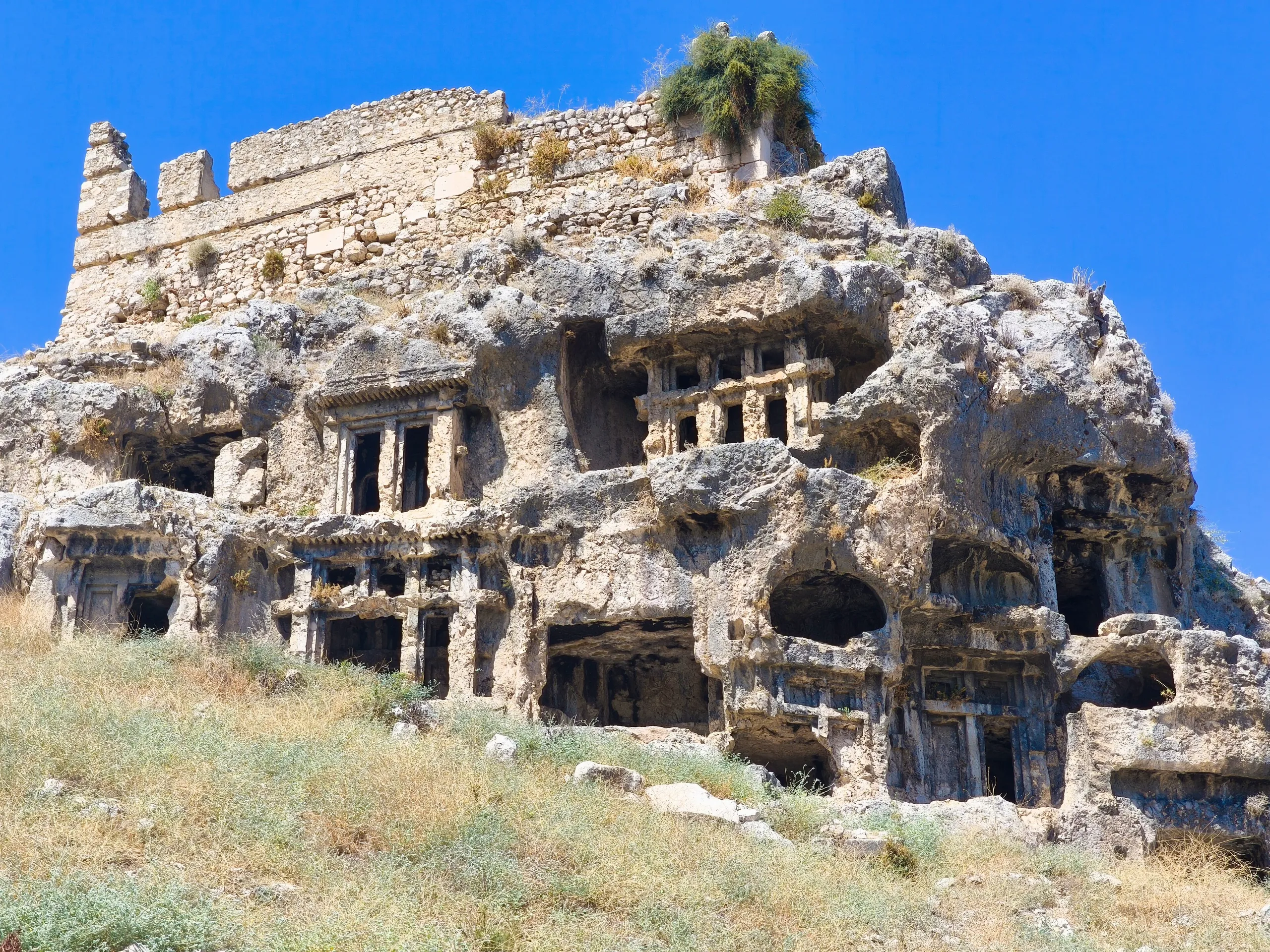
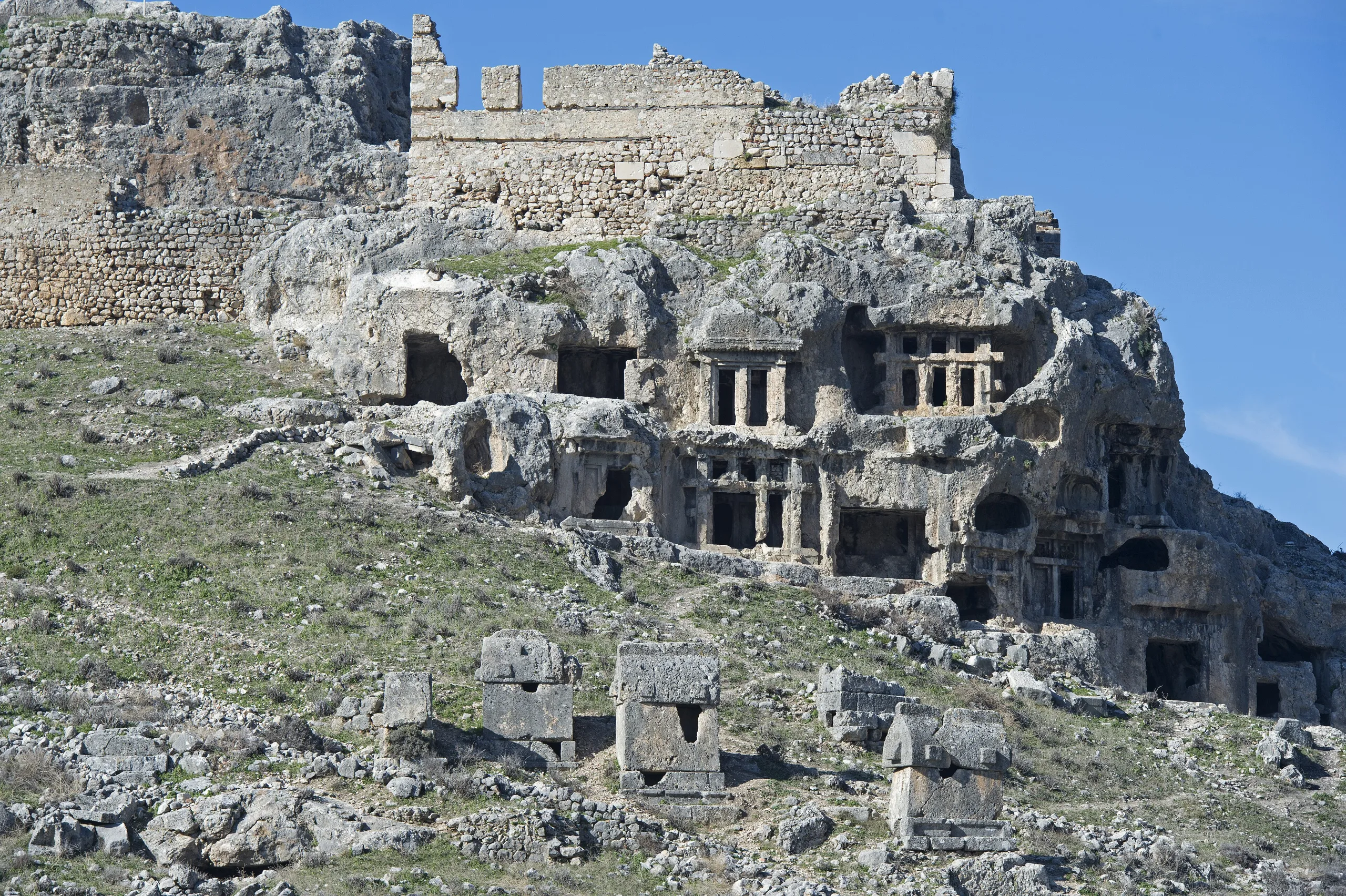
On the way up to the castle, temple-style tombs cut into the cliff draw the eye. The most striking is the Bellerophon tomb, linked to the scene of the winged horse Pegasus fighting the three-headed Chimera. It lies on the Titan Rock north of the acropolis, in front of a levelled terrace, and its facade imitates a four-column Ionic temple. Two chambers side by side and an entrance room make up the interior, which contains stone couches (klinai).
Lycian wall, agora and stadium
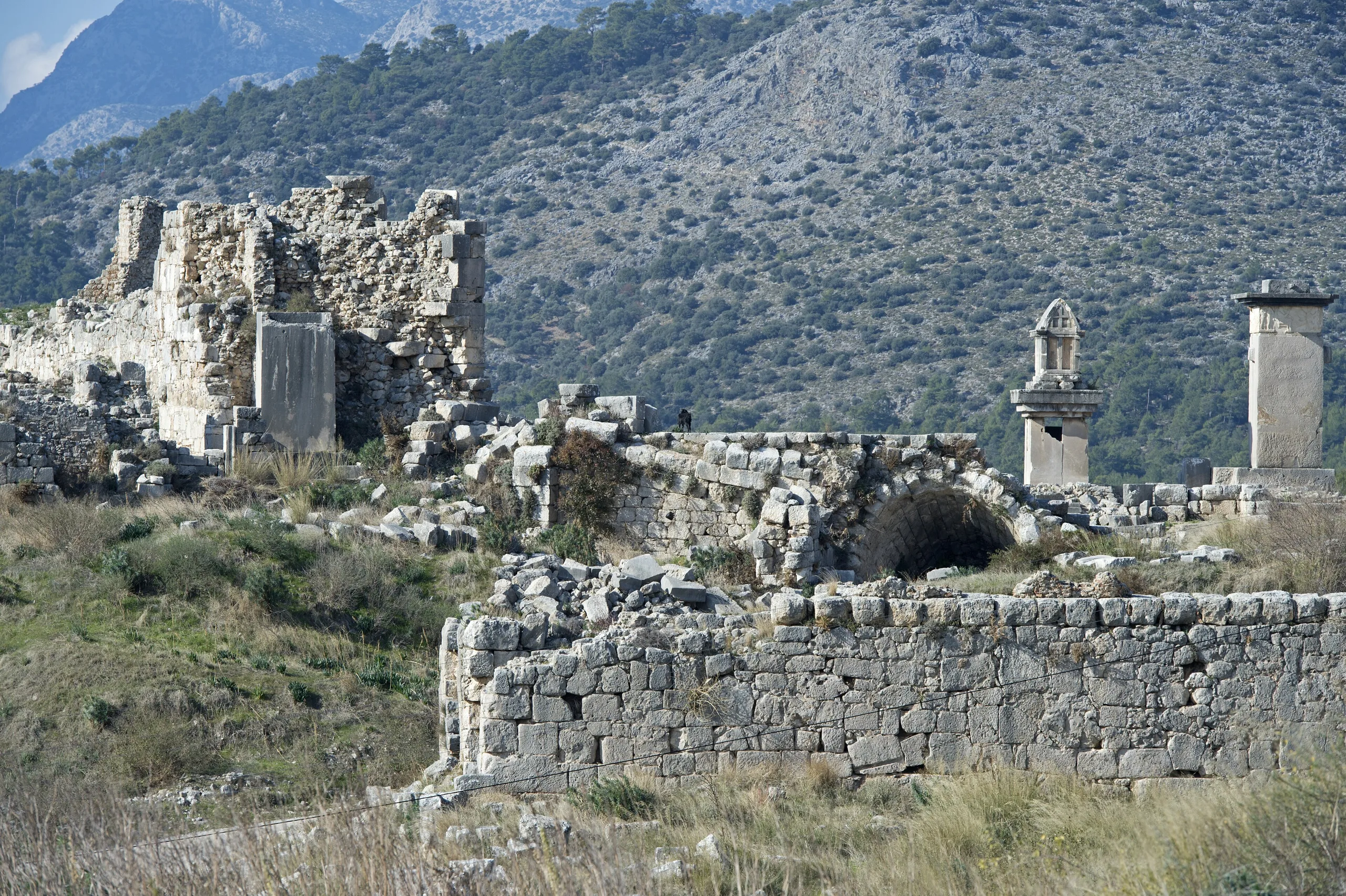
On the flat ground beneath the castle stand remains of a nine-metre-wide Lycian wall. South of the agora, whose six-arched gate survives, run Roman-period walls. Because Tlos was known as the sports city of Lycia, its stadium remains carry special archaeological weight.
Excavations
The ministry's English page says digs are going on at monumental buildings such as the Kronos temple, the basilica, the theatre, the stadium, the great bath and the rock-cut tombs. Akdeniz University's academic records list a report titled Tlos 2024 Kazı Etkinlikleri, by Taner Korkut, Çilem Uygun, B. Ş. Özdemir and U. O. Usanmaz, published in the Kazı Sonuçları Toplantısı series in 2026. These sources do not state who directs the project or when digging began.
UNESCO
Tlos belongs to the group Ancient Cities of Lycian Civilization (Antalya and Muğla), which entered UNESCO's Tentative List in 2009; it is not on the World Heritage List.
Gallery
Frequently asked questions
Where is Tlos?
Where does the name Tlos come from?
What was Tlos's role in the Lycian League?
What can be seen at Tlos?
Where is the Bellerophon tomb?
Is Tlos a UNESCO World Heritage Site?
Sources (13)
- Tlos Örenyeri / Tlos Archaeological Site (TR ve EN sayfalar) — T.C. Kültür ve Turizm Bakanlığı, Müzeler ve Ören Yerleri
- Tlos Antik Kenti - Muğla (kaynak: Muğla İl Kültür ve Turizm Müdürlüğü) — T.C. Kültür ve Turizm Bakanlığı, Türkiye Kültür Portalı
- Tlos 2024 Kazı Etkinlikleri (Korkut, Uygun, Özdemir, Usanmaz) - yayın kaydı — Akdeniz Üniversitesi AVESİS
- Tlos (Pleiades place 639147) — Pleiades
Photo credits
- Photo: Dosseman, CC BY-SA 4.0 — Wikimedia Commons (resized)
- Photo: Vano111ru, CC BY-SA 4.0 — Wikimedia Commons (resized)
- Photo: Toksave, CC BY-SA 3.0 — Wikimedia Commons (resized)
- Photo: Kevser Tunç, CC BY-SA 4.0 — Wikimedia Commons (resized)
- Photo: Nikodem Nijaki, CC BY-SA 3.0 — Wikimedia Commons (resized)
- Photo: Nikodem Nijaki, CC BY-SA 3.0 — Wikimedia Commons (resized)
- Photo: Kevser Tunç, CC BY-SA 4.0 — Wikimedia Commons (resized)
- Photo: Kevser Tunç, CC BY-SA 4.0 — Wikimedia Commons (resized)
- Photo: Dosseman, CC BY-SA 4.0 — Wikimedia Commons (resized)