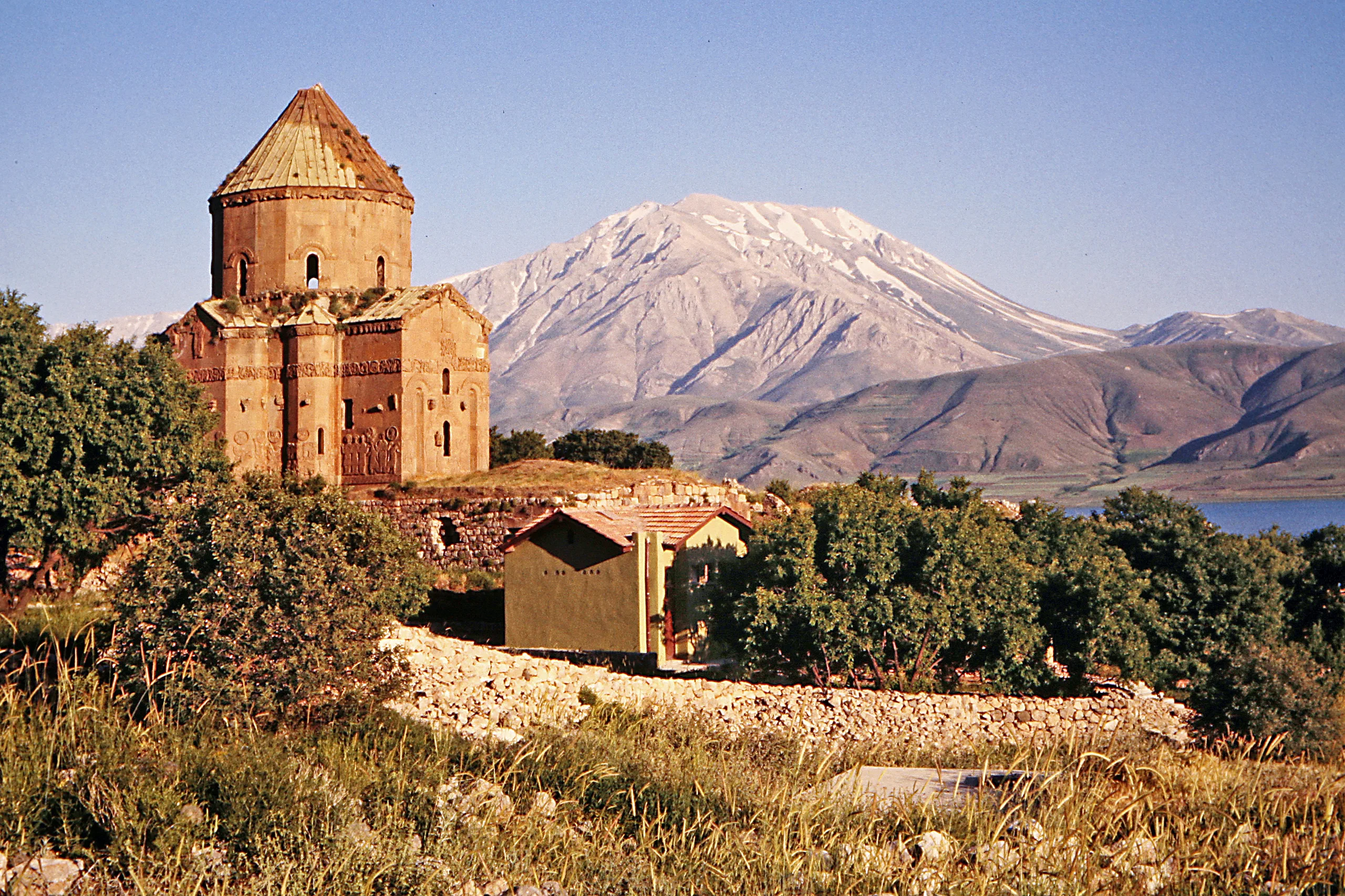
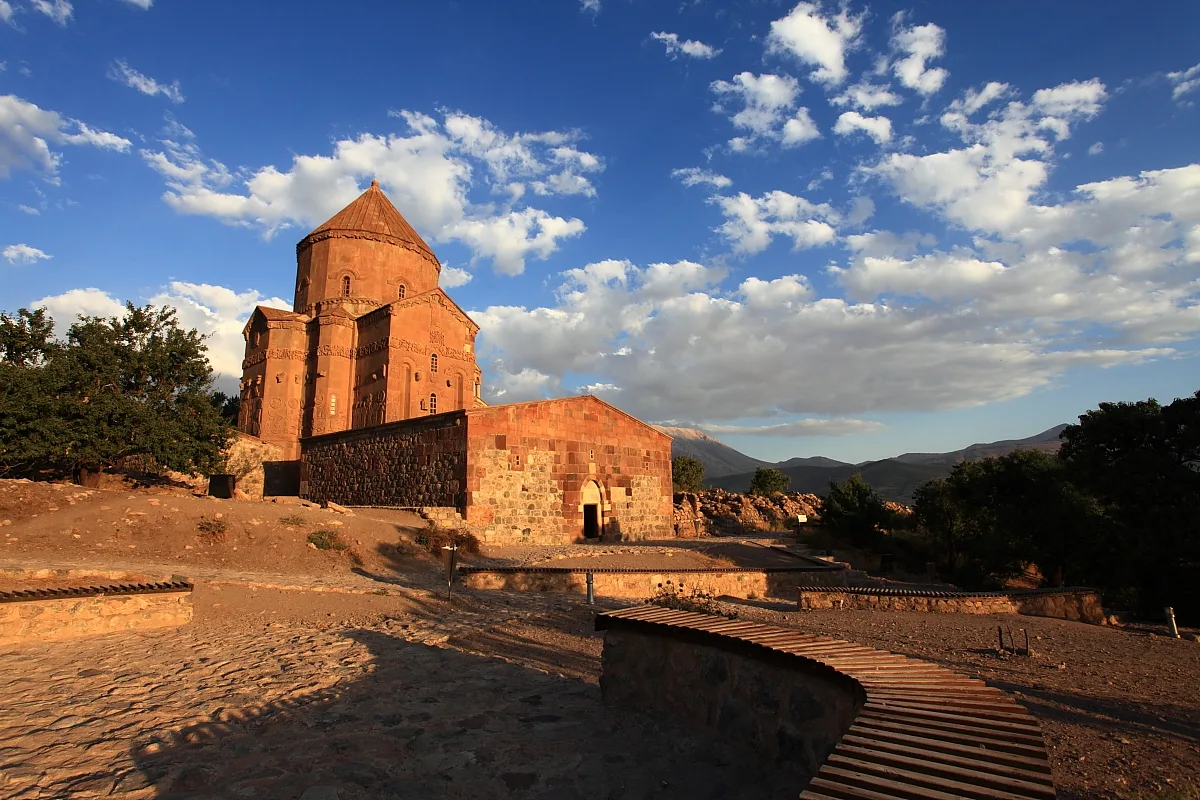
The Church of the Holy Cross on Akdamar Island in Lake Van, built in the early 10th century for the king of Vaspurakan and known for the figural reliefs on its outer walls.
Akdamar Church of the Holy Cross is a place (Church) in Turkey, Van.
On the second-largest island of Lake Van, three or four kilometres from the shore, stands a church of volcanic tuff whose outer walls are covered with reliefs from top to bottom. In sunlight the full-cheeked figures seem to step out of the stone; under grey, hazy skies they fade. This church on Akdamar Island, in Gevaş district, is among the best-known medieval works of Armenian art.
History
Gagik I Ardzruni, ruler of the Kingdom of Vaspurakan, which governed the Van region as an Abbasid dependency between 908 and 1021, had the church built in 915-921 by the architect Manuel as a palace church. The 10th-century chronicler of the king's deeds, Thomas Ardzruni, was the first to describe its construction, and an inscription on the west facade bears out the date. When the Byzantine emperor Basil II ended the kingdom in 1021-1022, the last king, Senekerim, was resettled with 40,000 people around Sivas and Kayseri, and the church ceased to be a palace church and became a monastery.
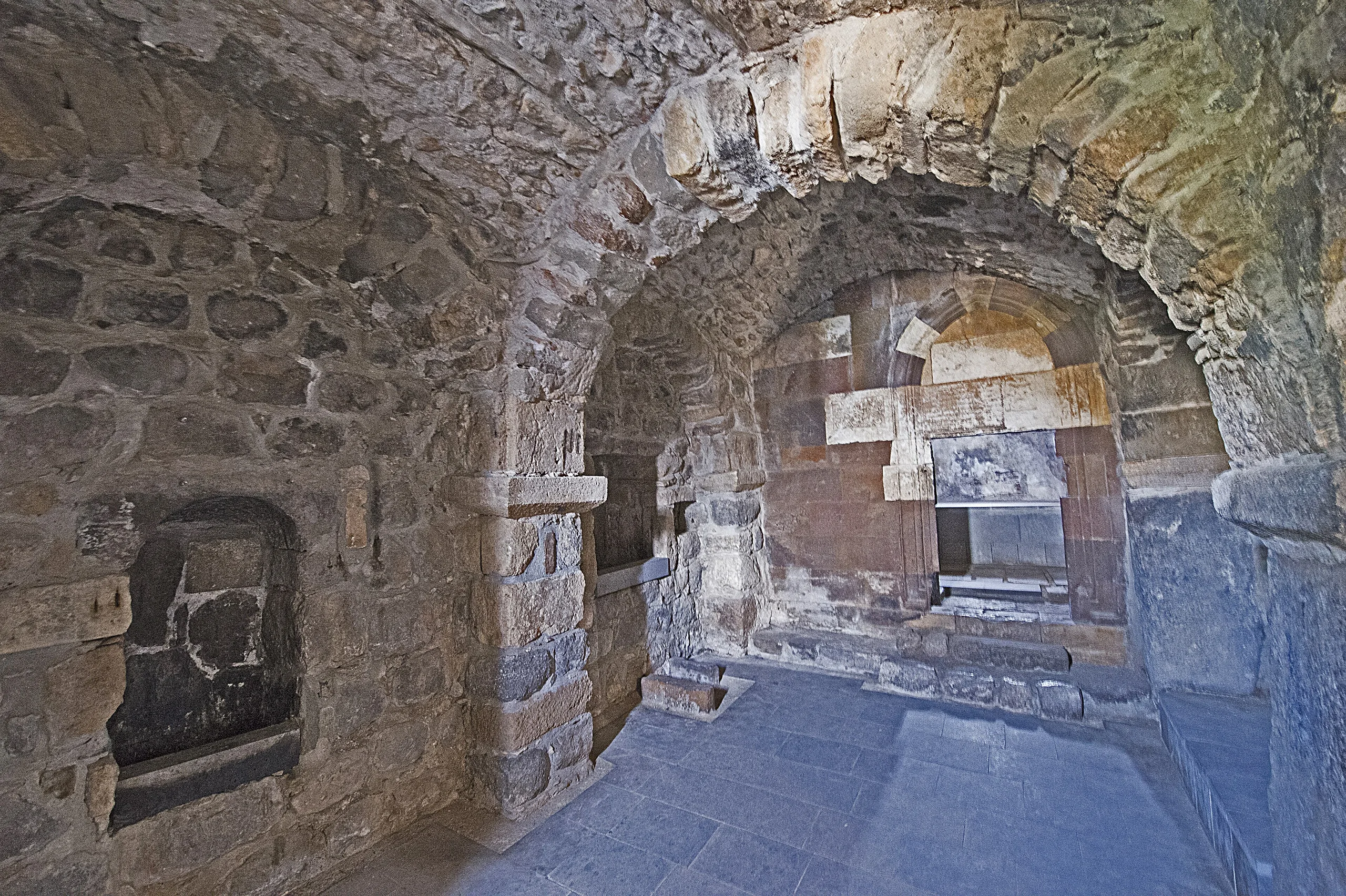
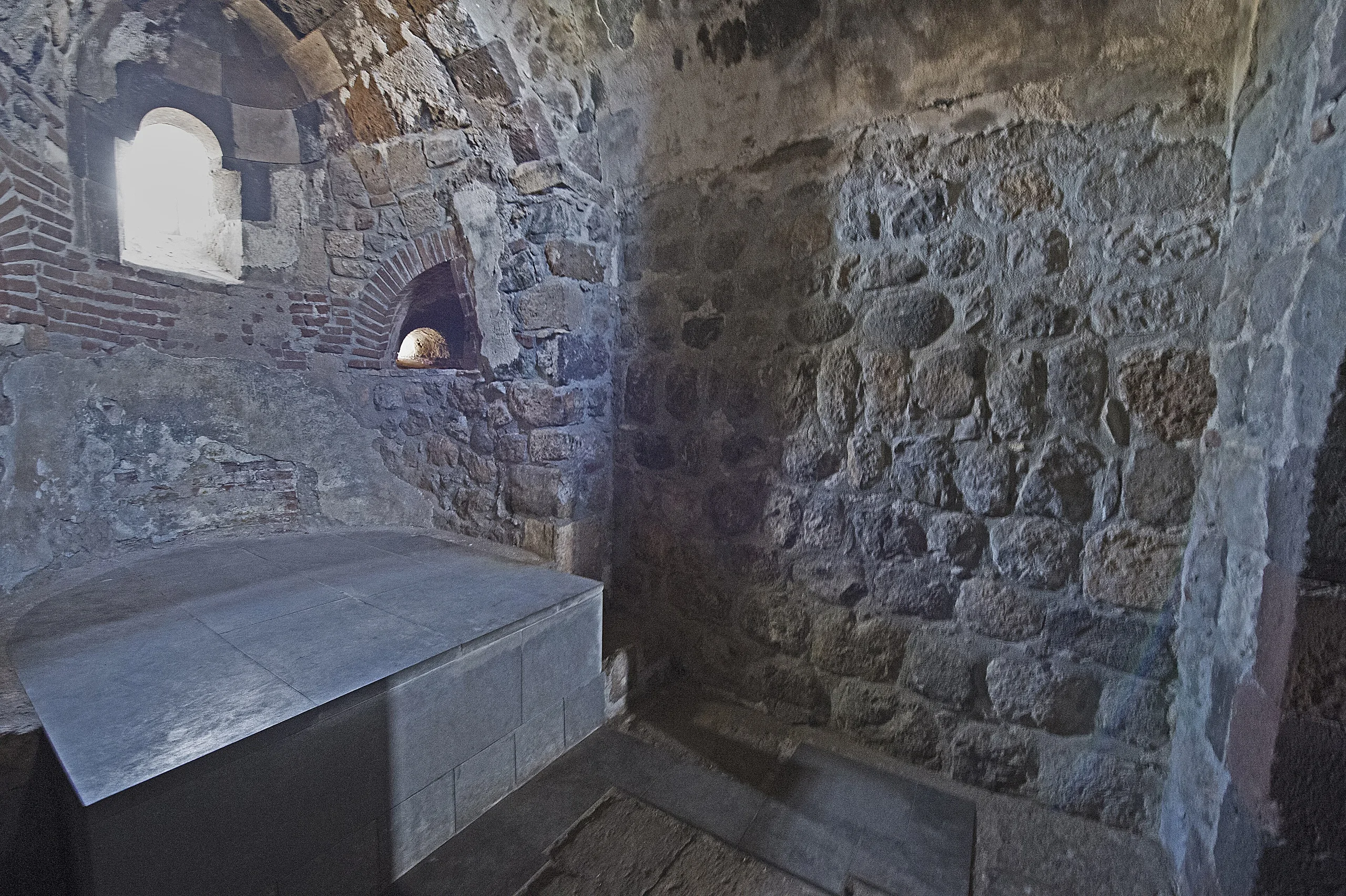
New sections were added to the main building in 1113, and the monastery served as the seat of the regional Armenian patriarchate until 1895. When the island was abandoned in the early 20th century, the surrounding monastic buildings were demolished and the church and its other parts fell into ruin. The Ministry of Culture and Tourism began restoration in 2005, and in 2007 the church opened as a monument museum. A scientific excavation south of the church, finished in 2006, covered about 3,435 square metres and uncovered rows of cells around a courtyard, a service area, a cistern and a seminary.
Architecture
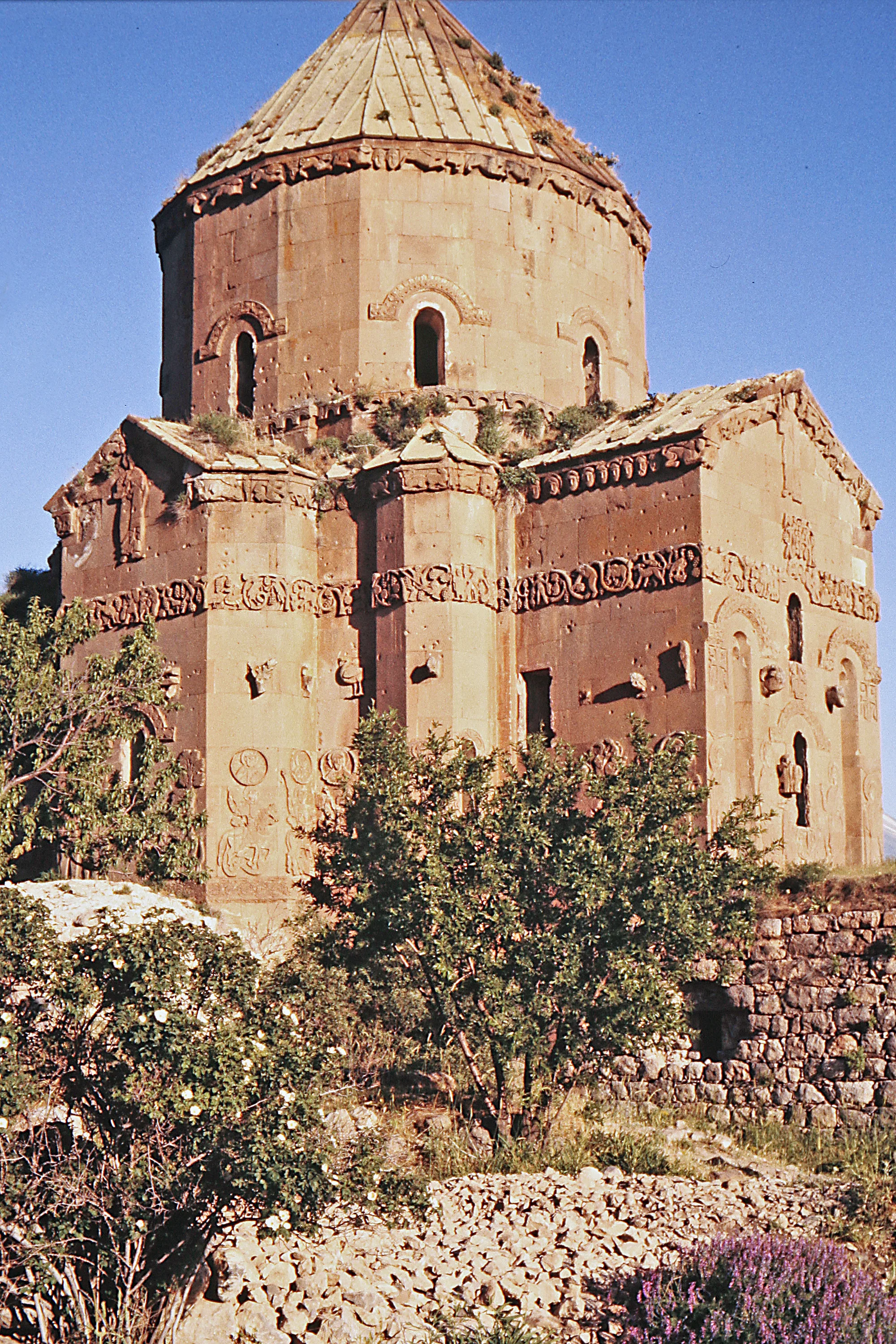
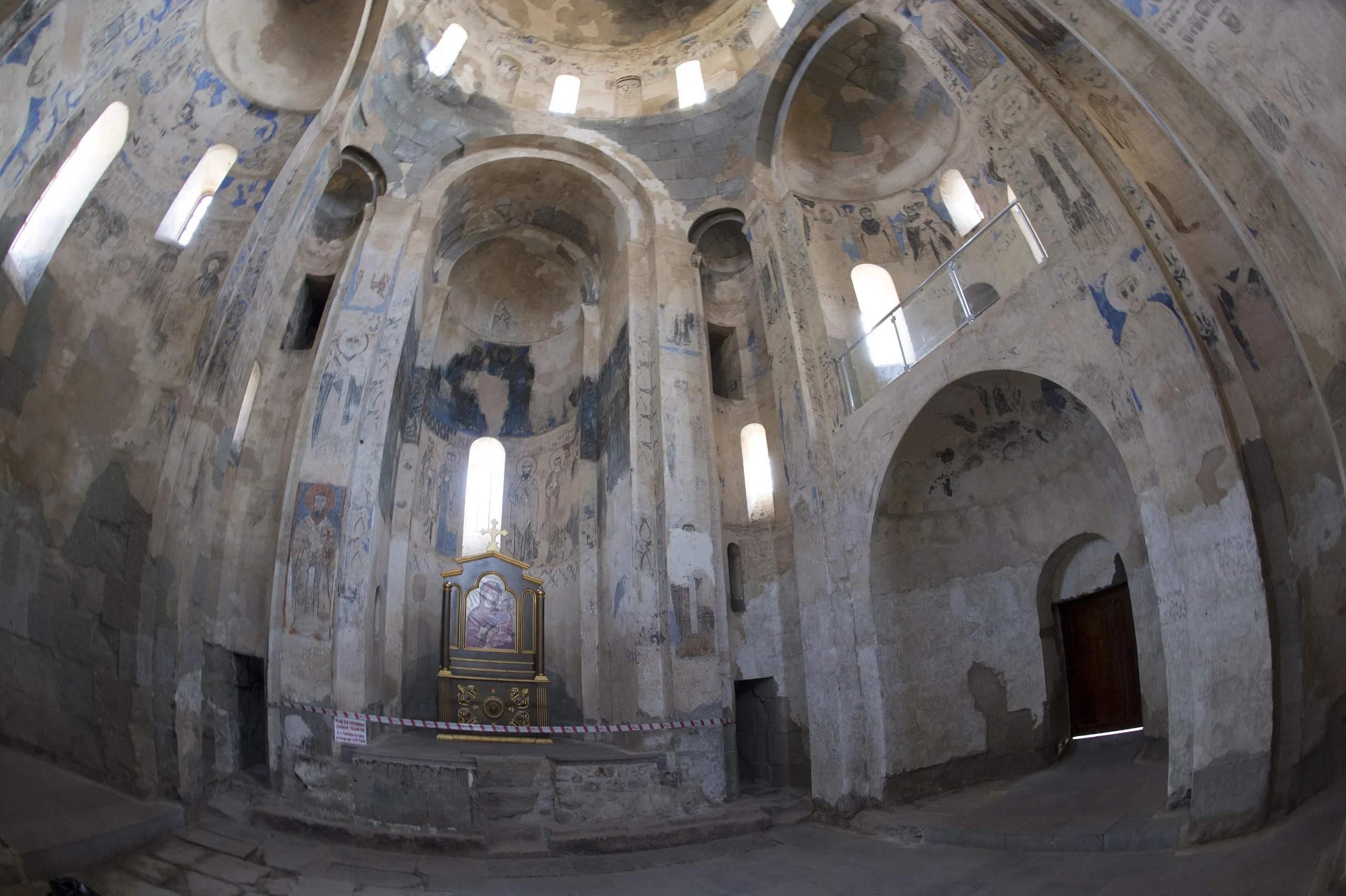
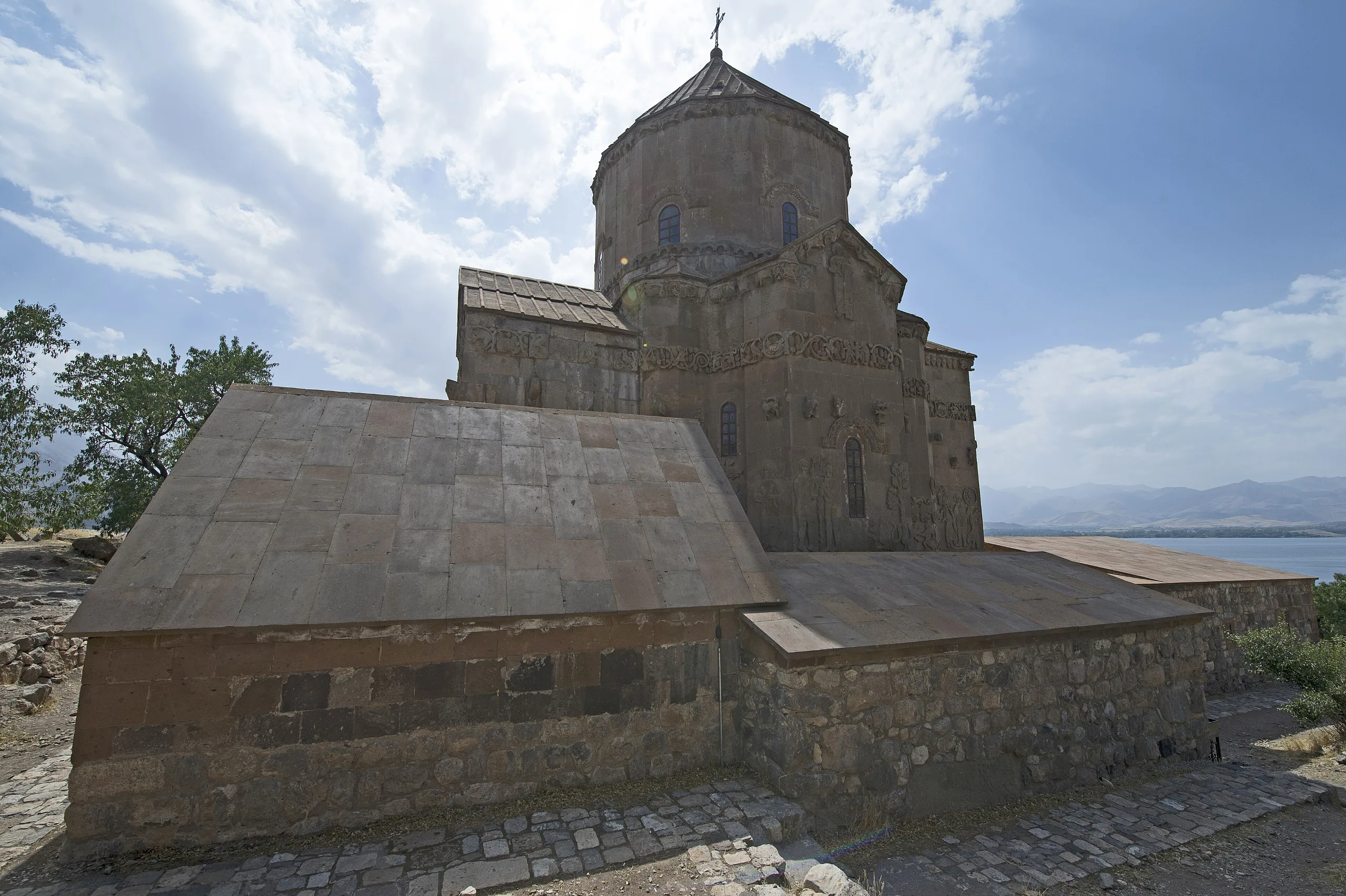
The plan is a cross of four lobes like a clover leaf, with a dome over the centre. The central space rises on a tall drum, closed inside by a dome and outside by a pyramidal cone. The interior measures 14.80 by 11.5 metres and the dome peaks 20.40 metres above ground. Built of volcanic tuff in neatly cut blocks, the walls use smaller stones in the upper courses to lighten the load, and blocks of different sizes sit within the same course to bind the wall against earthquakes. The varied shades of the stone also colour the facades. Entrances open on the west and north; the west door is treated as a portal and carries a bell tower above. The gavit added on the west, a square gathering hall for the congregation, is divided into nine bays.
The reliefs
The church owes its fame to the stone reliefs wrapped round its exterior. Subjects come from the New and Old Testaments: Jonah cast overboard, the Virgin with the Child, the expulsion of Adam and Eve, David and Goliath, Samson, three young Hebrews in the furnace, Daniel in the lions' den. The gables on all four sides show the evangelists standing. Between bands of vine scroll are hunting scenes, wrestlers, glimpses of court life and many kinds of animal.
On the west facade King Gagik offers a model of the church to Christ. At the centre of the east facade the Abbasid caliph Muktadir is worked into the vine band, haloed and sitting cross-legged with a cup in one hand and a bunch of grapes in the other. Inside, the frescoes are largely damaged and mostly tell the life of Christ.
The island and its name
A local legend explains the island's name. A young man who loved Tamara, the daughter of a monk living on the island, swam over from the opposite shore every night. One night he was swept away in a storm, crying Ah Tamara as he drowned, and the girl died of grief on hearing it. From then on the island was called Ahtamar, in time Akdamar.
World Heritage status
On 13 April 2015 Türkiye submitted the Akdamar Church to the World Heritage Tentative List as a cultural property, citing criteria (i), (ii), (iii), (iv) and (vi). It is not on the World Heritage List.
Visiting
The boat from the Gevaş shore takes about 20 minutes. Hours, fees and transport can change, so check the page on muze.gov.tr for current information. The MüzeKart is valid for Turkish citizens.
Gallery
Frequently asked questions
Where is Akdamar Church?
How do I get to the island?
When and for whom was it built?
What do the reliefs on the walls show?
When did it become a museum?
Is Akdamar a World Heritage Site?
Sources (14)
- Akdamar Anıt Müzesi (Kutsal Haç Kilisesi) / Akdamar Monument Museum (TR ve EN sayfalar) — T.C. Kültür ve Turizm Bakanlığı, Müzeler ve Ören Yerleri
- Akdamar Church - Tentative Lists, ref. 6035 — UNESCO World Heritage Centre
- Akdamar Anıt Müzesi / Kilisesi - Van, Gezilecek Yerler (kaynak: Van İl Kültür ve Turizm Müdürlüğü) — T.C. Kültür ve Turizm Bakanlığı, Türkiye Kültür Portalı
- Akdamar Adası ve Kilisesi — T.C. Kültür ve Turizm Bakanlığı, Van İl Kültür ve Turizm Müdürlüğü
- Armenian Cathedral of the Holy Cross (Wikidata Q1281985) — Wikidata
Photo credits
- Photo: Francesco Bini, CC BY-SA 4.0 — Wikimedia Commons (resized)
- Photo: W. Bulach, CC BY-SA 4.0 — Wikimedia Commons (resized)
- Photo: loiez Deniel, CC BY 2.0 — Wikimedia Commons (resized)
- Photo: W. Bulach, CC BY-SA 4.0 — Wikimedia Commons (resized)
- Photo: Dosseman, CC BY-SA 4.0 — Wikimedia Commons (resized)
- Photo: Dosseman, CC BY-SA 4.0 — Wikimedia Commons (resized)
- Photo: Dosseman, CC BY-SA 4.0 — Wikimedia Commons (resized)
- Photo: Dosseman, CC BY-SA 4.0 — Wikimedia Commons (resized)
- Photo: Dosseman, CC BY-SA 4.0 — Wikimedia Commons (resized)