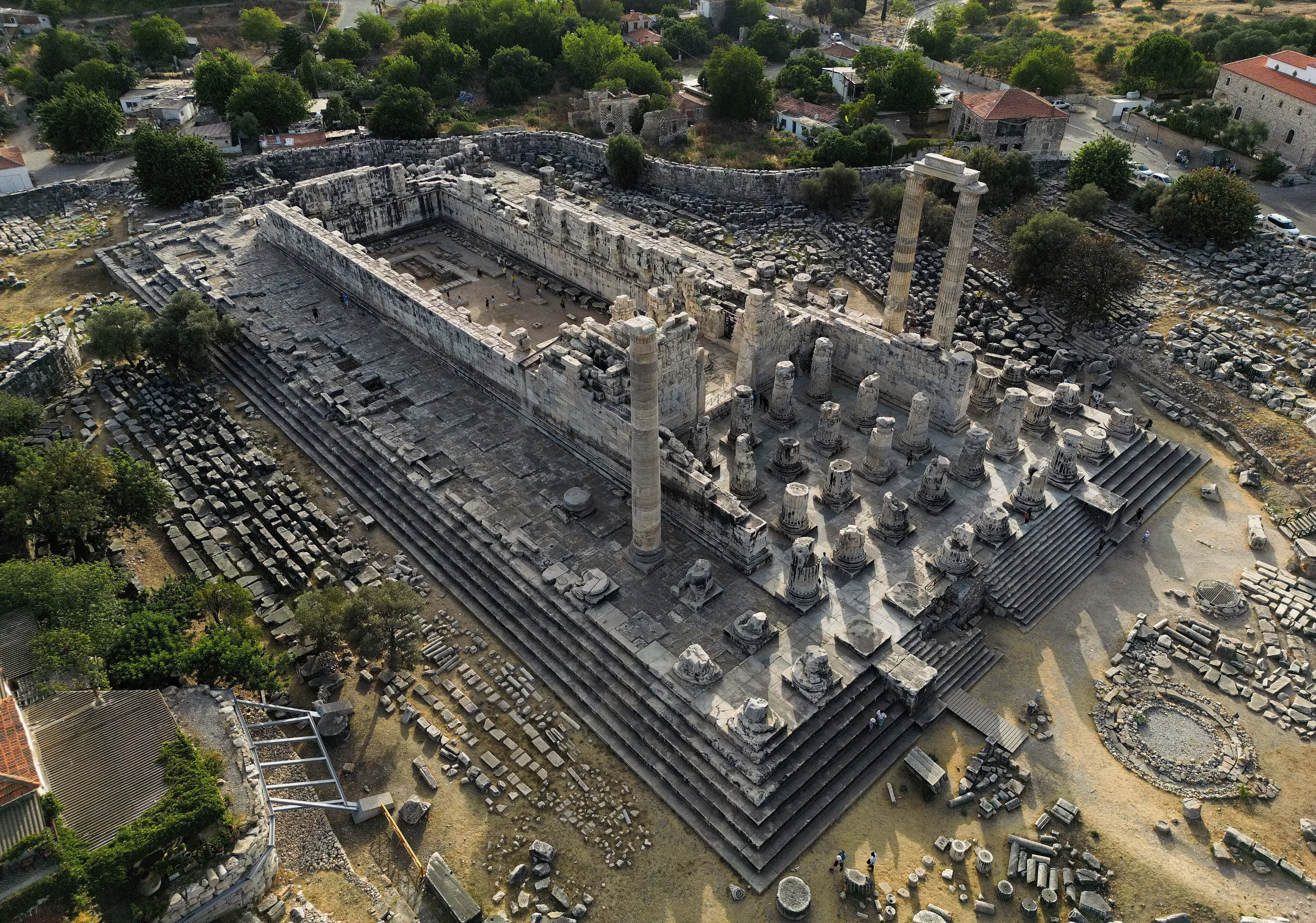
Mother city of more than 80 colonies, capital of Ionia and home of Thales, Miletus now lies on a silted plain with its Lion Harbour, theatre and the Sacred Way to Didyma.
Miletus is an ancient city located in Turkey, Aydin. Main periods: Archaic Period, Classical Period, Hellenistic Period, Roman Period, Byzantine Period, Ottoman Period, Chalcolithic Period, Bronze Age, Iron Age, Beyliks Period.
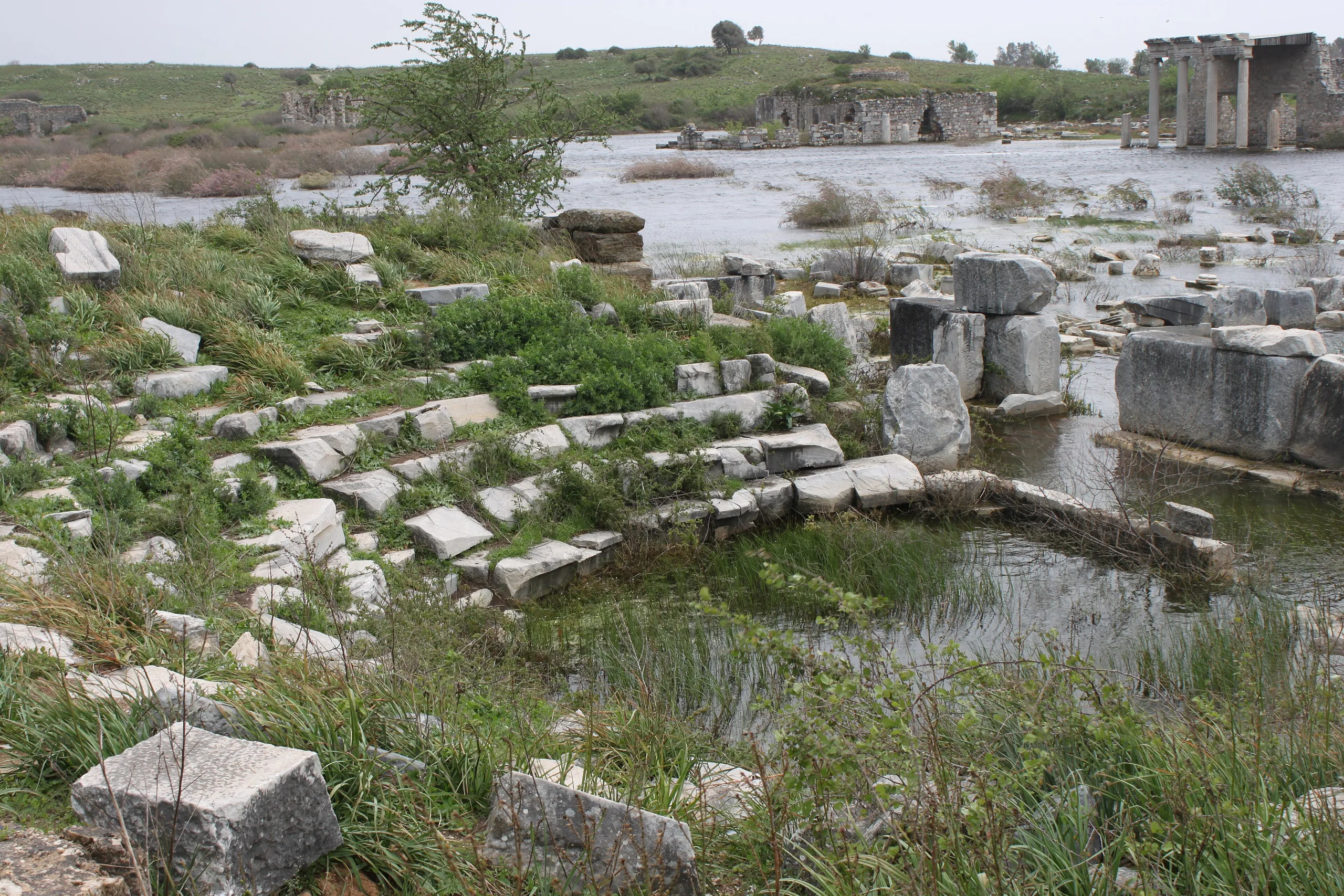
Miletus once met the sea, but today its harbours survive only as reed beds and hollows that flood in winter. In the Archaic period (8th-6th centuries BC), though, it was one of the strongest cities of the Aegean: more than 80 colonies took their names from it, and it was reckoned the capital of Ionia (Ioniae caput). The city was founded in what is now Balat village, Didim district, Aydın Province, where the Büyük Menderes river reaches the sea. It was also the home of the Milesian school, where ancient Greek science and philosophy began.
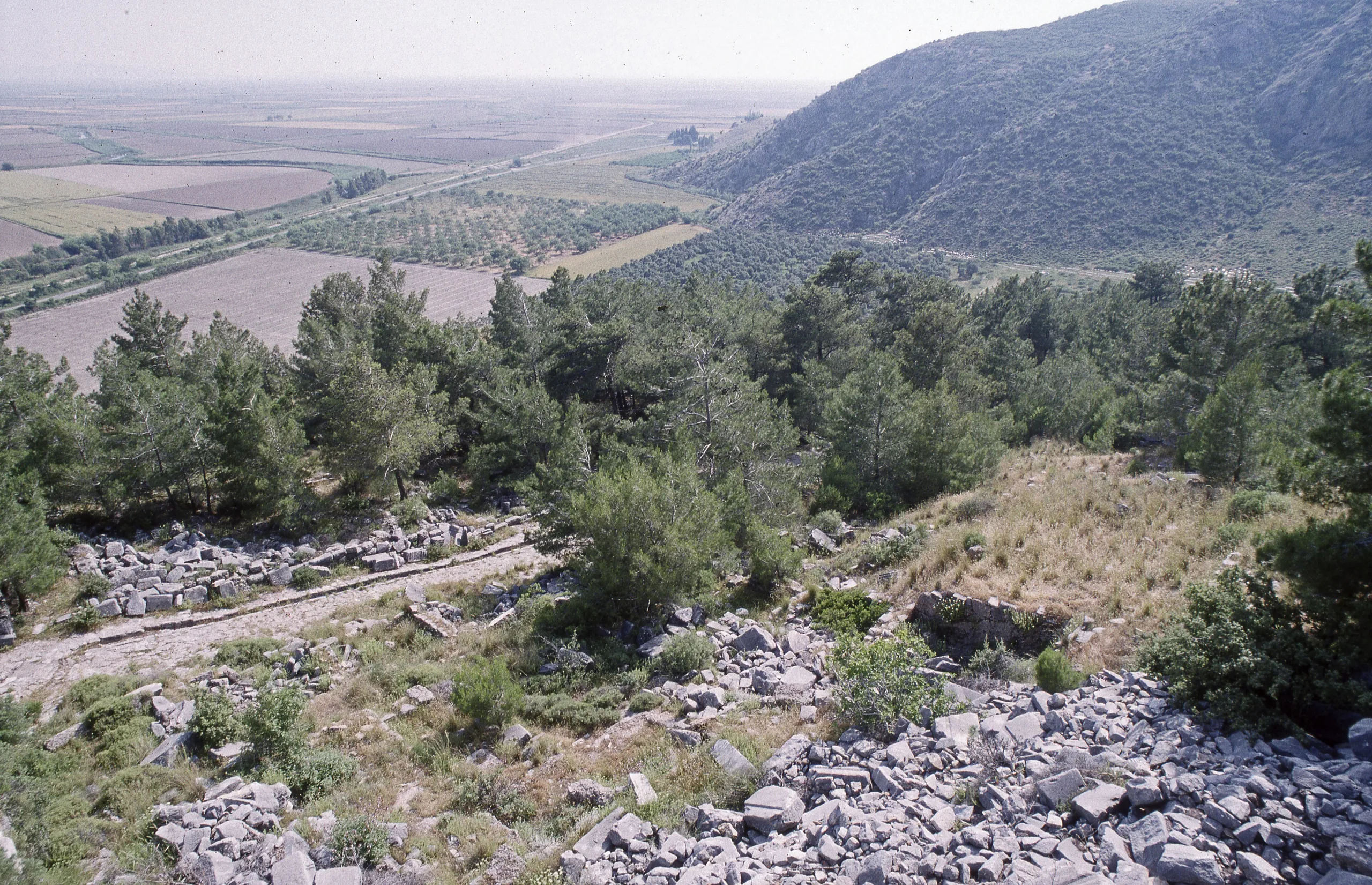
The ruins now stand on a silted plain near Lake Bafa. The three hills of the peninsula, Kaletepe, Humeitepe and Kalabaktepe, were once islands in the Latmian Gulf, and that geography gave the city its natural defences.
Location and access
The site lies within Balat village, with the address Balat Mahallesi, Milet Sokak. Hours, fees and Milet Museum conditions can change, so check the official page for current details. The Müzekart pass is valid for Turkish citizens.
History
Miletus has a history that reaches far beyond the written record. The first archaeological traces belong to the Chalcolithic (Copper Age); the earliest buildings were found on a flat hill near the Temple of Athena, and eight Bronze Age phases from the Late Chalcolithic to the end of the Mycenaean period have been documented. At the end of the 14th century BC the Hittites seized the settlement, and around 1200 BC they took it a second time and called it Milawanda.
Foundation stories vary. Pausanias gives two: Miletos arriving with a Cretan army, fleeing Minos, or Neleus, a son of Codrus, founding the city. Older tales have Cretan settlers led by Minos's brother Sarpedon settling over a Carian village, while the arrival of Ionian colonists is placed in the 11th century BC.
In the Archaic period the city was strong in both wealth and arms. The Milesian rulers Histiaeus and Aristagoras launched the Ionian Revolt against Persian rule in 499 BC, but the city fell in 494 BC. Herodotus says it was destroyed and its people enslaved; how far the destruction went is disputed today, though the event is seen as the turning point that broke Miletus's pre-eminence. The Archaic acropolis was abandoned after the Persian invasion, and the Hellenistic city took shape around the Lion Harbour and the theatre.
In the 5th century BC Miletus paid heavy tribute to the Delian League. Alexander the Great took it in 334 BC, and afterwards it stayed largely independent until 133 BC, when the kingdom of Pergamon was bequeathed to Rome and Miletus joined the province of Asia. Under Rome the Hellenistic city kept its size and shape, but building activity rose markedly. Jewish and Christian communities lived there as well.
From the 3rd and 4th centuries AD, silt carried by the Büyük Menderes began to fill the Latmian Gulf and the city's harbours, and Miletus lost its standing as a major port. In the mid-3rd century the walls were rebuilt after Gothic raids. From the 6th century it was an archbishopric. In the 7th century Persian and Arab raids forced the city to shrink inside a new, smaller wall. In Byzantine times it took the name Palatia, a nod to its easily defended theatre fortress and to the standing remains of a palace; the name Balat comes from it.
The Turks took Palatia in the 13th century. Under the Menteşe principality it was a small river port with wide trading links and a resident Venetian consul. Orhan Bey had coins struck in his name there after 1261, and in 1424 the town came under Ottoman rule when Murad II took over the principality. The village of Balat lived for a long time inside the ancient walls; after the great earthquake of 1955 it moved about 1.5 km south to its present site, and the ancient city was left empty.
Notable structures
City centre, Lion Harbour and Sacred Way
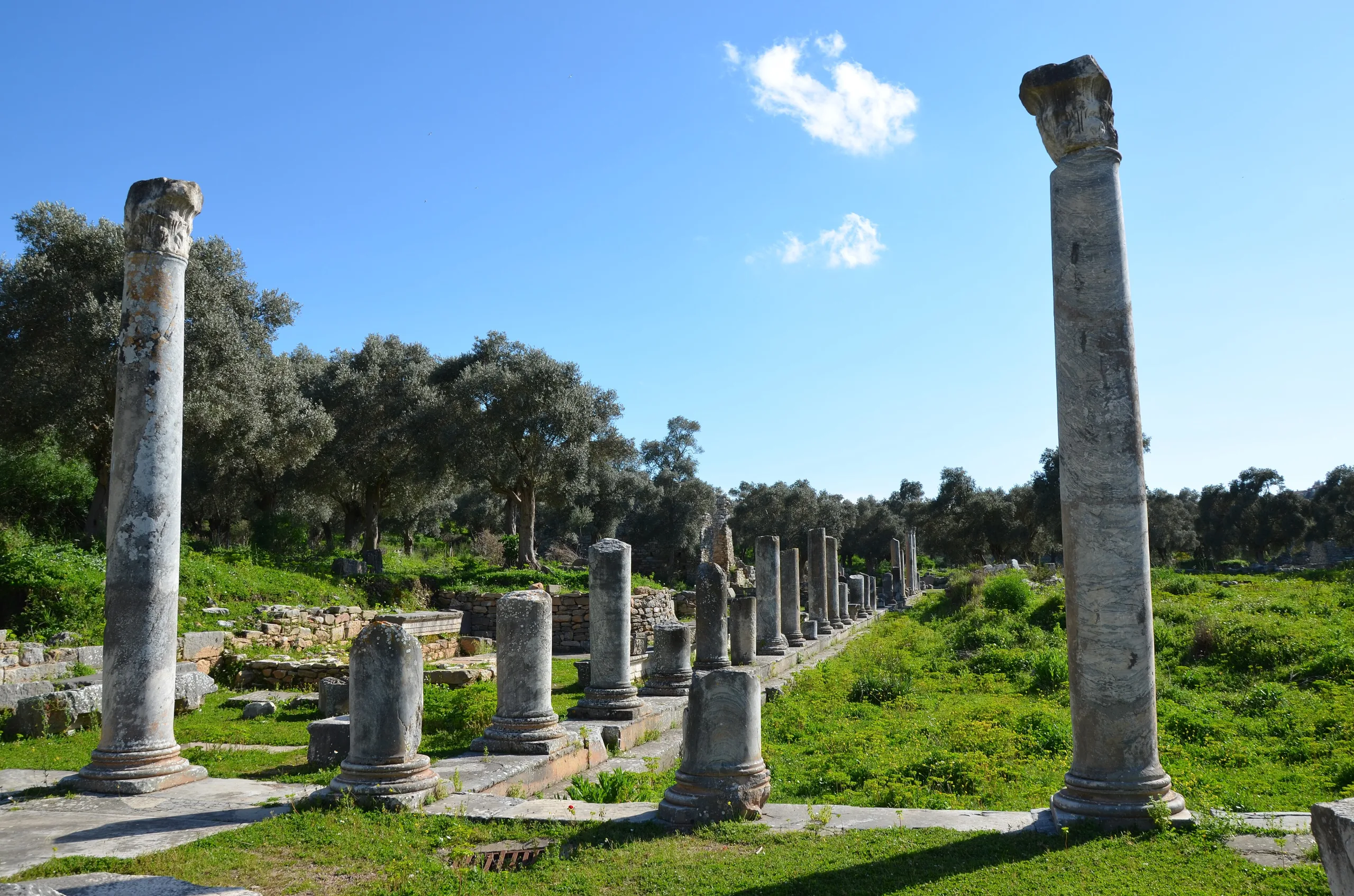
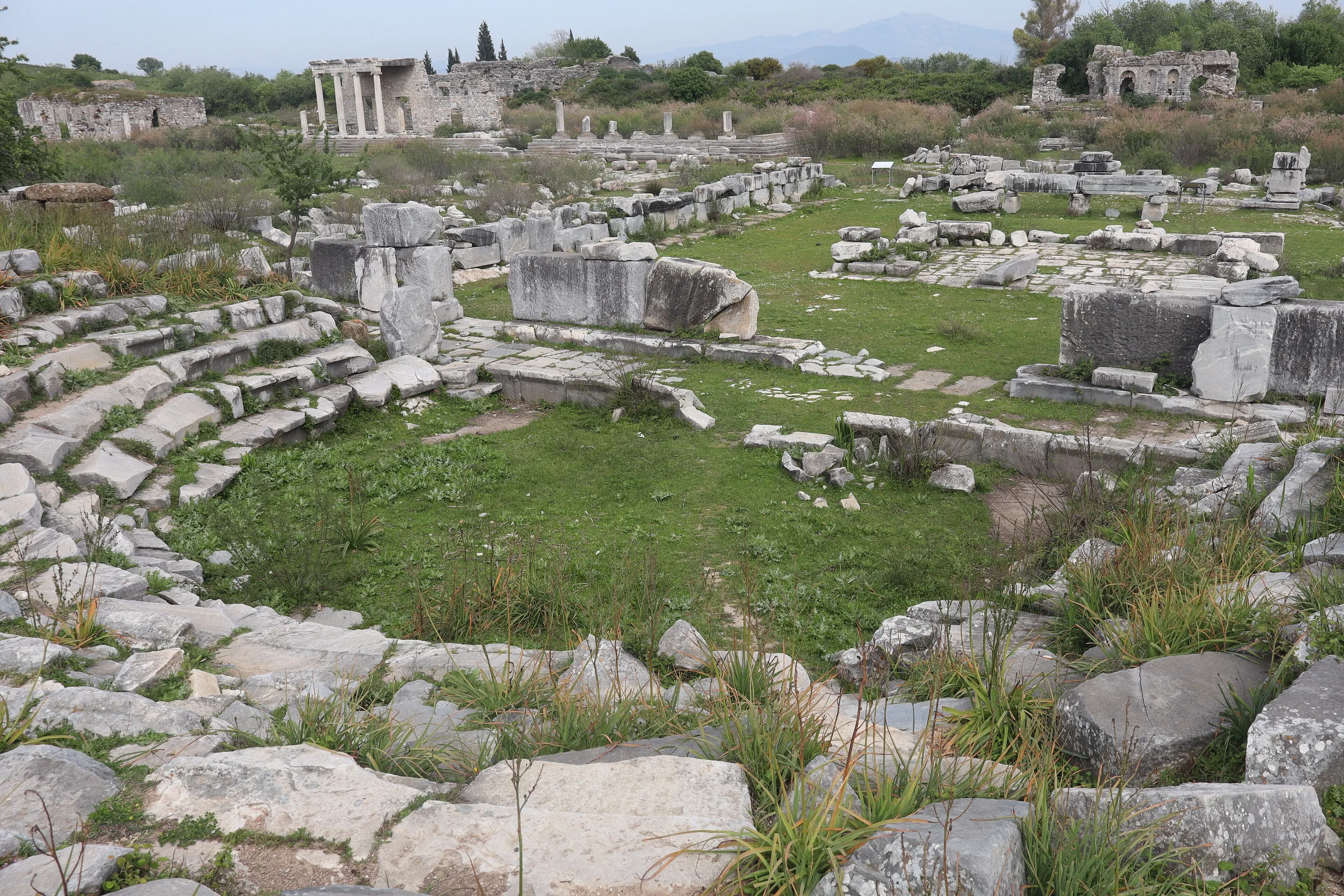
The religious, economic and social heart of the city is defined by a boulevard and markets running to the Lion Harbour. The Delphinion lies to the north, a bath and gymnasium complex to the east, the famous Market Gate to the south and the council house to the west. In the Roman imperial period columned halls such as the Ionic Hall were added in front of the buildings, and a Nymphaeum, a fountain building with a multi-storey facade, rose to the south-east.
From the Delphinion, the procession of the annual festival of Apollo set out. The Sacred Way, about 16 km long and starting at the Sacred Gate in the south, linked the city to the Temple of Apollo at Didyma. Under Trajan the road was widened and paved with inscribed marble slabs.
Roman-period buildings
Among the Roman era's major public buildings are two baths (Faustina and Humeitepe), the Capito Baths, the theatre, the harbour monument and harbour gate, the gymnasium, the South Agora gate, the west agora, the stadium and storehouses. The South City Baths, dug in the southern town, form a complex of about 27 by 24 m, around 640 sq m, founded in the late 1st or early 2nd century AD and later turned into a double bath using spolia from the Faustina Baths and two churches (St Michael and the Great Church).
Kaletepe and the theatre fortress
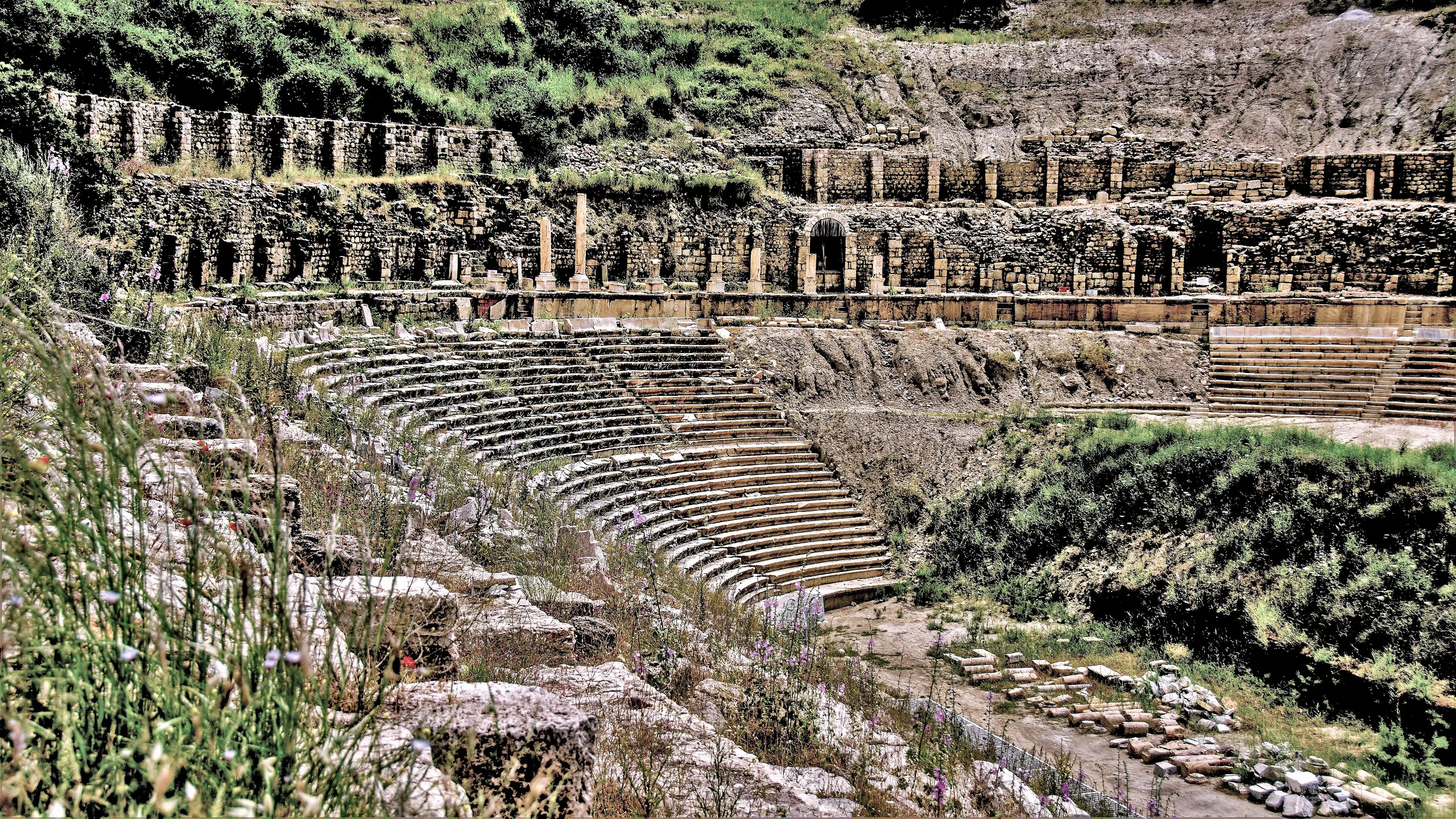
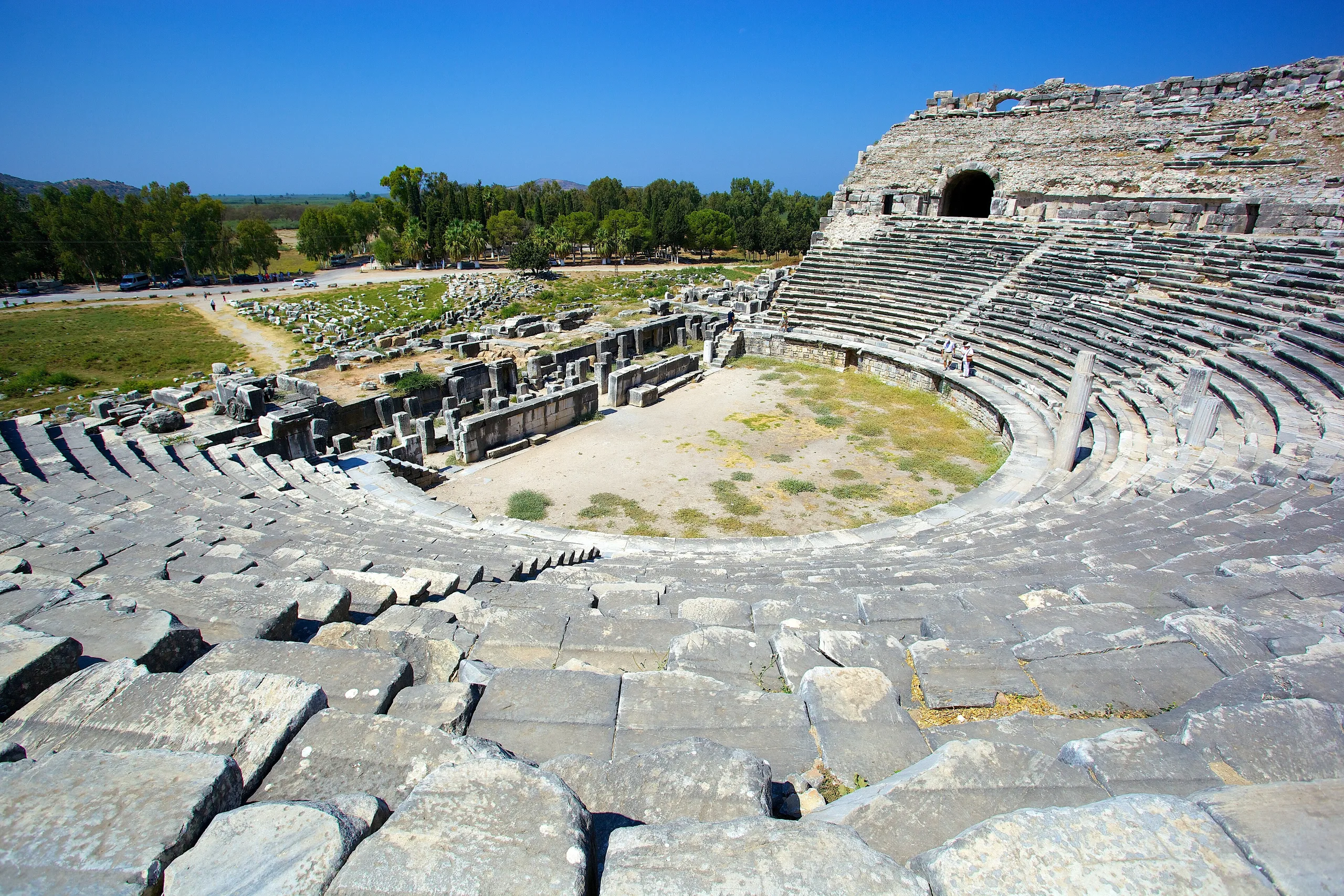
The ancient theatre lies on the south-west slope of Kaletepe, and the hill takes its name from the late Byzantine fortress above the theatre (11th-13th centuries AD). Excavation on Kaletepe has revealed Geometric and Archaic finds, followed by Hellenistic and Roman house blocks and houses with mosaics. A small mosque with an east-facing mihrab and a tomb also stand on the hill.
Humeitepe, Kalabaktepe and the temple of Artemis Kithone
Humeitepe, at the city's northern tip, was still an island in the Bronze Age and formed the north-eastern spur of the peninsula in the Geometric-Archaic period. A sanctuary of Demeter shows it was part of the settlement from Classical times; two bath complexes, a wall and a gate at the eastern harbour have been investigated.
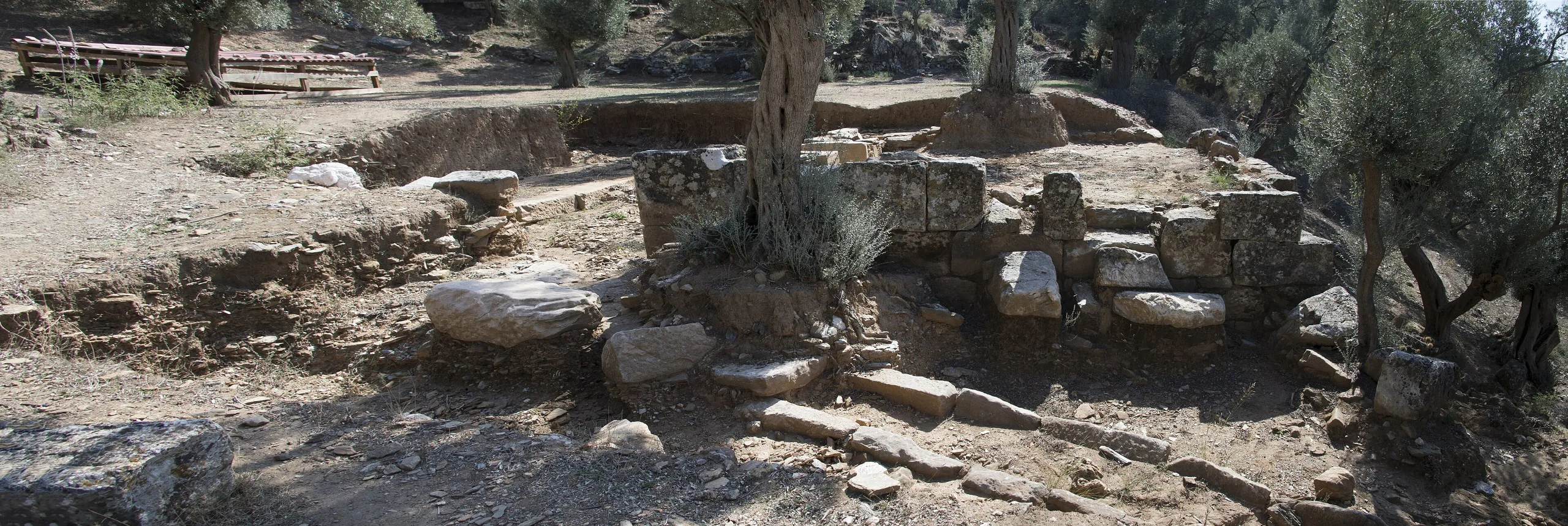
Kalabaktepe was the centre of Archaic Miletus: the settlement core of the city Herodotus called the pearl of Ionia. On the eastern terrace the foundations of an Archaic temple measuring about 11 by 19 m came to light, called the temple of Artemis Kithone after a votive bronze bowl. Persians destroyed the Kalabaktepe settlement in 494 BC.
Byzantine and Turkish remains
On the surface one finds an East Roman bath, an East Roman church and the Church of St Michael, along with Turkish-period remains: a caravanserai, a dervish lodge, baths, the Forty-Steps Mosque and the Ilyas Bey Mosque and its complex.
Excavations
The first dig at Miletus took place in 1873, when a French team worked in the theatre to recover art; six statues were donated to the Louvre. From 1899, Theodor Wiegand led large-scale excavations funded by the German emperor, and half of the finds went to the Berlin Museum under an agreement. The First World War ended that campaign. Work resumed in 1955 under Gerhard Kleiner and explored the Archaic city and the Mycenaean settlement.
From 1975 to 1988 Wolfgang Müller-Wiener expanded the work; Hellenistic sanctuaries were dug and the prehistoric settlement was found. Volkmar von Graeve concentrated on Archaic Miletus from 1990, especially Kalabaktepe and Zeytintepe. In the 1990s a team from Kiel University used geophysics to map the street and insula (city block) plan of almost the whole town. Wolf-Dietrich Niemeier's project strengthened the evidence that the Milawanda of Hittite documents is Late Bronze Age Miletus. Philipp Niewöhner studied the Byzantine period in 2012-2016. Since 2018 the dig has been run by Christof Berns with the support of Hamburg University.
Myth and ancient authors
Pausanias tells of the quarrel over the throne between Codrus's sons Neleus and Medon, and of Neleus founding the city. The thinkers of the Milesian school opened the way for Greek science: Anaximenes tried to explain existence, Anaximander had universal laws that did not depend on the gods carved in stone, Hecataeus excelled in geography and drew the first world map, and Thales learned to calculate solar eclipses after visiting Egypt. One legend says Hera was born under a chaste-tree bush near Miletus.
Natural setting
Miletus once sat on a peninsula reaching into the Latmian Gulf, and the former islands of Kaletepe, Humeitepe and Kalabaktepe gave the city a defensive edge. The Menderes Delta has been a nature reserve since 1994, and part of the ancient city floods in winter.
Visiting
Highlights of a visit are the theatre, the area around the Lion Harbour, the Faustina Baths, the Ilyas Bey Mosque and the Milet Museum. Check the official Miletus page for current information.
Gallery
Frequently asked questions
Where is Miletus?
Why is Miletus important?
How was Miletus destroyed?
What is the Sacred Way between Miletus and Didyma?
Who excavates Miletus?
Why is Miletus no longer on the sea?
Sources (20)
- Milet Örenyeri / Miletus (TR ve EN sayfaları) — T.C. Kültür ve Turizm Bakanlığı, Müzeler ve Ören Yerleri
- Milet Ören Yeri — T.C. Kültür ve Turizm Bakanlığı, Kültür Portalı
- Milet Araştırma Tarihçesi — Milet Kazısı, Hamburg Üniversitesi
- Milet Kenti'nin Tarihi — Milet Kazısı, Hamburg Üniversitesi
- Milet Peysajı — Milet Kazısı, Hamburg Üniversitesi
- Milet Turu: Şehir Merkezi — Milet Kazısı, Hamburg Üniversitesi
- Milet Turu: Kaletepe — Milet Kazısı, Hamburg Üniversitesi
- Milet Turu: Humeitepe — Milet Kazısı, Hamburg Üniversitesi
- Milet Turu: Antik Kentin Güneyi — Milet Kazısı, Hamburg Üniversitesi
- Milet Turu: Kalabaktepe — Milet Kazısı, Hamburg Üniversitesi
- Miletus (Pleiades place 599799) — Pleiades
Photo credits
- Photo: Rotadefterim, CC BY-SA 4.0 — Wikimedia Commons (resized)
- Photo: https://www.flickr.com/photos/jiuguangw/, CC BY-SA 2.0 — Wikimedia Commons (resized)
- Photo: Dosseman, CC BY-SA 4.0 — Wikimedia Commons (resized)
- Photo: Rotadefterim, CC BY-SA 4.0 — Wikimedia Commons (resized)
- Photo: Rotadefterim, CC BY-SA 4.0 — Wikimedia Commons (resized)
- Photo: Rotadefterim, CC BY-SA 4.0 — Wikimedia Commons (resized)
- Photo: Rotadefterim, CC BY-SA 4.0 — Wikimedia Commons (resized)
- Photo: ColumnBoi, CC BY-SA 4.0 — Wikimedia Commons (resized)
- Photo: Matthias Holländer, CC0 — Wikimedia Commons (resized)